News & Community eLanka

eLanka

Thursday, 21 May 2026
  • Home
  • Read History
  • Articles
    • eLanka Journalists
  • Events
  • Useful links
    • Obituaries
    • Seeking to Contact
    • eLanka Newsletters
    • Weekly Events and Advertisements
    • eLanka Testimonials
    • Sri Lanka Newspapers
    • Sri Lanka TV LIVE
    • Sri Lanka Radio
    • eLanka Recepies
  • Gallery
  • Contact
Newsletter
Sri lankan news
  • eLanka Weddings
  • Property
  • eLanka Shop
  • Business Directory
eLankaeLanka
Font ResizerAa
Search
  • Home
  • Read History
  • Articles
    • eLanka Journalists
  • Events
  • Useful links
    • Obituaries
    • Seeking to Contact
    • eLanka Newsletters
    • Weekly Events and Advertisements
    • eLanka Testimonials
    • Sri Lanka Newspapers
    • Sri Lanka TV LIVE
    • Sri Lanka Radio
    • eLanka Recepies
  • Gallery
  • Contact
Follow US
© 2005 – 2026 eLanka Pty Ltd. All Rights Reserved.
Home » Goodnews Stories Srilankan Expats » Articles » Sydney Metro: The new driverless hype? By Aditya Abeysinghe

Aditya AbeysingheArticles

Sydney Metro: The new driverless hype? By Aditya Abeysinghe

eLanka admin
Last updated: May 7, 2021 1:16 pm
By
eLanka admin
ByeLanka admin
Follow:
Share
7 Min Read
SHARE
Views: 11

Sydney Metro: The new driverless hype? By Aditya Abeysinghe


Sydney metro is a fully automated (driverless) train network which started its operations on 26th May 2019. It is currently composed of one line and covers 13 stations from Tallawong to Chatswood covering 36 km. The network is a rapid transmit metro system and is currently operated by Metro Trains Sydney. More than four million customers have travelled in this train service as of now and the overall impression of the service has been overwhelmingly positive. This metro service is the first of its kind in Australia. Earlier, only countries like Singapore and UAE boasted driverless metros and their experiences. Assembled by Alstom, the French-based manufacturer, each metro is composed of six compartments with newer technologies, accessibility features such as two wheelchair spaces per compartment as well as dedicated spacing for people with mobility needs. Metro stations also add a unique customer experience to this service with its added features. These include lifts directly to the platforms, audio hearing loops and advanced lighting systems to help people find their trains. There are also special flooring and accessibility features for visually-impaired passengers to move through the stations. The service is a turn-up-and-go service with a train every four minutes in each direction. Sydney Metro Expansion Project The current metro project is expected to be expanded to 31 stations with 30 kilometers of new railway by 2024 where the line will run from the end of the current line in the North West to the Central Business District (CBD). The project will add seven new stations and 11 upgraded stations and will extended to the Sydney Metro City and Southwest and will enable 40000 passengers to be served per hour. This expansion will expand Sydney’s railway network up to 60%. The project will add stations with lifts, CCTV surveillance, platform screen doors, improved station interchange facilities and trains running every four minutes in the peak time. Another railway line, Sydney West, is a separate line that is expected to link Greater Parramatta and the CBD between the CBD and Westmead. 12 new stations including Parramatta and the Olympic park will be considered and the construction has started and will be expected to open to public in 2030. This project will add new stations to key locations such as Sydney Olympic Park, Pyrmont, and Parramatta. The third project, the development of the stage 1 of the North-South link, was started in 2020 under the Western Sydney City Deal signed in March 2018. Stage 1 of the Western Sydney Airport line will operate connecting St. Mary’s and the Badgerys Creek Aerotropolis via the Western Sydney Airport. The project is expected to be completed in 2026. Features of driverless train operations Train automation is divided into five main categories based on their Grade of Automation (GoA). GoA 0 means no automation and the train operation is at on-sight. GoA 1 means manual train operation. In this category the train driver controls all aspects of the train including starting and stopping, and operating doors. GoA 2 means Semi-automatic (STO) train operation. In this category the starting and stopping are automated but a driver is required to operate the doors. Most Automatic Train Operation (ATO)s are in this category. In GoA 3 driverless train operation is in action where starting and stopping are automated and a train attendant operates the doors. In GoA 4 all the functions of the train are fully automated and is categorized as Unattended Train Operation (UTO). The current Sydney North West Metro is GoA 4. Why adopt driverless? Two main reasons to adopt driverless technology in trains is to improve punctuality and reduce operating costs. Punctuality is achieved by consistent control of train speed and traffic management strategies using ATO. ATO also reduces the human error and the overall safety of the system. For example, Dubai metro was able to achieve 99.6% punctuality since it began operations in 2009. The advantage with operating costs stems from the zero human labor cost incurred by increasing the rate of arriving trains and running trains outside usual times. Another advantage that driverless trains provide is the energy consumption efficiency by using ATO for controlling speed and planned changes of acceleration and deceleration. These trains also provide better energy regeneration during braking and pull off. Further, driverless trains have improved communication and monitoring systems such as the travel route and current speed as seen in the current Sydney North West metro. They are also often equipped with remote monitoring from a remote control centre. The drawbacks of driverless Driverless trains have been often criticized for their high capital costs and operational costs. For example, the costs of signaling and control equipment, remote monitoring and maintenance costs are higher in comparison to train systems that are semi-automatic or manual. For example, Sydney metro City and Southwest project was budgeted at $ 12.5 billion. Some upcoming metro projects have also been criticized for cost overruns. Moreover, driverless trains also have been criticized for unhuman nature of operations such as in unusual times such as misusing of doors and automatic closure of doors at stations. Public safety is also another concern in the absence of a human driver. Sydney metro is a fully automated (driverless) train network which started its operations on 26th May 2019. It is currently composed of one line and covers 13 stations from Tallawong to Chatswood covering 36 km. The network is a rapid transmit metro system and is currently operated by Metro Trains Sydney. More than four million customers have travelled in this train service as of now and the overall impression of the service has been overwhelmingly positive. 

This metro service is the first of its kind in Australia. Earlier, only countries like Singapore and UAE boasted driverless metros and their experiences. Assembled by Alstom, the French-based manufacturer, each metro is composed of six compartments with newer technologies, accessibility features such as two wheelchair spaces per compartment as well as dedicated spacing for people with mobility needs. 

Metro stations also add a unique customer experience to this service with its added features. These include lifts directly to the platforms, audio hearing loops and advanced lighting systems to help people find their trains. There are also special flooring and accessibility features for visually-impaired passengers to move through the stations. The service is a turn-up-and-go service with a train every four minutes in each direction.

Sydney Metro Expansion Project

The current metro project is expected to be expanded to 31 stations with 30 kilometers of new railway by 2024 where the line will run from the end of the current line in the North West to the Central Business District (CBD). The project will add seven new stations and 11 upgraded stations and will extended to the Sydney Metro City and Southwest and will enable 40000 passengers to be served per hour. This expansion will expand Sydney’s railway network up to 60%. The project will add stations with lifts, CCTV surveillance, platform screen doors, improved station interchange facilities and trains running every four minutes in the peak time.

Another railway line, Sydney West, is a separate line that is expected to link Greater Parramatta and the CBD between the CBD and Westmead. 12 new stations including Parramatta and the Olympic park will be considered and the construction has started and will be expected to open to public in 2030. This project will add new stations to key locations such as Sydney Olympic Park, Pyrmont, and Parramatta. 

The third project, the development of the stage 1 of the North-South link, was started in 2020 under the Western Sydney City Deal signed in March 2018. Stage 1 of the Western Sydney Airport line will operate connecting St. Mary’s and the Badgerys Creek Aerotropolis via the Western Sydney Airport. The project is expected to be completed in 2026. 

Features of driverless train operations

Train automation is divided into five main categories based on their Grade of Automation (GoA). GoA 0 means no automation and the train operation is at on-sight. GoA 1 means manual train operation. In this category the train driver controls all aspects of the train including starting and stopping, and operating doors. GoA 2 means Semi-automatic (STO) train operation. In this category the starting and stopping are automated but a driver is required to operate the doors. Most Automatic Train Operation (ATO)s are in this category. In GoA 3 driverless train operation is in action where starting and stopping are automated and a train attendant operates the doors. In GoA 4 all the functions of the train are fully automated and is categorized as Unattended Train Operation (UTO). The current Sydney North West Metro is GoA 4.
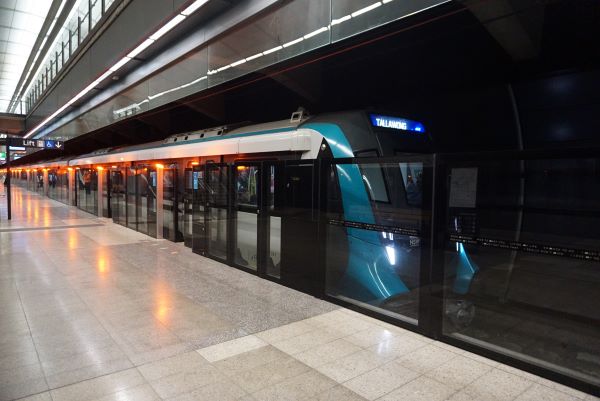
Sydney Metro: The new driverless hype?

Why adopt driverless?

Two main reasons to adopt driverless technology in trains is to improve punctuality and reduce operating costs. Punctuality is achieved by consistent control of train speed and traffic management strategies using ATO. ATO also reduces the human error and the overall safety of the system. For example, Dubai metro was able to achieve 99.6% punctuality since it began operations in 2009. The advantage with operating costs stems from the zero human labor cost incurred by increasing the rate of arriving trains and running trains outside usual times. 

Another advantage that driverless trains provide is the energy consumption efficiency by using ATO for controlling speed and planned changes of acceleration and deceleration. These trains also provide better energy regeneration during braking and pull off. Further, driverless trains have improved communication and monitoring systems such as the travel route and current speed as seen in the current Sydney North West metro. They are also often equipped with remote monitoring from a remote control centre. 

The drawbacks of driverless

Driverless trains have been often criticized for their high capital costs and operational costs. For example, the costs of signaling and control equipment, remote monitoring and maintenance costs are higher in comparison to train systems that are semi-automatic or manual. For example, Sydney metro City and Southwest project was budgeted at $ 12.5 billion. Some upcoming metro projects have also been criticized for cost overruns. 

Moreover, driverless trains also have been criticized for unhuman nature of operations such as in unusual times such as misusing of doors and automatic closure of doors at stations. Public safety is also another concern in the absence of a human driver. 

TAGGED:Sydney metroSydney metro CitySydney North West metroTrains Sydney
Share This Article
Facebook Whatsapp Whatsapp LinkedIn Email Copy Link Print
Previous Article Wishing you a safe and happy Eid-Al-Fitr’ – NSW Health and MHCS
Next Article UTHTHAMA MUNI DALADA WADAMMANA Darmadasa Walpola
FacebookLike
YoutubeSubscribe
LinkedInFollow
eLanka Wedding
- Advertisement -
Ad image
Most Read

FIBA 3×3 World summit awaits the Gangurrus

Bingxue 1

Bingxue Sri Lanka Opens Its First Outlet in Dehiwala

Agnii Eatery Bar, Agnii Windsor, Agnii Chapel Street, Sri Lankan restaurant Melbourne, modern Sri Lankan cuisine Australia, Chef Gayan Pieris, Gayan Pieris Melbourne chef, Many Little Bar & Dining Red Hill Many Little Bar & Dining, Sri Lankan fine dining Melbourne, Chapel Street restaurants Windsor, new restaurants Melbourne 2026, Sri Lankan fusion food Australia, kussiya kitchen concept, open kitchen dining Melbourne, Mornington Peninsula dining, Red Hill winery restaurant chef, Australian Sri Lankan chefs, Melbourne food news 2026, Concrete Playground food news, Windsor dining precinct

Coming Soon: Chef Gayan Pieris Brings Contemporary Sri Lankan Flavours to Chapel Street with ‘Agnii’

Sri Lankan cuisine Melbourne, Agnii Windsor Melbourne, Chef Gayan Pieris, Many Little restaurant, Sri Lankan restaurant Melbourne, Melbourne food scene 2026, Sri Lankan food Australia, Chapel Street restaurants, Windsor dining Melbourne, Sri Lankan culinary revolution, hoppers Melbourne, kottu roti Melbourne, authentic Sri Lankan food, fire-driven hearth cooking, wood-fired Sri Lankan cuisine, Sri Lankan expat community Melbourne, Colombo street food Melbourne, regional Sri Lankan recipes, Melbourne multicultural food, The Havelock Place Canterbury, Dutch Rules Distilling Co Mitcham, Pearl By P&D Dandenong South, Sri Lankan restaurants Australia, Melbourne foodie guide, Sri Lankan curry Melbourne, Sri Lankan chefs Australia, Australian Sri Lankan culture, Melbourne dining destinations, contemporary Sri Lankan cuisine, Sri Lankan street food Australia, hopper brunch Melbourne, Good Food Guide chefs, Melbourne restaurant openings 2026, Agnii restaurant opening, Sri Lankan heritage cuisine, Sri Lankan flavours Melbourne, luxury Sri Lankan dining, Chapel Street food culture, Sri Lankan food trends Australia, eLanka food news

Melbourne’s Sri Lankan Food Revolution: Hatted Chef Gayan Pieris Fires Up ‘Agnii’ in Windsor

Written in the Stars, Sri Lankan community Melbourne, Sri Lankan Australian film, Menik Gooneratne, Su Dharmapala, The Wedding Season novel, Melbourne romantic comedy, Sri Lankan diaspora Australia, Australian Sri Lankan cinema, Nikesh Patel, Saagar Shaikh, Fawzia Mirza, Screen Australia, Telefilm Canada, Sri Lankan culture in Australia, multicultural Australian films, Sri Lankan weddings, Vedic astrology romance, Sri Lankan actress Australia, Melbourne film production, Sri Lankan heritage stories, eLanka news, Sri Lankan Australians, immigrant stories Australia, diversity in Australian cinema, Asian Pacific representation, Sri Lankan romance film, Melbourne arts community, Sri Lankan entertainment news, diaspora storytelling, Blue Fox Entertainment, Maslow Entertainment, Sri Lankan creatives, Sri Lankan identity in film, Australian multicultural storytelling, women-led film production, Sri Lankan community events Melbourne, cultural representation in cinema, eLanka Australia, Sri Lankan success stories

Melbourne Rom-Com About Sri Lankan Community “Written in the Stars” Heads to the Big Screen

Related News
Articles

OPALS VS CHINA | MELBOURNE 2026

NISHAN VELUPILLAY IMAGES. COURTESY ALEAGUES
Articles Lawrence Machado

Socceroo Nishan Vellupillay Eyes World Cup Debut

Escape-to-Baththalangunduwa-300x190 (1)
Articles

Escape to Baththalangunduwa: Sri Lanka’s Hidden Island Paradise

Asian Gym for Life Challenge 2026 , Indonesia Gymnastics. , Master Ahamadh Ayaan , Sri Lanka Gymnastics , Trinity College Kandy
Articles

Master Ahamadh Ayaan to Represent Sri Lanka at the 1st Asian Gym for Life Challenge 2026 in Indonesia

Sri Lanka cricket 2016, Australia tour of Sri Lanka, Warne-Muralitharan Trophy, Sri Lanka vs Australia Test series, Rangana Herath, Kusal Mendis, Lakshan Sandakan, Dilruwan Perera, Dhananjaya de Silva, Sri Lanka whitewash Australia, Sri Lanka cricket victories, historic cricket series, Sri Lankan cricket legends, Galle International Stadium, Pallekele International Cricket Stadium, SSC Colombo Test, Sri Lankan diaspora cricket, Test cricket classics, Sri Lanka sporting history, Sri Lankan pride, Australian cricket team 2016, Sri Lanka cricket memories, cricket nostalgia, Asian cricket dominance, spin bowling masterclass, Sri Lanka cricket fans, iconic Sri Lanka cricket moments, Sri Lanka vs Australia rivalry, Sri Lanka Test triumph, Sri Lankan sporting excellence, cricket in Sri Lanka, Herath 13 wickets SSC, Kusal Mendis breakthrough innings, Sri Lanka cricket retrospective, cricket history article, eLanka cricket feature, Sri Lankan community worldwide, cricket celebrations, Sri Lankan sports news, international cricket tours, cricket legends of Sri Lanka, Test match domination, Sri Lanka cricket heritage, world number one Australia, cricketing milestones, Sri Lankan excellence, cricket memories for diaspora, classic Test cricket, Sri Lanka sports achievements, eLanka sports articles
Articles

Rewind to Glory: Reliving the Historic 2016 Australia Tour of Sri Lanka!

  • Quick Links:
  • Articles
  • DESMOND KELLY
  • Dr Harold Gunatillake
  • English Videos
  • Sri Lanka
  • Sinhala Videos
  • eLanka Newsletters
  • Obituaries
  • Sunil Thenabadu
  • Dr. Harold Gunatillake
  • Tamil Videos
  • Sinhala Movies
  • Trevine Rodrigo
  • eLanka Newsletter
  • Photos

eLanka

Your Trusted Source for News & Community Stories: Stay connected with reliable updates, inspiring features, and breaking news. From politics and technology to culture, lifestyle, and events, eLanka brings you stories that matter — keeping you informed, engaged, and connected 24/7.
Kerrie road, Oatlands , NSW 2117 , Australia.
Email : info@eLanka.com.au / rasangivjes@gmail.com.
WhatsApp : +61402905275 / +94775882546
  • About eLanka
  • Terms & Conditions

Disclaimer:
eLanka is committed to sharing positive and community-focused stories. We do not publish or endorse political, religious, or ethnic viewpoints. The content published on eLanka, including articles and newsletters, reflects the opinions and views of the respective authors and not those of eLanka. eLanka accepts no responsibility or liability for the accuracy, completeness, or consequences of any content provided by contributors.

(c) 2005 – 2025 eLanka Pty Ltd. All Rights Reserved.