The Lasantha Wickrematunge Legacy The patron of the voiceless – by Selva-Raj Subramanian

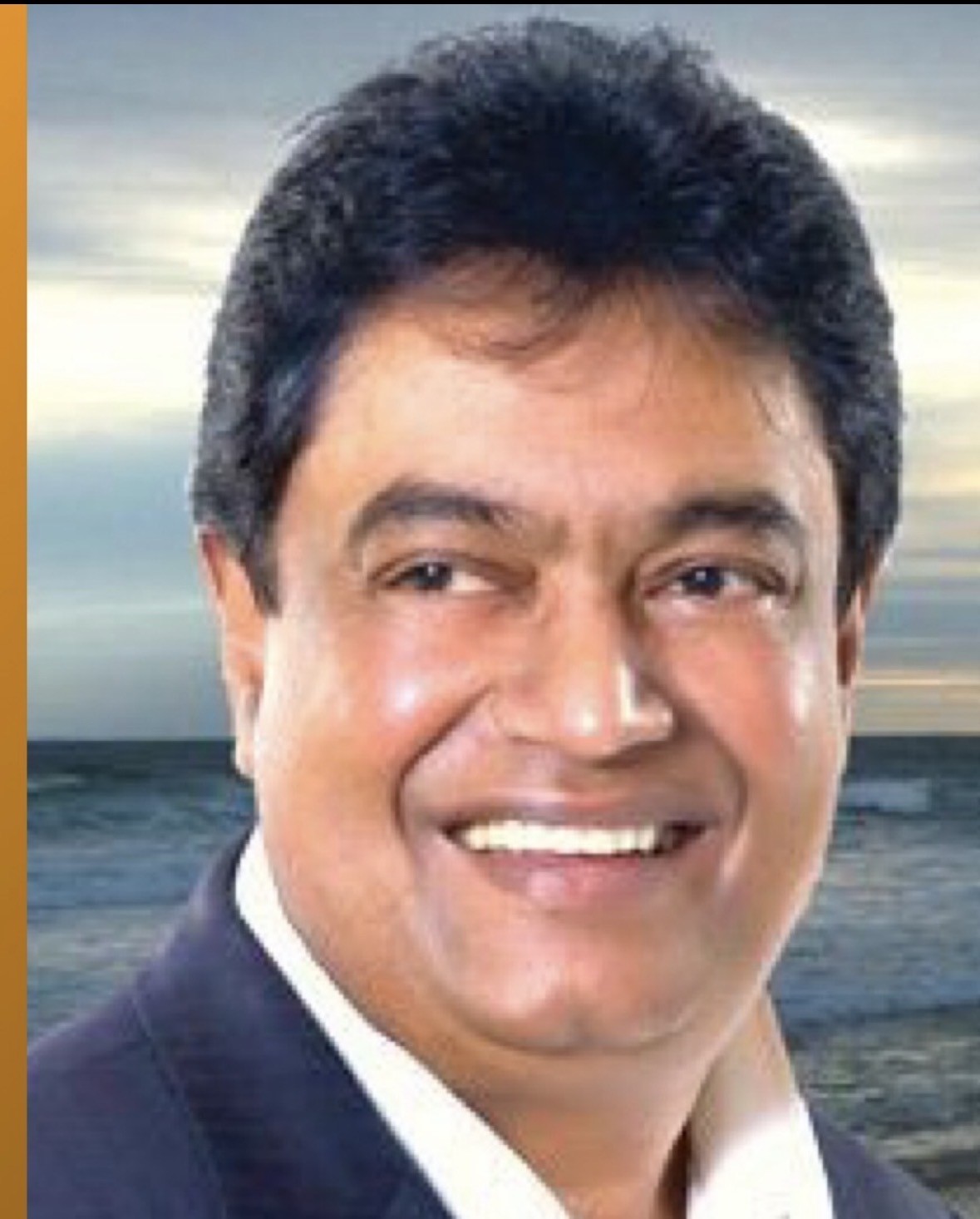
Lasantha Wickrematunge occupies a singular place in the political and modern history of Sri Lanka. At a time when Sinhala-nationalism, militarisation, and state violence dominated public life, he emerged as one of the most uncompromising voices opposing the dehumanisation of Tamil people. His stance was neither opportunistic nor rhetorical; it was grounded in a commitment to justice, equality, and the sanctity of civilian life. In an environment where silence was rewarded and dissent criminalised, Lasantha consistently challenged the legitimacy of a war that exacted its greatest cost from Tamil civilians. His assassination was not incidental to this stance—it was the culmination of a sustained effort to silence a powerful figure who refused to accept the mass suffering of Tamils as a necessary or acceptable outcome of state policy.
The Sri Lankan state’s relationship with its Tamil population has been marked by decades of institutional discrimination, political exclusion, and episodic mass violence. From language policies and unequal access to education and employment to repeated anti-Tamil pogroms, the foundations of the conflict were deeply structural. By the time the civil war reached its most intense phases, Tamil civilians in the North and East lived under conditions of constant precarity: aerial bombardment, artillery shelling, displacement, food shortages, and the erosion of basic legal protections.
During the final stages of the war, these conditions intensified dramatically. Entire civilian populations were trapped in shrinking conflict zones, designated as “safe areas” yet repeatedly shelled. Hospitals, food distribution centres, and humanitarian convoys were not spared. Independent estimates point to tens of thousands of Tamil civilian deaths, many occurring in circumstances that raise serious allegations of war crimes and crimes against humanity. It was against this backdrop of overwhelming state power and widespread denial that Lasantha Wickrematunge articulated a fundamentally different vision.
Lasantha rejected the framing of the war as a purely patriotic or security-driven enterprise. Instead, he insisted on foregrounding the human cost borne by Tamil civilians, refusing to allow their suffering to be erased under the language of national victory. He openly condemned the collective punishment of Tamil communities and challenged the logic that equated Tamil civilian spaces with legitimate military targets.
Crucially, he did not conflate Tamil civilians with armed groups, nor did he accept the argument that civilian deaths were an unavoidable by-product of war. He argued that the deliberate or reckless killing of Tamil non-combatants represented a moral failure of the state and a betrayal of the very idea of democratic governance. In doing so, he positioned himself in direct opposition to a dominant political culture that treated dissent as treason and empathy for Tamils as disloyalty.
For many Tamils, Lasantha became a rare figure from the majority community who acknowledged the suffering faced without qualification. His voice disrupted the isolation imposed on Tamil victims and challenged the state’s attempt to monopolise truth.
Many Sinhala nationalists have accused Lasantha of harboring an anti-Buddhist agenda and a aversion towards Buddhist monks, often pointing to his frequent critiques of Buddhist monks and citing the use of an image of a shouting monk as a logo associated with his media house. Such claims, however, fundamentally misrepresented his position. Lasantha did not oppose Buddhism as a religion; rather, he stood firmly against the Buddhization of Sri Lanka—particularly the state-driven Buddhization of the North and East—and the rise of Buddhist nationalism. He was, in fact, among the first public intellectuals and voices to expose and condemn this process, warning that the politicization of Buddhism was a threat to democracy.
Lasantha often said that Buddhization in Sri Lanka, particularly in its modern nationalist articulation, represented a profound distortion of Buddhist ethical philosophy through its entanglement with majoritarian politics and state power and that Buddhist nationalism has recast the religion as an instrument of ethnic consolidation and territorial entitlement, privileging Sinhala-Buddhist identity at the expense of diversity. He was the first to speak out on how buddhiszation has facilitated the marginalisation of religious and ethnic minorities, legitimized cultural homogenization, and normalized exclusionary state practices under the guise of religious guardianship.
Lasantha’s refusal to conform came at immense personal cost. He was subjected to sustained intimidation, ongoing state surveillance, and attacks. These acts were not random; they reflected a systematic effort to neutralise a figure whose authority threatened the legitimacy of state conduct during the war. Lasantha endured a pattern of intimidation and physical violence that reflected the threat his opposition posed to state power. He was assaulted, subjected to death threats, and placed under constant watch, while armed attacks on his home demonstrated the use of violence to instil fear and enforce silence. The failure to meaningfully investigate these incidents fostered a climate of impunity, signalling that those who challenged the state’s treatment of Tamil civilians could be targeted without consequence.
During his time at Newsfirst MTV, where he worked and hosted Good Morning Sri Lanka, he spoke with notable vigour and clarity on behalf of the Tamil people. In this context, he disclosed the discovery of an explosive device that had been planted and subsequently detained outside the premises—an incident that underscored both the gravity of his opposition to injustice and the immediate dangers he faced for speaking out on such views. This campaign of intimidation ultimately culminated in his assassination, underscoring the lethal risks of dissent during the war.
Despite this, he remained defiant, fully aware that his voice put him in danger.
His assassination in January 2009 was a politically charged act that occurred at the height of the war’s final offensive against Tamil areas. He was killed in a manner consistent with targeted professional violence. By eliminating the most influential and uncompromising voices in the country, the perpetrators signalled to all others the consequences of dissent. Subsequent failures to deliver justice, alongside credible allegations of official involvement and cover-ups, reinforced the perception that his killing was not an deviation but an extension of the same system of impunity that enabled atrocities against Tamil civilians.
Lasantha Wickrematunge’s legacy is inseparable from the Tamil struggle for dignity, recognition, and justice. He is remembered not simply as a brave man who opposed violence, but as someone who affirmed the humanity of Tamils at a moment when that humanity was being systematically denied. His life demonstrated that solidarity across ethnic lines was possible, and that moral clarity could exist even in the most polarised of environments.
For Tamil communities, his death symbolises both loss and affirmation: loss of the most powerful Sinhalese ally, and affirmation that the suffering of Tamils was seen and named by someone willing to sacrifice everything to speak out. His assassination is a message that the war did not end with battlefield victory, but with unresolved questions of accountability, truth, and reconciliation.