


UNESCO-Listed Panadura Debate Documents Go on Display at Rankoth Viharaya

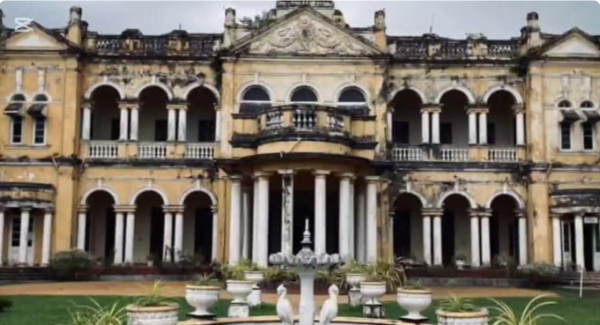
AI-generated illustration, not a historical photograph. Authentic photographs by Eshan Fernando appear in the original Sunday Times report.
Four historic documents connected with the Panadura Debate of 1873 have found a permanent home at Rankoth Viharaya, the Panadura temple associated with the landmark religious exchange. An exhibition centre displaying the papers was inaugurated at the temple on Saturday, bringing the collection closer to visitors and affirming its place in Sri Lanka’s shared historical record.
The documents, recognised through their inclusion in UNESCO’s Memory of the World Register, preserve evidence of a moment when Buddhist and Christian leaders engaged with one another’s religious teachings. Their significance lies not in one faith prevailing over another, but in the record they offer of an effort to explain doctrinal differences, address misunderstandings and encourage mutual respect.
The opening ceremony began with religious observances. The Supreme Mahanayake Thera of the Sri Lanka Amarapura Maha Nikaya, Most Venerable Karagoda Uyangoda Maithree Murthi Mahanayake Thera, chanted pirith. Other Buddhist monks were present, and Cultural Affairs Minister Dr. Sunil Senevi attended as chief guest.
The exhibition project was carried out under the guidance of Ven. Kahapola Sugatharatana Mahanayaka Thera of the Amarapura Chapter, in consultation with Rankoth Viharaya, Panadura, and the National Library and Documentation Services Board (NLDSB). The partnership brings together the temple connected with the historical event and the national institution responsible for safeguarding the documentary collection.
Four records from 1873
According to the NLDSB, the collection consists of four documents dating to 1873, each with historical, cultural, spiritual and intellectual value. Together, the papers comprise correspondence between Christian and Buddhist leaders calling for an open dialogue about doctrinal questions, as well as a handwritten transcription of the debate.
The transcription runs to 27 and a half pages, written in ink. The letters and the account of the exchange provide a tangible connection to the people and ideas involved: not only a record of religious discussion, but evidence of an attempt to communicate across differing beliefs at a time when misunderstandings could create division.

The opening ceremony at Rankoth Viharaya. Photograph by Eshan Fernando, published in The Sunday Times.
The Panadura Debate is remembered as an exchange in which both sides had the opportunity to explain aspects of their respective faiths. As described by the NLDSB, the dialogue helped eliminate misunderstandings and paved the way for reconciliation and mutual respect between the two religious communities. That account places the emphasis on the value of listening and explanation, rather than on religious rivalry.
The documents are important precisely because they preserve this process. Historical records can show how people met differences in belief: whether through confrontation, avoidance or considered discussion. Here, the correspondence that called for an open dialogue and the transcript of the debate together make visible a shared effort to set out religious views and make them better understood.
From a local encounter to a wider readership
The influence of the Panadura Debate was not confined to the communities present at the original exchange. English translations of the dialogue’s transcription were made available in Europe and the United States, where they attracted attention among religious leaders and scholars. The Sunday Times report notes that the translations contributed to greater recognition of Buddhism as an advanced religion.
That international circulation adds another dimension to the papers’ story: a local religious conversation became part of a wider exchange of ideas. Yet its significance need not be framed as one tradition defeating another. Rather, the translation made Buddhist thought more accessible to readers who might otherwise have encountered it through limited or inaccurate accounts. The episode illustrates how careful explanation can broaden understanding across cultures and religious boundaries.

Cultural Affairs Minister Dr Sunil Senevi views the displayed documents. Photograph by Eshan Fernando, published in The Sunday Times.
The addition of the documents to UNESCO’s Memory of the World Register recognises their importance beyond their place of origin. Their preservation speaks to a wider human interest in records that reveal how communities have shaped their intellectual and spiritual lives. In this instance, the papers preserve a dialogue rooted in Sri Lanka’s history while also documenting ideas that travelled beyond the island.
The National Library’s account describes the collection as heritage of value to the world, and the new exhibition centre gives that recognition a visible home. Instead of remaining known only through summaries and archival references, the documents can now be encountered at the temple where they are housed. Their handwritten pages invite visitors to consider both what was said and the historical act of recording and preserving the exchange.
Preserving a record of respect
Sri Lanka’s religious diversity makes the preservation of such records especially meaningful. A country’s heritage is not formed only by monuments, buildings or objects of artistic value; it also resides in the conversations through which communities have sought to understand one another. The Panadura documents offer a particular example of that heritage, carrying evidence of a religious discussion across generations.
Their new exhibition setting also connects preservation with public learning. Visitors who see the papers can reflect on the care required to conserve fragile historical material, and on the responsibility to interpret it fairly. The account of the debate invites attention to the views expressed by both communities and to the shared value of an exchange that, according to the NLDSB, helped create a path towards reconciliation and mutual respect.
More than 150 years after the documents were created, the opening of the exhibition centre marks a significant step in making this part of Sri Lanka’s history accessible. The papers remain a record of their time, but their message about open discussion and respectful engagement continues to have relevance in a society where diverse religious traditions live alongside one another.
The development was reported by The Sunday Times, in an article by Sumith Pothupitiya, with information about the collection also provided by the National Library and Documentation Services Board. Readers can find the original report here and further information about the documentary heritage on the NLDSB website.
For more stories connecting Sri Lankans with their heritage and community, visit eLanka’s news and articles.
This article was written based on the source https://www.sundaytimes.lk/261115/news/panadura-debate-documents-now-on-display-at-rankoth-viharaya-664067.html, kindly email us at info@eLanka.com.au if any information needs to be corrected.
At eLanka, we respect the rights of creators. If we have used an image you own and you’d like it removed, please email us at info@elanka.com.au and we’ll handle it promptly.
Thanks.
eLanka team
eLanka Disclaimer
Content published on eLanka may be created by the eLanka team, submitted by contributors or third parties, reproduced or adapted from other sources with appropriate source acknowledgement, or provided as promotional/advertising material by our clients. While eLanka takes reasonable care in preparing and publishing content, we do not warrant its completeness or accuracy. Views expressed are those of the respective authors or contributors and do not necessarily represent the views of eLanka. Third-party contributors, content providers and advertisers are responsible for the accuracy of material they supply and for ensuring they hold the necessary rights and permissions for its publication. Advertising and promotional content should not be regarded as an endorsement by eLanka of any product, service or claim.