


IS MEDIA A PILLAR OF DEMOCRACY ANYMORE ?-N.S.Venkataraman
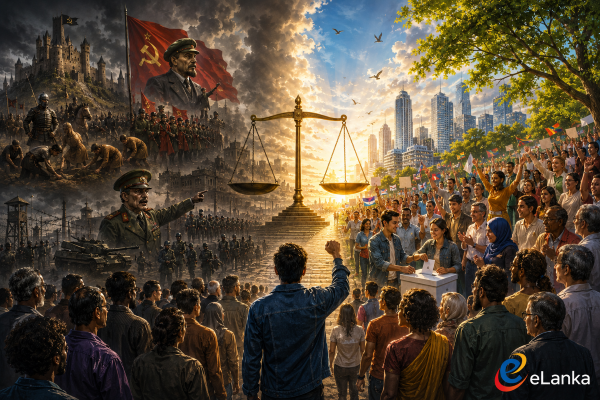
Over the last several hundred years, different forms of governance have evolved including democracy, communism, feudalism, dictatorship / military regime / totalitarian governance
While based on the past experience , there are merits and demerits seen in all such systems of governance , democracy has been hailed as the most appropriate form of governance from holistic point of view . Given the fact that the basic instincts of humans are craving for freedom in thought process and action, the democratic system of governance remain popular in public perspective due to the freedom that the citizens enjoy.
Even while not discussing about the merits and demerits of other systems, democratic form of governance have several unwelcome aspects such as the possible abuse of freedom by the people and other agencies and the prevalence of nearly free for all conditions leading to undesirable activities.
Those who advocate need for reforms in democratic governance have said that people should know that liberty cannot be a personal Affair but is essentially a social contract. It essentially involves adjustment of individual interests for the larger social good. Over the years, several checks and controls have been introduced to curb abuse and misuse of freedom in democratic governance. . In such reforms , judiciary , election commission and media have been given the focus and are termed as pillars of democracy, expecting that these would ensure that democratic form of governance remains fair and un exploitative in any way.
Amongst these pillars, media has been considered as the most vital one. However, of late, the development and progress of media in multiple directions largely due to technology developments , have created misgivings around the world as to whether media meets the public expectations with regard to the role that it should play.
In the earlier decades, media all over the world enjoyed considerable and much more credibility, as the editors and media personnel largely considered media activity as essentially a form of service. Media personnel , by and large , remained steadfast in their commitment to the professional ethics and certainly the administration of media houses were not essentially guided by the exclusive profit motive or the tendency to amass profit by in giving up the core value of media ethics.
In the recent time, with the media expanding the base that now include print media, visual media , social media including you tube, Instagram , face book etc. there is obviously recognisable fall in the credibility enjoyed by the media in all forms .
Today, all said and done, most of media houses function like business enterprises and controlled by business houses or religious bodies or political parties and other vested interests. With the mass of journalists entering the media field due to rapid expansion of the media base , several media personnel do not anymore have the expertise or training or role model needed to show excellence in performance. There is public suspicion gaining ground that number of editors and journalists have pre conceived views , carry prejudices in their attitude and sometimes speak and write like semi politicians , particularly where the readers and subscribers may easily guess what would be the statement of the particular journalist even before they would make the statements.
With the widespread reach of the media, there is also the situations where corrupt dealings of the media houses and journalists are suspected and even exposed. People have started thinking that today’s media is no more the media that prevailed earlier.
With the need to keep the business interests and increase the circulation, publication of unproven allegations and sensational news are being published frequently. Several litigations are now in the courts against such reports in the media filed by affected persons and agencies. There are also frequent rumours about paid news being published at the behest of individuals or agencies.
All these are not healthy developments and only reflect the urgent need to reform the media , even as expectations are that the media should reform the democratic process.
All said and done , it is certainly not an irretrievable situation. There are still several editors and journalists , who desire to adhere to professional ethics at any cost but they seem to be out numbered by editors and journalists with a lesser level of commitment to professional ethics .
Such committed editors and journalists should remain as role model for the young persons who want to enter into media as professionals and they should write and speak about the undesirable aspects in the functioning style of media houses in a general way, with courage of conviction and commitment to the cause of media reputation.
Perhaps, the ball is also in the court of readers and subscribers who should be able to separate the wheat from the chaff , whether it concerns print media, visual media or social media. The discerning observers and reformists have to play a more active role in this task that will considerably strengthen the pillar ( media) , to ensure that the democratic governance remain at optimum standards.