Source image: Newswire.
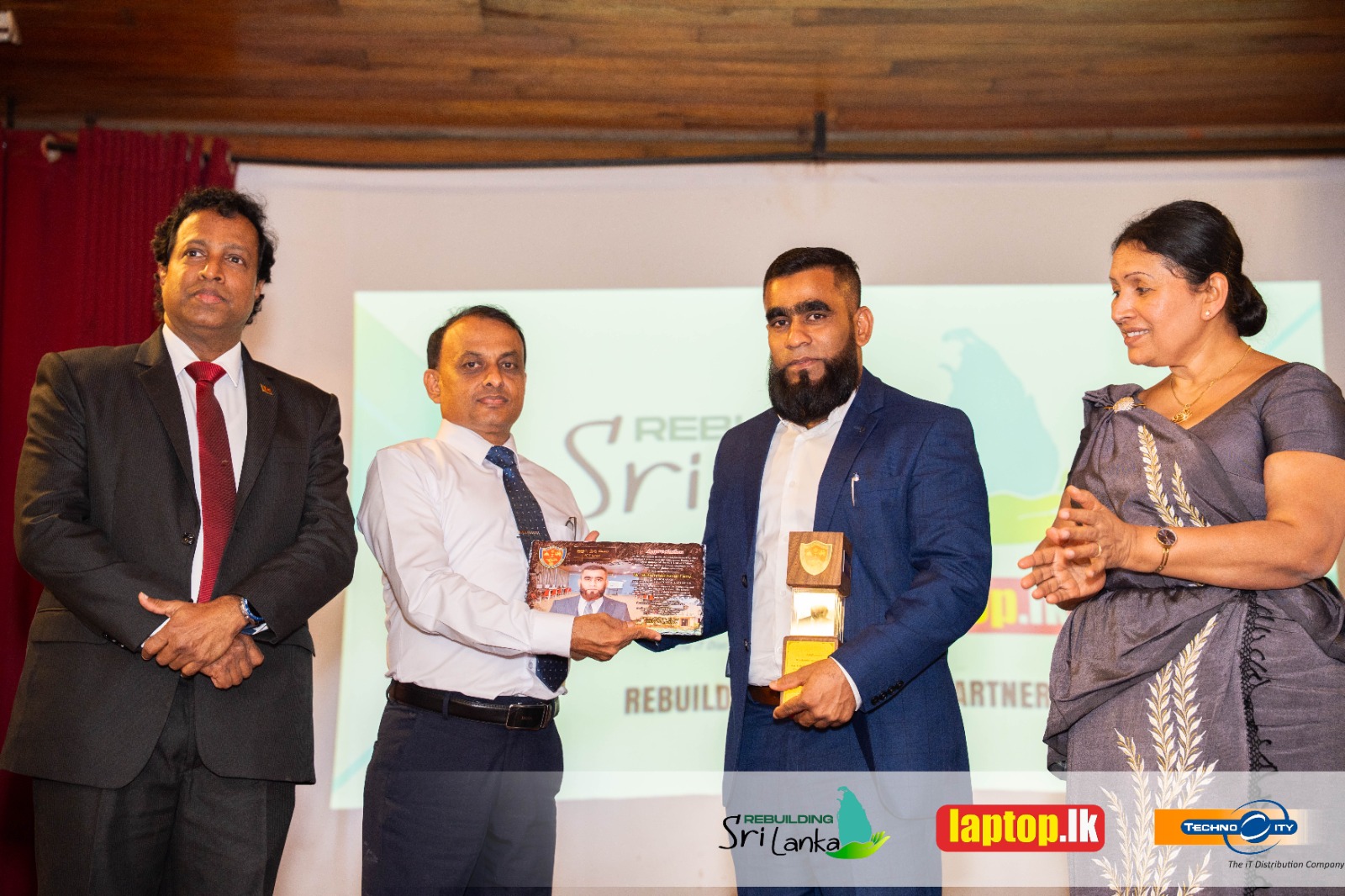
Sri Lankan ICT company Technocity (Pvt) Ltd has completed its ‘Rebuilding Sri Lanka’ corporate social responsibility initiative, a four-month programme that supported 18,326 students across 39 schools in the North Western Province through expanded access to technology and digital education.
The initiative, which was undertaken in collaboration with the Prime Minister’s Office, the Ministry of Education and provincial education authorities, was launched at the end of December and completed by the end of April. Its implementation represented a substantial private-sector contribution to strengthening school technology infrastructure, particularly in communities where access to modern digital learning facilities has remained uneven.
With a total commitment of approximately LKR 80 million, the programme was structured around both direct financial support and the provision of practical equipment. Technocity committed LKR 20 million in cash through the Prime Minister’s Office, while approximately LKR 60 million was allocated towards information technology equipment and related infrastructure.
A province-wide investment in digital education
The scale of the initiative is reflected in its reach: 39 schools and more than 18,000 students were included across the North Western Province, an area in which the availability of properly equipped information technology facilities can have a significant influence on students’ exposure to digital learning.
Rather than limiting the programme to the donation of individual computers, Technocity adopted a broader approach intended to establish complete and immediately usable learning environments. The initiative included the development of nine fully equipped IT laboratories, technology upgrades at participating schools and the complete equipping of one Zonal Education Office.

Source image: Technocity/Newswire.
The facilities were designed to provide students and teachers with a more consistent platform for learning, research and the development of essential digital skills. In an educational environment increasingly influenced by online resources, computer-based instruction and technology-supported administration, the availability of suitable equipment and properly arranged spaces is instrumental.
The provision of infrastructure also suggests a more sustainable understanding of digital access. A computer laboratory requires more than computers alone; it depends upon appropriate furniture, reliable equipment and a setting in which students can work safely and effectively. By including these elements, the programme sought to ensure that the facilities could be used for practical classroom purposes rather than remaining underutilised assets.
Modern computers and complete laboratory facilities
Among the equipment provided were new desktop computers fitted with Intel Core i5 processors, 16GB of RAM and 512GB solid-state drives, together with 22-inch monitors and other required IT equipment. Computer tables, chairs and additional furniture were also supplied for the laboratories.
The specifications represent a meaningful improvement in the capacity available to many school-based learning environments, enabling students to engage with a wider range of educational software, digital resources and information technology activities. The inclusion of solid-state storage and adequate memory is particularly relevant to the everyday usability of laboratory computers, while larger monitors can support clearer viewing during lessons and practical exercises.
The programme’s investment in one Zonal Education Office further extended its impact beyond individual classrooms. Education offices perform an important coordinating and administrative function, and their effective use of information technology can assist communication between schools, teachers and provincial education authorities.
The initiative was completed through coordination between Technocity, the Prime Minister’s Office, the Ministry of Education, North Western Province education authorities, zonal education officials, school principals, teachers and local communities. Technocity also acknowledged the employees who worked across the province to deliver, install and complete the facilities.
A long-term contribution rather than a one-off donation
Commenting on the completion of the programme, Mohamed Ismail Famy, chairman of Technocity (Pvt) Ltd., said the company had sought to create lasting value rather than simply distribute computers.
> “Our intention was not simply to donate computers, but to provide complete facilities that students and teachers could genuinely use for many years. Education and technology can change the direction of a young person’s life, and we believe giving students access to these opportunities is one of the most meaningful ways we can contribute to our country.”
The statement places the emphasis on continuity and practical use, recognising that the success of an IT laboratory is ultimately determined by the opportunities it creates for students and educators over time. Properly maintained facilities can support classroom instruction, independent study, digital literacy and future vocational development, thereby extending the benefit of the original investment.
The programme also reflects the potential for Sri Lankan businesses to contribute their specialist knowledge to national development. For a company operating in the ICT sector, support for digital education is closely aligned with its professional expertise, while the educational benefit reaches well beyond the commercial technology environment.
Technocity’s 28-year presence in Sri Lanka
Technocity has operated in Sri Lanka’s technology industry for more than 28 years, during which time it has developed into an established ICT distribution organisation. According to the report, the company distributes and develops more than 23 international technology brands through an island-wide partner and retail network.
Famy said the company’s long association with Sri Lanka had influenced its decision to support community development.
“Sri Lanka has been the foundation of our growth for more than 28 years. We believe that as a Sri Lankan company grows, part of that success should return to the communities that helped make that growth possible.”
The quotation highlights a corporate responsibility model in which commercial growth and community investment are viewed as connected obligations. In this context, the ‘Rebuilding Sri Lanka’ initiative has been presented not merely as a financial contribution, but as a practical expression of the company’s relationship with the country in which it was established and expanded.
The programme also offers a constructive example for the wider Sri Lankan business sector, demonstrating how industry-specific capabilities can be directed towards education, opportunity and social progress. While the provision of equipment cannot by itself resolve every challenge faced by schools, the establishment of properly equipped facilities can provide an important foundation upon which teachers, education authorities and communities can build.
Measuring the future impact
Technocity has indicated that the long-term success of the initiative will not be measured only by the number of computers installed or laboratories completed. Its broader value will be seen in the opportunities created for students to learn, explore, innovate and develop skills suited to an increasingly technology-driven world.
For the 18,326 students supported by the programme, the new facilities may provide access to forms of learning that were previously limited by the condition or availability of school equipment. Teachers, meanwhile, can benefit from environments that make it easier to incorporate digital resources into lessons and introduce students to the practical applications of information technology.
The completion of the current phase marks an important milestone, while the need for continued maintenance, teacher support and progressive skills development remains evident. Sustained collaboration between businesses, public institutions and education authorities would help ensure that the investment continues to produce measurable benefits across the participating schools.
The ‘Rebuilding Sri Lanka’ initiative therefore stands as a positive example of private-sector involvement in education, combining financial assistance, technical equipment and institutional cooperation in a programme that has reached schools throughout the North Western Province. Its emphasis on complete facilities, rather than isolated donations, provides a more durable model for expanding digital education and strengthening opportunities for Sri Lankan students.
Source: https://www.newswire.lk/business/technocity-completes-rebuilding-sri-lanka-initiative-empowering-more-than-18000-students/
This article was written based on the source https://www.newswire.lk/business/technocity-completes-rebuilding-sri-lanka-initiative-empowering-more-than-18000-students/, kindly email us at info@eLanka.com.au if any information needs to be corrected.
(adsbygoogle = window.adsbygoogle || []).push({});
At eLanka, we respect the rights of creators. If we have used an image you own and you’d like it removed, please email us at info@elanka.com.au and we’ll handle it promptly.