News & Community eLanka

eLanka

Thursday, 21 May 2026
  • Home
  • Read History
  • Articles
    • eLanka Journalists
  • Events
  • Useful links
    • Obituaries
    • Seeking to Contact
    • eLanka Newsletters
    • Weekly Events and Advertisements
    • eLanka Testimonials
    • Sri Lanka Newspapers
    • Sri Lanka TV LIVE
    • Sri Lanka Radio
    • eLanka Recepies
  • Gallery
  • Contact
Newsletter
Sri lankan news
  • eLanka Weddings
  • Property
  • eLanka Shop
  • Business Directory
eLankaeLanka
Font ResizerAa
Search
  • Home
  • Read History
  • Articles
    • eLanka Journalists
  • Events
  • Useful links
    • Obituaries
    • Seeking to Contact
    • eLanka Newsletters
    • Weekly Events and Advertisements
    • eLanka Testimonials
    • Sri Lanka Newspapers
    • Sri Lanka TV LIVE
    • Sri Lanka Radio
    • eLanka Recepies
  • Gallery
  • Contact
Follow US
© 2005 – 2026 eLanka Pty Ltd. All Rights Reserved.
Home » Goodnews Stories Srilankan Expats » Articles » Building gender-equitable economies in South Asia post-COVID-by Sofia ShakilDiya Nag and Fatima Laraib
Articles

Building gender-equitable economies in South Asia post-COVID-by Sofia ShakilDiya Nag and Fatima Laraib

eLanka admin
Last updated: July 1, 2021 5:47 pm
By
eLanka admin
ByeLanka admin
Follow:
Share
7 Min Read
SHARE
Views: 3

Building gender-equitable economies in South Asia post-COVID-by Sofia ShakilDiya Nag and Fatima Laraib

Building gender

Source:Dailynews

With over 30 million COVID-19 cases, South Asia currently finds itself in the midst of a devastating second wave of the pandemic. The region – already massively impacted in terms of lives and livelihoods in 2020 – has recently seen the number of cases double in just over a month.

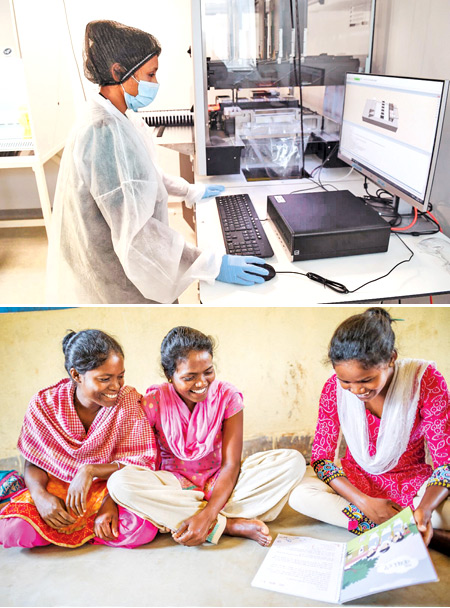
 During the first wave, women were severely affected. In September 2020, UNDP estimated that the pandemic will see a three percent rise in the female poverty rate across the region, from 10 percent to 13 percent. In light of the second wave, this may well be an underestimate.

Not only has the pandemic affected the regional economy of South Asia, its impact will see women worse off than before. The governments of South Asia need to act much more decisively than they did in the first wave, or decades of progress on gender equality and women’s empowerment will be lost. Lessons from the havoc caused by haphazard policy responses in the past need to be learned and appropriate actions need to be taken this time.

During the first wave, The Asia Foundation analysed many of the policy responses in Bangladesh, India, Nepal and Pakistan. Despite evidence of the unequal impact the pandemic has had on women compared to men, policy responses were not designed to take this into account. For example, access to social protection was generally made available to those who lost their jobs in the formal labour market. Since women comprise the majority of informal labour market workers, many were left out in the cold. Emergency measures for individuals and businesses (such as subsidies or tax relief) have been harder for women to obtain.

Already vulnerable due to insecure employment, many women in informal work or the ‘gig economy’ were the first to lose their jobs or see their wages cut as the pandemic progressed. Social protection programmes’ outreach to women has been woefully inadequate, with most vulnerable workers falling through the cracks. According to a 36-year-old worker in Muzaffargarh, Pakistan, who participated in our study, women in her region “… never received any help from Ehsaas (the government’s social protection programme)”. She said: “I strongly believe that the government has failed completely in helping females working in the informal sector.”

Women-led small and medium-sized enterprises (SMEs) have faced similar challenges. In Bangladesh, the study found that during the lockdown between March and May 2020, more than 50 percent of women-owned SMEs had to reduce their business activity, and 17 percent closed completely. Yet only five percent of the government’s loans were reserved for women entrepreneurs.

Much more needs to be done to restructure these programmes to make them accessible to women, and to inform women that the support is available.

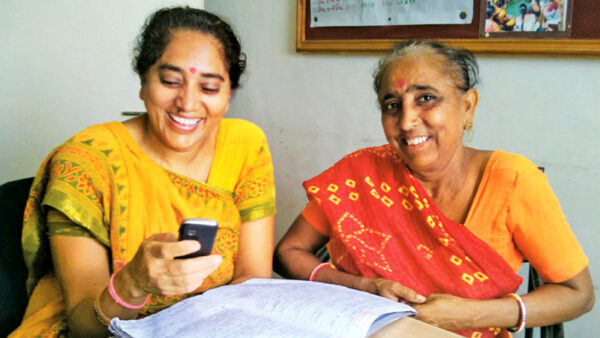
Throughout the region, governments have relied heavily on digital platforms to communicate information on policies and programmes to citizens, yet the region has the widest digital gender divide in the world. South Asian women are 28 percent less likely to own a mobile phone than men.

Communication strategies that rely solely on digital platforms, therefore, exclude women. While Nepal’s Government was quick to offer stimulus packages, weak outreach left most women without information or access to the benefits. Similarly in Pakistan, women’s lack of digital literacy and access to technology prevented them from accessing government programmes, including a nutrition programme designed specifically for them.

Women’s unequal access to digital technology needs to be addressed proactively now, so that they will be better able to adapt and rebuild their livelihoods after the pandemic ends. Since future workforce development programmes should focus on helping women informal sector workers develop new skills, and given that the platforms for the delivery of retraining programmes will likely be online, the digital divide needs to be overcome so that those opportunities will be available to women.

Ultimately, rising gender inequalities can only be reduced if key structural inequalities are addressed. Perhaps it is time to recognise that the distinction between formal and informal labour is out of date and exclusionary. ‘Employment’ should be redefined to include both formal and informal jobs, including ‘gigs’. In India, female gig workers in the beauty service sector experienced a 50 to 100 percent reduction in demand for their services in the first wave of COVID-19, yet they are not considered to be formally employed and therefore missed out on the help available for those categorised as jobless.

The burden of unpaid labour women bear also must be addressed. One of the key factors holding women back from full participation in economic, political, social and cultural life in South Asia is the vastly unequal distribution of unpaid household labour. This has become worse during the pandemic, with school closures and movement restrictions. For example, in India household responsibilities for women increased by 30 percent during the first year of the pandemic, while in Nepal women continue to carry out 80 percent of household work. Unless inequalities at home are addressed, it will make little sense to talk about supporting women to return to work after COVID-19.

The Foundation’s study suggests that while Governments can consider adopting some fairly straightforward measures now to prevent greater inequity in the future, bold responses will be needed to address the fundamental causes of gender inequalities. As countries grapple with how to help their economies and labour force recover after COVID-19, rebuilding South Asia’s economies to be gender equitable is the only way for them to return to normal, and become better.

(This article is part of a collaborative series with The Asia Foundation.)
 

TAGGED:Covid 19
Share This Article
Facebook Whatsapp Whatsapp LinkedIn Email Copy Link Print
Previous Article Traditional rice harvesting in South Asia The future of agriculture in Sri Lanka-by Nadira Gunatilleke
Next Article Watch England v Sri Lanka ODI Cricket Highlights June 2021
FacebookLike
YoutubeSubscribe
LinkedInFollow
eLanka Wedding
- Advertisement -
Ad image
Most Read

FIBA 3×3 World summit awaits the Gangurrus

Bingxue 1

Bingxue Sri Lanka Opens Its First Outlet in Dehiwala

Agnii Eatery Bar, Agnii Windsor, Agnii Chapel Street, Sri Lankan restaurant Melbourne, modern Sri Lankan cuisine Australia, Chef Gayan Pieris, Gayan Pieris Melbourne chef, Many Little Bar & Dining Red Hill Many Little Bar & Dining, Sri Lankan fine dining Melbourne, Chapel Street restaurants Windsor, new restaurants Melbourne 2026, Sri Lankan fusion food Australia, kussiya kitchen concept, open kitchen dining Melbourne, Mornington Peninsula dining, Red Hill winery restaurant chef, Australian Sri Lankan chefs, Melbourne food news 2026, Concrete Playground food news, Windsor dining precinct

Coming Soon: Chef Gayan Pieris Brings Contemporary Sri Lankan Flavours to Chapel Street with ‘Agnii’

Sri Lankan cuisine Melbourne, Agnii Windsor Melbourne, Chef Gayan Pieris, Many Little restaurant, Sri Lankan restaurant Melbourne, Melbourne food scene 2026, Sri Lankan food Australia, Chapel Street restaurants, Windsor dining Melbourne, Sri Lankan culinary revolution, hoppers Melbourne, kottu roti Melbourne, authentic Sri Lankan food, fire-driven hearth cooking, wood-fired Sri Lankan cuisine, Sri Lankan expat community Melbourne, Colombo street food Melbourne, regional Sri Lankan recipes, Melbourne multicultural food, The Havelock Place Canterbury, Dutch Rules Distilling Co Mitcham, Pearl By P&D Dandenong South, Sri Lankan restaurants Australia, Melbourne foodie guide, Sri Lankan curry Melbourne, Sri Lankan chefs Australia, Australian Sri Lankan culture, Melbourne dining destinations, contemporary Sri Lankan cuisine, Sri Lankan street food Australia, hopper brunch Melbourne, Good Food Guide chefs, Melbourne restaurant openings 2026, Agnii restaurant opening, Sri Lankan heritage cuisine, Sri Lankan flavours Melbourne, luxury Sri Lankan dining, Chapel Street food culture, Sri Lankan food trends Australia, eLanka food news

Melbourne’s Sri Lankan Food Revolution: Hatted Chef Gayan Pieris Fires Up ‘Agnii’ in Windsor

Written in the Stars, Sri Lankan community Melbourne, Sri Lankan Australian film, Menik Gooneratne, Su Dharmapala, The Wedding Season novel, Melbourne romantic comedy, Sri Lankan diaspora Australia, Australian Sri Lankan cinema, Nikesh Patel, Saagar Shaikh, Fawzia Mirza, Screen Australia, Telefilm Canada, Sri Lankan culture in Australia, multicultural Australian films, Sri Lankan weddings, Vedic astrology romance, Sri Lankan actress Australia, Melbourne film production, Sri Lankan heritage stories, eLanka news, Sri Lankan Australians, immigrant stories Australia, diversity in Australian cinema, Asian Pacific representation, Sri Lankan romance film, Melbourne arts community, Sri Lankan entertainment news, diaspora storytelling, Blue Fox Entertainment, Maslow Entertainment, Sri Lankan creatives, Sri Lankan identity in film, Australian multicultural storytelling, women-led film production, Sri Lankan community events Melbourne, cultural representation in cinema, eLanka Australia, Sri Lankan success stories

Melbourne Rom-Com About Sri Lankan Community “Written in the Stars” Heads to the Big Screen

Related News
Articles

OPALS VS CHINA | MELBOURNE 2026

NISHAN VELUPILLAY IMAGES. COURTESY ALEAGUES
Articles Lawrence Machado

Socceroo Nishan Vellupillay Eyes World Cup Debut

Escape-to-Baththalangunduwa-300x190 (1)
Articles

Escape to Baththalangunduwa: Sri Lanka’s Hidden Island Paradise

Asian Gym for Life Challenge 2026 , Indonesia Gymnastics. , Master Ahamadh Ayaan , Sri Lanka Gymnastics , Trinity College Kandy
Articles

Master Ahamadh Ayaan to Represent Sri Lanka at the 1st Asian Gym for Life Challenge 2026 in Indonesia

Sri Lanka cricket 2016, Australia tour of Sri Lanka, Warne-Muralitharan Trophy, Sri Lanka vs Australia Test series, Rangana Herath, Kusal Mendis, Lakshan Sandakan, Dilruwan Perera, Dhananjaya de Silva, Sri Lanka whitewash Australia, Sri Lanka cricket victories, historic cricket series, Sri Lankan cricket legends, Galle International Stadium, Pallekele International Cricket Stadium, SSC Colombo Test, Sri Lankan diaspora cricket, Test cricket classics, Sri Lanka sporting history, Sri Lankan pride, Australian cricket team 2016, Sri Lanka cricket memories, cricket nostalgia, Asian cricket dominance, spin bowling masterclass, Sri Lanka cricket fans, iconic Sri Lanka cricket moments, Sri Lanka vs Australia rivalry, Sri Lanka Test triumph, Sri Lankan sporting excellence, cricket in Sri Lanka, Herath 13 wickets SSC, Kusal Mendis breakthrough innings, Sri Lanka cricket retrospective, cricket history article, eLanka cricket feature, Sri Lankan community worldwide, cricket celebrations, Sri Lankan sports news, international cricket tours, cricket legends of Sri Lanka, Test match domination, Sri Lanka cricket heritage, world number one Australia, cricketing milestones, Sri Lankan excellence, cricket memories for diaspora, classic Test cricket, Sri Lanka sports achievements, eLanka sports articles
Articles

Rewind to Glory: Reliving the Historic 2016 Australia Tour of Sri Lanka!

  • Quick Links:
  • Articles
  • DESMOND KELLY
  • Dr Harold Gunatillake
  • English Videos
  • Sri Lanka
  • Sinhala Videos
  • eLanka Newsletters
  • Obituaries
  • Sunil Thenabadu
  • Dr. Harold Gunatillake
  • Tamil Videos
  • Sinhala Movies
  • Trevine Rodrigo
  • eLanka Newsletter
  • Photos

eLanka

Your Trusted Source for News & Community Stories: Stay connected with reliable updates, inspiring features, and breaking news. From politics and technology to culture, lifestyle, and events, eLanka brings you stories that matter — keeping you informed, engaged, and connected 24/7.
Kerrie road, Oatlands , NSW 2117 , Australia.
Email : info@eLanka.com.au / rasangivjes@gmail.com.
WhatsApp : +61402905275 / +94775882546
  • About eLanka
  • Terms & Conditions

Disclaimer:
eLanka is committed to sharing positive and community-focused stories. We do not publish or endorse political, religious, or ethnic viewpoints. The content published on eLanka, including articles and newsletters, reflects the opinions and views of the respective authors and not those of eLanka. eLanka accepts no responsibility or liability for the accuracy, completeness, or consequences of any content provided by contributors.

(c) 2005 – 2025 eLanka Pty Ltd. All Rights Reserved.