



Cyclone Ditwah leaves an indelible mark in Sri Lanka – By Arundathie Abeysinghe

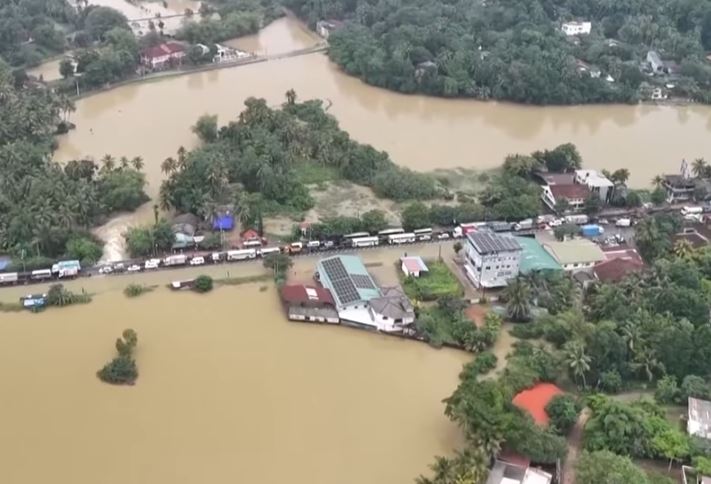
Over 2.3 million Sri Lankans, approximately 50% of them women living in areas flooded by Cyclone Ditwah which struck Sri Lanka on November 28, inundated over 1.1 million hectares, almost 20 percent of the land area and caused significant damage to homes, infrastructure and essential services. Approximately 1.2 million women, 522,000 children and 263,000 elderly were affected placing heavy pressure on essential services. Termed as “one of the worst flooding disasters to hit Sri Lanka in decades,” struck regions and sectors already destabilized by the worst economic crisis during the post-independence era.” Currently, many sectors bear the brunt of the cyclone, while health authorities are facing a massive challenge in preventing spoiled and unsafe food from reaching markets, whilst, 143 kilometres of Sri Lanka’s coastline is polluted following severe flooding and paddy lands have also been devastated.
Scholars are of the view that the cyclone has generated economic losses estimated between three and five per cent of the country’s Gross Domestic Product (GDP) with implications of post-crisis recovery. The government has estimated losses between US$6-7 billion. The cyclone has exposed Sri Lanka’s infrastructure weaknesses, gaps in disaster preparedness as well as persistent social inequalities.
A current major issue in the country is rotten food, especially, rotten rice and meat entering the market as over 3 million livestock is estimated to have died during the disaster, while stocks of rice spoilt due to flood waters have also entered the market.
Senior academics Sampath Alwis, Pradeepa Gunathilake and Shirantha Dissanayaka explained that “livestock farms in several districts were washed away and poultry have died. Many individuals are attempting to sell meat obtained from dead animals to unsuspecting customers. Similarly, over contaminated meat, crops, vegetables, grain stocks, rice, and other food supplies exposed to floodwaters are also currently circulating in markets. Many of them have been repacked, processed and sold posing a serious threat to public health. Last weekend, Public Health Inspectors (PHIs) uncovered an illegal operation involving the processing and distribution of flood-damaged rice unfit for consumption in Harispattuwa, Kandy. During the raid, officers seized 1,000 kilograms of contaminated rice. The role of the public is pivotal in reporting suspicious food outlets or products.”
According to senior officials of Marine Environment Protection Authority (MEPA), 143 kilometres of Sri Lanka’s coastline has been polluted following severe flooding triggered by Cyclone Ditwah causing significant environmental damage along the coast, and restoring the affected areas is expected to require 5,280 man-hours with the most affected regions including the coastal belts of Colombo, Negombo, Chilaw, Puttalam, Kalpitiya, and several areas in the Eastern Province. Debris, waste, and personal belongings washed away during floods and landslides across the country carried through river systems have deposited along the coastline. Garbage from the Indian coastline have also deposited on the country’s shores, further worsening the pollution and MEPA is mobilizing a hired workforce, with operations expected to last over three weeks.”
According to Crop Science academics Oshantha Rathnayaka and Senarath Chandrasekara “as 20 per cent of paddy fields have been destroyed due to floods, initially, the paddy fields need to be cleaned before cultivation. This could take about two weeks to remove them of sand and silt. It would be advisable to cultivate the 3-month paddy seed varieties which can be obtained from farmers in areas not affected by floods as the Department of Agriculture will not be able to provide the required paddy seeds. Authorities need to provide adequate fertiliser to the farmers to carry out re-cultivation as they would have already used fertiliser which they purchased initially.”