Deified and Damned: Cricket, Faith and the Mob-by K.K.S Perera
“Cricket a Religion”; A Dangerous Delusion
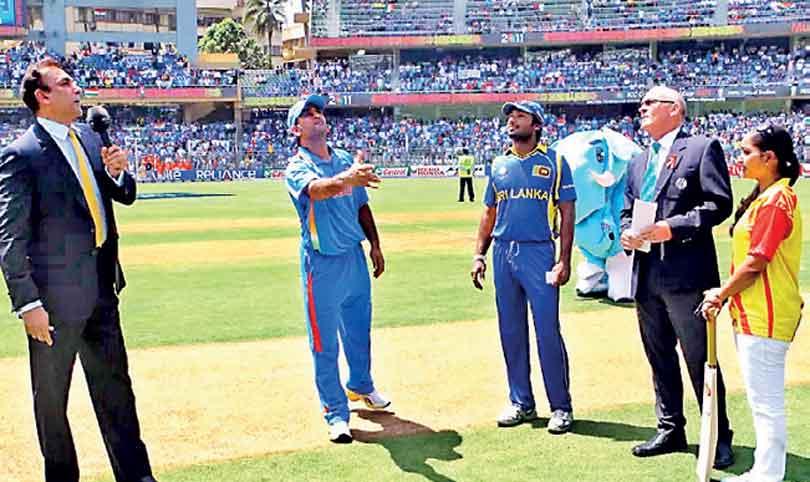
Players are worshipped as gods in victory but threatened and harassed in defeat
Source:Dailymirror
Compounding all of this is the sorry state of cricket’s administration in Sri Lanka. Sri Lanka Cricket [SLC] has long functioned less as a cricket board than as a political machine

“We are not sure exactly why, but cricket is like a religion here.” So wrote W. Lewis Amselem, Chargé d’Affaires of the US Embassy in Colombo, in a cable to Washington on September 13, 2002, logged in the WikiLeaks database. The observation was made in passing, almost as an aside, yet it captured something profound about the subcontinent’s relationship with a bat-and-ball game that has long ceased to be merely a sport.
Religion, at its core, is a system of beliefs, practices, and moral codes centred on the sacred, divine, or supernatural, through which people seek meaning, purpose, and connection to something greater than themselves. Cricket, by any honest definition, is a sport. Yet in much of South Asia, it has dangerously assumed the character of a religion, and the consequences are deeply damaging.
Cricket’s Fanaticism Exposed
Compounding all of this is the sorry state of cricket’s administration in Sri Lanka. Sri Lanka Cricket[SLC] has long functioned less as a cricket board than as a political machine. At the centre of its alleged corruption is the formation of fictitious, non-cricket-playing clubs whose sole purpose is to manufacture votes, electing and re-electing favoured office bearers who reward their backers with generous financial inducements. Observers say that these operators shrewdly cultivate influential politicians, ensuring those in authority look the other way while the manipulation continues. Genuine cricket lovers of proven ability have been repeatedly out-manoeuvred at elections, defeated not on merit but by the organised votes of bookmakers and businessmen who see cricket not as a sport to be nurtured, but as a platform to be exploited. That such people govern the sport that once united a war-torn nation is not merely corrupt, it is a profound betrayal of everything Sri Lankan cricket once stood for.
Mob violence and communal tensions erupt after defeats, particularly in contests like India vs Pakistan, turning sporting events into social flashpoints. Players are worshipped as gods in victory but threatened and harassed in defeat, crushed under the weight of impossible expectations. Corruption and match-fixing thrive precisely because blind devotion overrides rational judgment. Unlike true religion, this intensity carries no moral framework; it is raw, unchecked passion that reduces grown nations to emotional dependency on a game.
India’s cricketing history is stained with shameful episodes that lay bare this folly. Players have had their homes vandalised and properties destroyed by rampaging fans after defeats. Effigies have been burned in the streets, families threatened, and reputations demolished, not by enemies, but by the very fans who cheered them the day before. Ajith Wadekar, Mohammad Azharuddin, Sourav Ganguly, Dhoni, and even the great Sachin Tendulkar have faced the ugly wrath of a fandom incapable of distinguishing human limitation from personal betrayal.
The cruelest irony is this; unlike true gods, who remain divine regardless of circumstance, cricketers are granted godhood purely on condition of performance. The moment a player falls below expectation, the worshipping crowd turns on him with venom, reducing him overnight from deity to devil. And yet, many fans proudly defend this fanaticism, arguing that because cricket is their religion, players must never disappoint their devotees. No religion worthy of the name, however, teaches its devotees to mock, boo, or persecute its gods when they fail to meet expectations.
Interestingly, Indian fans appear to have matured considerably in recent years, while Sri Lankan fans seem to have inherited the very worst of what their neighbours left behind. Every faith, without exception, counsels patience, humility, and reverence, virtues that our fanatics, it would seem, have yet to discover. Yet the self-appointed worshippers at cricket’s altar operate by an entirely different code, one of conditional devotion, instant fury, and breathtaking hypocrisy. The fault lies not with the players, but with a culture too proud to acknowledge the absurdity of the religion it invented.
The Church of Cricket: Devotion, Delusion and Damage
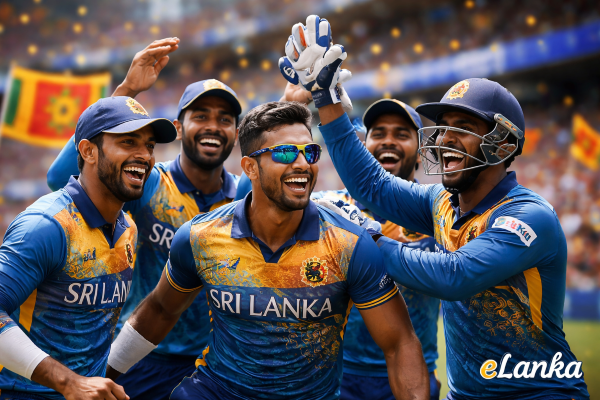
Yet cricket’s power to unite is equally undeniable, and nowhere was this more movingly demonstrated than in Sri Lanka during the 1990s. While the civil war tore the nation apart along lines of ethnicity, language, and religion, cricket cut across every one of those fault lines. In a country where almost nothing else could unite a Sinhalese from Kandy, a Tamil from Jaffna, and a Muslim from Galle, eleven men in blue and yellow somehow managed to do exactly that. It was even said that LTTE cadres set aside their arms to watch Sri Lanka play, a testament to the extraordinary, almost inexplicable reach of the game.
The pinnacle came in 1996, when Sri Lanka, a small island in the midst of a devastating civil war, defeated the mighty Australians to win its first ODI World Cup title. People poured into the streets from Colombo to Galle, from Kandy to Dambulla, celebrating as one people, if only briefly. Players like Sanath Jayasuriya, Roshan Mahanama, Aravinda de Silva, Mahela Jayawardene, Kumar Sangakkara, ChamindaVaas, Kumar Dharmasena, and Muttiah Muralitharan enjoyed near-godlike status during those years. They were not merely cricketers, they were national symbols of pride, excellence, and hope in a deeply troubled era. Perhaps nothing illustrated cricket’s unifying power more eloquently than Muralitharan, a Tamil revered across the entire nation as its greatest cricketing hero at a time when his community and the state were at war. That speaks not to politics or diplomacy, but to the quiet, remarkable power of cricket to reach where reason could not.
Of Gods and Googlies
There is, however, a telling contrast between how cricket is experienced in the West or Downunder, and how it is consumed in South Asia. Friends in Australia, New Zealand, and England describe a refreshingly straightforward relationship with the game, they watch the match, cheer for their side, and return home. Win or lose, life goes on. There are no death threats, no effigies burned in the street, no families terrorised. When these same friends learn that in South Asia players are deified, families threatened after losses, and mobs unleashed in fury after defeats, they are genuinely baffled.
They laugh, not unkindly, but with the bewildered amusement of people observing something beyond their comprehension. In their laughter lies an uncomfortable truth: what we proudly call passion, they quite reasonably call primitiveness. And it is difficult to argue with them.
The fans who dissolve into hysteria at every defeat would do well to pause and reflect on one inconvenient truth: the players never asked to be their gods. It was the fans themselves who chanted the hymns and declared the sport a sacred faith. So, when their deity bungles a drive or drops a catch, they should at least have the decency to acknowledge who is truly responsible for their misery. The folly was entirely their own, and the tragedy is that fanatics are far too frantic to notice.