




‘Experienced’ vs. ‘inexperienced’ politicians: ‘Ditwah’ and the Bankruptcy of All Political Leadership – By KKS Perera
Source : dailymirror
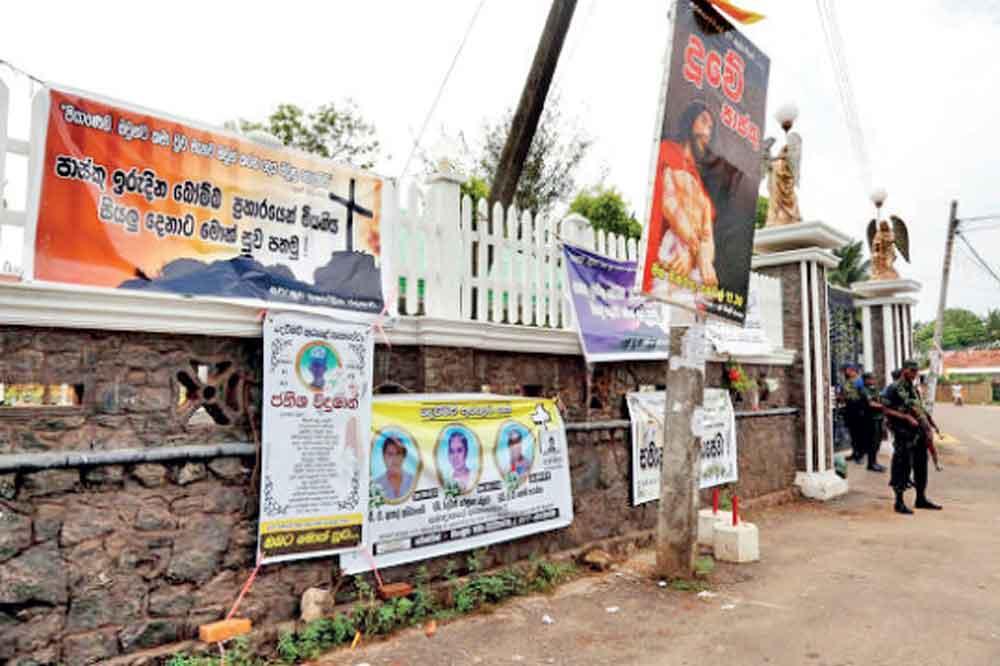
‘Experienced’ politicians were in power when the Easter bombings occurred despite warnings
 Sri Lanka’s worst flood disaster in a decade has exposed an uncomfortable truth that transcends any single administration: the catastrophic impact of Cyclone Ditwah reveals not merely the current government’s inability to protect its people, but the bankruptcy of an entire political class that has systematically failed the nation through decades of mismanagement and negligence.
The scale of devastation is staggering. More than 2.4 million people across 22 districts have been affected, with the confirmed death toll at 618 and two hundred still missing. Nearly 233,000 people remain in approximately 1,441 active shelters, representing nearly 10 percent of the country’s population directly impacted. Officials estimate the reconstruction bill could reach $7 billion, devastating for a nation that only recently completed historic debt restructuring. The UN reports that 575,000 hectares of paddy have been destroyed out of approximately 780,000 hectares nationwide, threatening food security for months ahead. [Deputy minister of Agriculture says its 3.1mn hectares!]
Warnings Ignored, Opportunities Squandered
What makes this disaster particularly damning is that it did not arrive without warning. The Indian Meteorological Department shared information about Cyclone Ditwah with Sri Lankan authorities as early as November 13, with alerts for possible cyclogenesis issued on November 20 and regular updates from November 23 onwards. While meteorological agencies cannot issue precise warnings two weeks in advance, officials had several days of increasingly specific warnings about the approaching threat.
Yet the response revealed systemic failures at every level. The Sri Lanka Meteorology Department issued general rain and flood alerts from November 24, but these lacked the necessary urgency and specificity. More troublingly, crucial warnings were often issued only in Sinhala and sometimes English, leaving Tamil-speaking communities with an unconscionable information gap. A lack of translators at the Disaster Management Centre hampered cyclone-related communications in Tamil at the national level.
The government’s operational failures compounded the communication breakdown. One heavily criticized decision was declaring a public sector holiday on Friday, November 28, as severe weather intensified. Affected residents reported that officials were at home on holiday when emergency support was desperately needed. A state of emergency was declared on November 29, but only after the storm had already wreaked immense damage across the country. The Opposition has seized upon these failures as evidence of the JVP-NPP government’s inexperience in governance. This argument contains some truth. President Anura Kumara Dissanayake himself acknowledged that Cyclone Ditwah exposed long-standing weaknesses in disaster preparedness and response mechanisms.
But this critique rings hollow when examined against the track record of those making it. The same Opposition figures now pointing fingers at inexperience were themselves in power during one of the most catastrophic intelligence failures in Sri Lankan history. As members of the dysfunctional Yahapalana government from 2015 to 2020, they failed to act on repeated, specific warnings about an imminent series of terror attacks. The Easter Sunday bombings in 2019 killed over 250 people, a massacre that could have been prevented if the so-called experienced politicians had heeded the actionable intelligence placed before them.
This reveals a deeper pathology in Sri Lankan governance. Political experience corrupts just as readily as power itself. The prevalence of corruption under the watch of these experienced leaders created the very conditions that brought inexperienced politicians to power. The people did not choose political novices out of naive idealism; they chose them out of desperate exhaustion with a political establishment that had proven itself thoroughly corrupted.
A Vicious Cycle of Failed Leadership
The trajectory of Sri Lankan politics over the past decade reads like a case study in governmental failure. The rapid ascent of inexperienced politicians can be traced directly to the people’s desperation to end President Mahinda Rajapaksa’s rule, which had become synonymous with corruption, nepotism, and abuse of power.
But the country paid a devastating price for electing Sirisena as President in 2015. This mediocre politician neglected national security to such an extent that the entire National Security Council apparatus effectively ceased to function. Intelligence agencies gathered specific, actionable information about the Easter Sunday terror attacks, but this information went unheeded because President Sirisena had so thoroughly undermined the very institutions responsible for protecting the nation. The chaos of the Yahapalana years then opened the door for Gotabaya Rajapaksa, a man with no political governance experience. His lack of experience, combined with an obstinate refusal to accept advice, almost destroyed the economy.
This cascade of failures created the conditions for the current government’s rise to power. The JVP-NPP won not because of proven competence or extensive experience, but because every alternative had been thoroughly discredited. They are inexperienced precisely because the experienced politicians had so corrupted the system that voters were willing to try anyone untainted by it.To be fair, Cyclone Ditwah would have tested any government. The cyclone was classified as only the second weakest of four cyclone categories, yet it brought unprecedented rainfall of 400 mm in 24 hours over three consecutive days. Sri Lanka lacks the elaborate evacuation mechanisms that countries like India have developed through decades of experience with regular cyclones.
These factors provide context but not absolution. Even accounting for the inherent difficulty, basic competence demanded better. Warnings were available. Resources could have been pre-positioned. Communications could have been issued in all languages. President Dissanayake has indicated that disaster management systems are now under review, including the creation of a National Disaster Management Authority with enhanced resources and decision-making power. Whether these reforms will materialise and prove effective when the next disaster strikes remain to be seen.
Unity Over Recrimination
The most urgent need now is not to assign blame but to accomplish the monumental task of relief and reconstruction. Destroyed infrastructure must be rebuilt. Thousands of displaced families need permanent housing solutions. Disease outbreaks must be prevented through restoration of sanitation and clean water systems. Entire communities require reconstruction from the ground up.
This is no time for political theatre. The need of the hour is for self-proclaimed experienced opposition politicians and admittedly inexperienced government leaders to sink their political differences and join forces in service of the people who are suffering. Political battles and investigations into alleged lapses can wait. Right now, the only thing that matters is providing relief to disaster victims and helping rebuild their shattered lives.
The Opposition’s criticism may help shape future responses, as President Dissanayake has suggested, but only if offered constructively rather than as political point-scoring. Similarly, the government must abandon any defensiveness and accept help from whatever quarter it comes, even from political opponents. The magnitude of this disaster dwarfs any political consideration.
The Lesson in Blood and Water
If there is any silver lining to be found in this catastrophe, it is that it has finally exposed the bankruptcy of the old way of doing politics. The myth that political experience automatically translates to competent governance has been thoroughly exploded. The experienced politicians failed just as catastrophically as the inexperienced ones. The reconstruction ahead will be the truest test of governance Sri Lanka has faced this century. The country does not need more animated speeches in Parliament about how previous governments failed. It needs competent administration, transparent decision-making, and leadership that places public welfare above political advantage.
The time for excuses has passed. The time for blame games has passed. The victims of Cyclone Ditwah deserve nothing less than the full, united, competent response of their entire government, regardless of party or political affiliation. Anything less is a betrayal of the most fundamental obligation any government owes its people: to protect them when they are most vulnerable.
kksperera1@gmail.com