Night of the Divine
Source:Dailynews
The Hindu festival of Maha Shivaratri (Literally the “Great Night of Lord Shiva” in Sanskrit and many other Asian languages) is observed with much fervour by Hindus across Sri Lanka, India, Nepal and many other countries.
Among all the 12 Shivaratris that occur in a calendar year, Maha Shivaratri, the one that occurs in February/March is of the most spiritual significance. Maha Shivaratri, which is being celebrated today, falls once a year during the months of February and March. However, Shivaratri falls on the 14th day of each month of the lunar calendar. Maha Shivaratri is celebrated in various forms depending on the perspective.
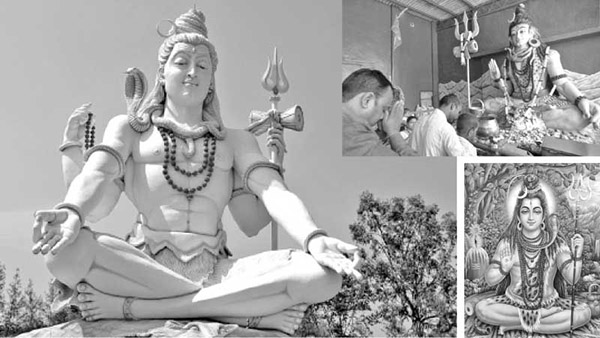
 Shiva, (Sanskrit: “Auspicious One”) also spelt Siwa or Siva, is one of the main deities of Hinduism, whom Hindus worship as the Supreme God. Among his common epithets are Shambhu (Benign), Shankara (Beneficent), Mahesha (Great Lord), and Mahadeva (Great God). Shiva is represented in a variety of forms: in a pacific mood with his consort Parvati and son Skanda, as the cosmic dancer (Nataraja), as a yogi, accompanied by a dog (Bhairava), and as the androgynous union of Shiva and his consort in one body, half-male and half-female (Ardhanarishvara). He is both the great ascetic and the master of fertility, and he is the master of both poison and medicine, through his ambivalent power over snakes.
Shiva is usually depicted in painting and sculpture as white (from the ashes of corpses that are smeared on his body) with a blue neck (from holding in his throat the poison that emerged at the churning of the cosmic ocean, which threatened to destroy the world), his hair arranged in a coil of matted locks (jatamakuta) and adorned with the crescent moon and the Ganges (according to legend, he brought the Ganges River to earth from the sky, where she is the Milky Way, by allowing the river to trickle through his hair, thus breaking her fall).
History
Maha Shivaratri is one of the major festivals in Hinduism dedicated to Lord Shiva. It is also known as ‘Padmarajarathri’ in India. As per the Hindu calendar, Maha Shivaratri is celebrated on the new moon day in the month of Maagha. On this day, devotees worship Lord Shiva, observe a strict fast, and engage in various religious activities to please Lord Shiva. Devotees further believe that by pleasing Lord Shankara on the auspicious Shivaratri day, a person is absolved of past sins and is blessed with Moksha or Salvation.
Maha Shivaratri celebrations are associated with several stories about Lord Shiva who is also known as ‘The Destroyer’ within the Hindu Trinity.
Generally, Maha Shivaratri is celebrated as the anniversary of the union of Lord Shiva and Goddess Parvati, but there are many other stories in various texts and scriptures describing why Maha Shivaratri is celebrated. It is said that after the death of Sati, Lord Shiva went into deep meditation. Sati reincarnated as Parvati to become the consort of Lord Shiva. Hence, Maha Shivaratri marks the union of Shiva and Parvati on the 14th day of the dark fortnight in the month of Phalguna.
According to Indian Purana (ancient) texts, Shivaratri is celebrated as the day Shiva saved the world from the pot of poison that emerged during the great mythical churning of the ocean by Devas and Asuras called Samudra Manthan. (The next time you go to the Swarnabhoomi Airport in Bangkok, check out the massive sculpture depicting this event).
Yet another story goes on to say that Shivaratri marks the day Brahma and Vishnu got involved in an argument about their supremacy. It is believed that the angry Lord Shiva punished them by taking the form of a massive fire that spread across the length of the universe. Vishnu and Brahma then got into the race to find the end of the fire and prove their prowess. However, Brahma is believed to have resorted to a lie, and angered Shiva greatly who cursed that no one would ever pray to him.
In the Shivaism tradition, this is the night when Shiva performed the glorious dance of creation.
Significance
On this day, followers of Lord Shiva observe the special Maha Shivaratri vrat (fast). Devotees throng Kovils across the country, perform late evening pujas, offer milk to the Shivalingam and also pray for Moksha (Emancipation). Many spend the night chanting verses and hymns in praise of Lord Shiva. Women also pray to be blessed with a good husband and a happy married life. Some temples organise fairs and other cultural programmes on this day.
In India, Shivaratri has a great significance for the Kumbh Mela. The festival marks the end of the mega holy event which is celebrated every 12 years. It is believed that the people who fast on this day and offer prayers to Lord Shiva are blessed with good luck. The most popular Maha Shivaratri celebrations take place in Ujjain, India, which is believed to be the most sacred abode of Lord Shiva. Large processions are carried out throughout the city, with people thronging the streets to catch a glimpse of the revered idol of Lord Shiva.
 Devotees of Shiva stay awake the entire night on this auspicious night of Shivaratri. Some perform poojas, chant Vedic mantras or Rudram, practice sadhana and meditation. These sacred practices bestow a sense of peace within us and oneness with the world.
It is believed that whoever worships Lord Shiva on this day receives the grace of the Lord and attains Salvation. Fasting on this day can equal the benefits of a whole year’s rigorous prayer. The scriptures quote Lord Shiva as promising that whoever worships Him, and fasts on Maha Shivaratri will be dearer to him than his own son Kartikeya.
On the occasion of Maha Shivaratri, devotees observe a day-long fast and worship Lord Shiva with great ardour. The Maha Shivaratri fast begins on the morning of the festival and ends the following morning. Fasting rules are the same for all Shivaratris, including the Maha Shivaratri. So, are you all set to soak deep in Bliss by fasting and praying on the auspicious occasion of Maha Shivaratri?
Here are a few fasting tips to help you stay healthy, hydrated, detoxified, and rejuvenated: physically and spiritually.
1. Prepare yourself mentally
Since you are observing a fast towards a sacred and pure cause, staying happy, calm and prayerful will help you sail smoothly through the day. Be stress-free and happy, so you can feel energetic and keep your prakruti (innate nature) in balance – this will help you maintain your fast more easily.
2. Keep yourself well hydrated
Drink at least eight glasses of water while you are fasting to purify your body – it will help wash away toxins and waste. If you are fasting on water alone, increase the amount of water to match your body’s requirements. This will also help you stay energized and avoid getting tired and hungry. However if your pitta (acidity) levels are too high, it would be better to follow a light diet along with water since this body type tends to release toxins too quickly.
3. Avoid heavy or strenuous physical activity
While you are fasting, it would best to avoid a heavy workout or any physically challenging work or activity to maintain your rate of metabolism and stay active all day. Instead, choose more sedentary pastimes such as working at your desk, reading spiritual books, listening to devotional music or, simply, meditating to rest your body and mind.
4. Choose liquids for detox
 Fasting with a variety of liquid foods is a healthier option for people who find it tough to go hungry, or have health issues to consider. For example, pregnant women, and people with diabetes, digestive issues, severe weakness and such ailments.
You could include juices, milk, milkshakes, herbal tea, yoghurt, or buttermilk in your diet to help you get through your fast successfully.
5. Eat light (if you must)
If you choose to include fruits and light meals to your fast, make sure the food is soft and in limited quantities. It would help to avoid raw, chewy foodstuff, or simply too much food or fruits. This is because the physical act of chewing sends a signal to the stomach to activate the digestive system and release digestive juices initiating hunger pangs.
Pulses, rice, wheat, and table salt may be replaced with potatoes, yams, fruits such as bananas, papaya, and melons in your Shivaratri fast. Use rock salt to maintain taste in your diet. Do check with an Ayurveda doctor to know if your body type is suitable for fasting or not.
Before you enter the fast, make sure you have small and frequent meals in preparation. When you are about to break your fast, ensure that you choose to eat small portions of easily-digestible food that is high in fibre and protein, and low in calories. These healthy fasting tips can enable you to cleanse yourself inside out. Your focus can then be on the crux of your fast – achieving a focused meditative state to, ultimately, be one with the Divine.