The Sacred Swarnamali Stupa and the Legend of Goddess Swarnamali – By Bhanuka – eLanka
The Ruwanwalisaya, also known as the Swarnamali Stupa, is one of the most revered monuments in Sri Lanka, standing majestically in the Sacred City of Anuradhapura. Built by King Dutugemunu in 137 BCE, the stupa is not only an architectural marvel but also a symbol of the island’s deep spiritual heritage. The Swarnamali Stupa has been venerated for centuries, with legends and stories adding layers of spiritual significance to its already sacred status.
The Swarnamali Stupa is celebrated for being enshrined with the largest portion of the Buddha’s sacred relics, making it one of the most important pilgrimage sites for Buddhists around the world. The name “Swarnamali” or “Ratnamali” signifies “sand of gems,” which is reflective of the large quantities of gold, pearls, silver, and other invaluable treasures contained within the stupa. These treasures are believed to symbolize the immeasurable spiritual wealth that the stupa holds.
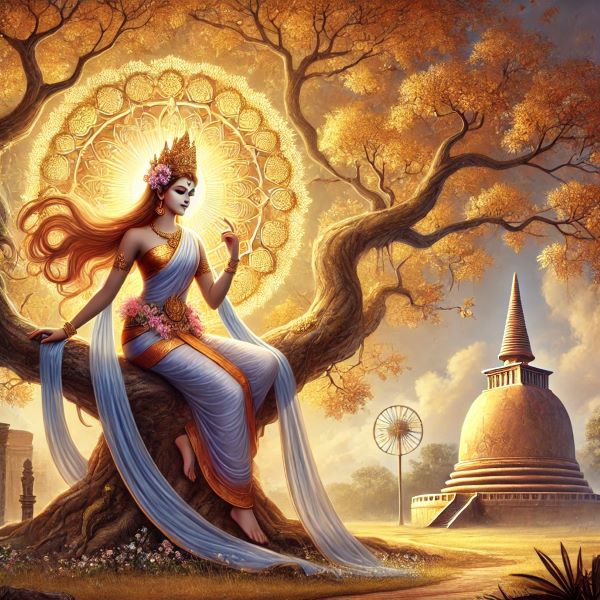
One of the most compelling legends associated with the Swarnamali Stupa is that of Goddess Swarnamali. According to folklore, a beautiful goddess named Swarnamali dwelled in a Ran Thelambu tree at the site where the stupa now stands. When King Dutugemunu decided to construct the stupa, the goddess agreed to vacate the site only after the king promised to name the stupa in her honor. This act of naming not only ensured the protection of the site by the goddess but also imbued the stupa with a divine presence, making it a focal point of veneration.
The architectural grandeur of the Swarnamali Stupa is a testament to the ancient Sri Lankan mastery of construction and devotion. Standing at 300 feet in height and with a diameter of 370 feet, it was the largest stupa in the ancient world. The stupa’s design, resembling a giant water bubble, reflects the Buddhist concept of impermanence, an essential tenet of the Buddha’s teachings. The structure’s golden spire, known as the koth kerella, shines brightly in the sunlight, symbolizing the ultimate truth of Nirvana, which stands above all worldly matters.
Entering the stupa’s compound through one of its four grand gates, visitors are greeted by intricately carved lion figures and a majestic Tusker Wall featuring 338 elephant figures. The inner compound, where the stupa is located, is paved with smooth granite slabs designed to channel rainwater, showcasing the thoughtful engineering behind the stupa’s construction. Surrounding the main stupa are four smaller dagabas, each facing a sub-direction, as if offering their own reverence to the sacred Swarnamali Stupa.
Inside the stupa, the relic chamber holds the sacred relics of the Buddha, which, according to ancient chronicles, include one-eighth of the Buddha’s whole-body relics. The stupa is also home to several statues of the Buddha, including a spectacular marble footprint adorned with 108 auspicious marks. The site is further sanctified by the presence of statues of King Dutugemunu, Queen Viharamahadevi, and other historical figures, who are depicted in acts of worship towards the stupa.
The spiritual significance of the Swarnamali Stupa is further highlighted by the many miracles associated with it. Ancient texts recount how the sacred relics of the Buddha, once enshrined within the stupa, assumed the appearance of the living Buddha and performed the miracle of emitting fire and water simultaneously. This miraculous event, known as the Yamaka Maha Pelahara, is said to occur at the end of 5,000 years of the Buddha’s era, after which the relics will rise to the sky and disappear, marking the culmination of the Buddhist dispensation.
Today, the Swarnamali Stupa stands as a beacon of purity and perfection, drawing countless devotees who seek solace in the Dhamma of the Lord Buddha. The site is not only a symbol of the Buddha’s teachings but also a reminder of the divine protection offered by Goddess Swarnamali, whose presence continues to be felt by those who visit this sacred monument. As Sri Lanka approaches the 2600th Sambuddha Jayanti, the significance of the Swarnamali Stupa remains as profound as ever, offering a connection to the spiritual legacy of the Buddha and the divine forces that protect it.
The connection between this sacred site and Sri Lankan culture is also reflected in the arts, particularly in music. One such tribute is the song “Obe Namin” by W. D. Amaradeva, a revered figure in Sri Lankan music. The song beautifully captures the reverence and devotion associated with Swarnamali. The lyrics speak of the divine presence of Goddess Swarnamali and the sanctity of the stupa, blending spiritual themes with cultural pride.
The connection between this sacred site and Sri Lankan culture is also reflected in the arts, particularly in music. One such tribute is the song “Obe Namin” by W. D. Amaradeva, a revered figure in Sri Lankan music. The song beautifully captures the reverence and devotion associated with Swarnamali. The lyrics speak of the divine presence of Goddess Swarnamali and the sanctity of the stupa, blending spiritual themes with cultural pride.