Where courage meets legacy as we celebrate International Women’s Day- By Sheyana La Brooy
‘From ancient queens to global trailblazers, Sri Lankan women lead across time and continents, shaping nations, uplifting communities, and inspiring change’.
As International Women’s Day is celebrated across the globe by the Sri Lankan diaspora, it is an opportunity to reflect on the long legacy of female leaders of Sri Lankan origin shaping the country and paving new paths for future generations of women across all spheres.
Eighth of March was formally proclaimed by the United Nations in 1977 as International Women’s Day (IWD) and this follows decades of several women’s rights movements across the world. Whilst we explore the legacy of a handful of female leaders from the Sri Lankan community over the centuries, there are many more unsung heroines. We should also be reminded of the essential need to recognise and champion the role of women in all areas of life, at home, as educators and guardians of cultural knowledge in communities, and across every profession.
Sri Lanka’s history has been shaped from ancient times by women’s leadership and service to the community. In 205BC, Viharamahadevi was Queen consort of King Kavantissa and mother of one of Sri Lanka’s greatest heroes King Dutugemunu. She was a Theravāda Buddhist devotee and respected for her legendary sea‑sacrifice undertaken to save her people, symbolising moral courage and national duty.
Queen Anula (47–42 BCE) was Sri Lanka’s first queen and has been cited as Asia’s first recorded female head of state. She led a challenging five-year reign in the Anuradhapura Kingdom and highlights the political power of women in ancient times. In 35 CE, Queen Seevali reigned briefly after succeeding her brother to the Anuradhapura throne and this demonstrates that women were already positioned in succession systems.
From 1197 Queen Lilavati ruled for three periods in the Polonnaruwa era to bring stable leadership during a crisis. Queen Kalyanavati ruled for approximately six years from 1202 and had a peaceful reign in Polonnaruwa, which reinforces the legitimacy and effectiveness of a female sovereign in antiquity.
Sri Lankan Buddhist female figures have also played a vital role as protectors of religion. Sri Lanka’s Buddhist heritage is inseparable from women whose devotion, resourcefulness and leadership shaped the island’s spiritual identity and its commitment to the protection of Buddhism for all of humanity. The story of Queen Anula Devi is one worth highlighting in the context of vision, the role of female leadership in the region, commitment to the preservation of culture and religion, and service to the global Buddhist community.
Prior to colonialism, Sri Lanka was revered as the island preserving the Buddha’s teachings, the Dharma. Sri Lanka continues to be the custodian of the Dharma and the sacred Sri Maha Bodhi, a sapling from the original Bodhi tree in Bodh Gaya under which the Buddha attained enlightenment. It is considered the oldest historically documented living tree in the world. This sapling was brought to Sri Lanka by Saṅghamittā Theri, daughter of Indian Emperor Asoka. She arrived in Sri Lanka together with several other nuns, to start Sri Lanka’s female Buddhist nun-lineage (Bhikkhunis), so that Queen Anula (also known as Anula Devi) could convert to Buddhism to lay the foundation for a female order of Buddhist nuns in Sri Lanka to spread the religion. Subsequently, when the original tree in India was destroyed, a sapling from that sacred Jaya Sri Mahabodhi in Sri Lanka was taken for replanting at Bodh Gaya. More recently, a sapling from Sri Lanka was also brought to Australia by devotees and planted at the Great Stupe of Universal Compassion in Bendigo, Victoria.
Sri Lanka has many modern trailblazers across politics, sport, business, performing arts and science. Sirimavo Bandaranaike became the world’s first female Prime Minister in 1960 and established the Ministry of Women and Child Affairs (1975). In 1994, her daughter, Chandrika Bandaranaike Kumaratunga became Sri Lanka’s first female President.
Today, Dr Harini Amarasuriya is serving as Sri Lanka’s Prime Minister. Yoshan Sithara Khan Azard when appointed to the State of Qatar in 2025, became the first Muslim woman Ambassador-Designate of Sri Lanka, and Yasoja Gunasekera is now serving as High Commissioner-designate of Sri Lanka in Australia.
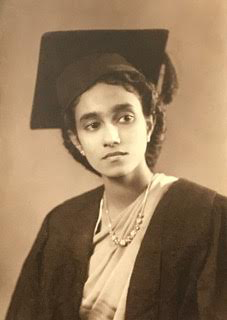
Women have pushed boundaries across many fields, with pioneer Deshamanya Vajira Chitrasena becoming Sri Lanka’s first prima ballerina and the first Sri Lankan woman to practise the traditional Kandyan dance, which was traditionally performed only by men. Dr Gladys Jayewardene was the first woman to be awarded a PhD in Parasitology from the University of London, she was an academic, the first female Director of the Medical Research Institute, and Chairman of the State Pharmaceutical Corporation when local production of oral hydration formula Jeevani in Sri Lanka commenced to build local capacity and ensure supply. Her last selfless and courageous act before being assassinated for it in 1989, was to ensure the release of essential medicines to stock hospitals and prevent shortages. In 2016, Jayanthi Kuru-Utampala became the first Sri Lankan to reach the summit of Mount Everest and was named the Goodwill Ambassador for Women’s Rights in Sri Lanka.
In Australia, women of Sri Lankan heritage continue to pave new pathways for multicultural women. Professor Raina MacIntyre a Global Biosecurity Leader from the University of New South Wales’ Kirby Institute, won the 2022 Eureka Prize for Leadership in Science and Innovation. She was a leading expert voice during COVID‑19 and continues to advocate for stronger societal oversight of biosecurity and biotechnology risks. Similarly, Professor Niloufer Selvadurai from Macquarie University Law School is a leader in the field of technology and the law with a focus on the regulation of artificial intelligence. In business and finance, Shemara Wikramanayake became the first woman to lead Macquarie Group and was the first Asian‑Australian woman to lead an ASX‑200 company. She is a leader in advocating for climate finance and global sustainability initiatives and is ranked as one of the world’s most powerful women.
From bygone royalty to modern society, this article seeks to highlight that Sri Lanka’s female leadership lineage spans politics, spirituality, sport, business, health, education, and science, proving that women’s leadership is not an exception but a constant in the island’s long history.
IWD is a timely reminder that while women are making progress from royal courtrooms and government to boardrooms, structural barriers remain. Continued investment in leadership pathways, capacity-building, safe participation, and inclusive institutions are essential for this strong legacy of achievement by women to permeate across all spheres for generations to come.