Why the Ancient Kingdoms of Sri Lanka Were Impossible to Beat
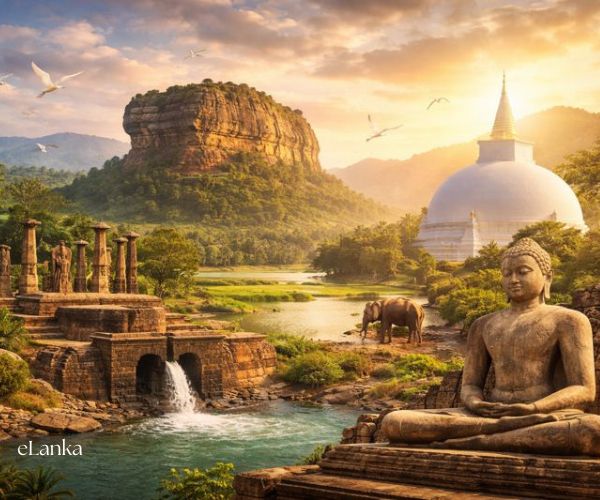
Sri Lanka’s ancient kingdoms represent one of the most advanced and enduring civilizations in human history. Long before modern science, machinery, or digital technology, Sri Lankan kings and engineers created systems of governance, water management, architecture, medicine, and education that continue to function even today. This extraordinary combination of intelligence, sustainability, and spiritual wisdom is what makes the ancient kingdoms of Sri Lanka truly impossible to beat.
Strategic Location and Early Civilization
Sri Lanka’s location in the Indian Ocean played a vital role in the rise of its ancient kingdoms. As early as the Anuradhapura period, the island became a major hub for maritime trade, connecting East Asia, the Middle East, and the Mediterranean world.
Ancient ports such as Mantai (Manthai) facilitated trade in gems, spices, elephants, and pearls. This global interaction brought wealth, knowledge, and cultural exchange, strengthening the kingdom’s economy and influence.
Visionary Kings Who Built for the Future
Unlike many rulers who focused only on short-term power, Sri Lankan kings planned for generations ahead.
- King Pandukabhaya (4th century BCE) established Anuradhapura as a planned capital city with reservoirs, hospitals, and cemeteries.
- King Dutugemunu (2nd century BCE) unified the island and promoted Buddhism while ensuring social welfare.
- King Mahasena (3rd century CE) transformed the dry zone into fertile land through massive irrigation projects.
- King Kashyapa (5th century CE) built Sigiriya, combining military defense, art, and hydraulic engineering.
- King Parakramabahu I (12th century CE) elevated Sri Lanka to its golden age through agriculture, diplomacy, and unity.
These rulers governed not only with power, but with knowledge and responsibility.
Irrigation Engineering That Still Feeds the Nation
The ancient irrigation system of Sri Lanka is one of the greatest engineering achievements in the world.
The tank cascade system allowed water to flow from one reservoir to another, reducing waste and preventing floods. Tanks such as Kala Wewa, Minneriya Wewa, and Parakrama Samudraya are still in use today.
Modern hydrologists and climate scientists study these systems as models for sustainable water management in drought-prone regions.
Urban Planning and City Design
Ancient Sri Lankan cities were carefully planned with zones for religion, administration, agriculture, and residence.
Anuradhapura covered a vast area with monasteries, hospitals, bathing ponds, roads, and drainage systems. This level of urban planning rivaled major cities of the ancient world such as Rome and Babylon.
Medical Knowledge and Ancient Hospitals
Sri Lanka was among the first civilizations to introduce organized healthcare.
Archaeological evidence confirms the existence of ancient hospitals with surgical instruments, medicinal herbs, and patient care facilities. Kings supported traditional medicine (Ayurveda), making healthcare accessible to monks and laypeople alike.
Education and Global Learning Centers
Monasteries such as Mahavihara, Abhayagiri, and Jetavanaramaya functioned as international universities.
Students and scholars from India, China, and Southeast Asia studied philosophy, medicine, astronomy, and logic in Sri Lanka. The island was a leading intellectual center in Asia for centuries.
Artistic Excellence and Cultural Identity
Ancient Sri Lankan art reflects deep symbolism and refined craftsmanship.
- Sigiriya frescoes show advanced knowledge of proportion and color.
- Moonstones and guardstones represent philosophical concepts such as the cycle of life.
- Literature, poetry, and inscriptions reveal a highly literate society.
This cultural richness continues to shape Sri Lanka’s identity today.
Military Strategy and Defense Systems
Sri Lanka’s ancient kingdoms developed strong defense strategies without aggressive expansion.
Natural barriers, strategic fortresses like Sigiriya, and disciplined armies protected the island for centuries. Kings balanced strength with diplomacy, maintaining sovereignty despite foreign threats.
Environmental Protection and Sustainability
Ancient Sri Lankan rulers understood the importance of protecting nature.
Forests were preserved, wildlife was respected, and agriculture followed ecological balance. This approach prevented environmental collapse, unlike many ancient civilizations that disappeared due to resource exhaustion.
A Legacy That Still Lives
What truly makes Sri Lanka’s ancient kingdoms impossible to beat is that they are not lost civilizations.
- Ancient tanks still supply water
- Buddhist practices remain alive
- Cultural values continue across generations
Sri Lanka is living proof that ancient wisdom can outlast modern empires.
Conclusion
The ancient kingdoms of Sri Lanka achieved greatness through intelligence, sustainability, compassion, and long-term vision. Their accomplishments in irrigation, architecture, medicine, education, and governance place them among the greatest civilizations the world has ever known.
Even today, modern society continues to learn from ancient Sri Lanka — a civilization that was, and remains, truly impossible to beat.
References
- Mahavamsa (Great Chronicle of Sri Lanka)
- UNESCO World Heritage Centre
- Department of Archaeology, Sri Lanka
- R. L. Brohier – Ancient Irrigation Works in Ceylon
- Central Cultural Fund, Sri Lanka