Colombo Port City: Sri Lanka’s Visionary Gateway to the Future – By Malsha – eLanka
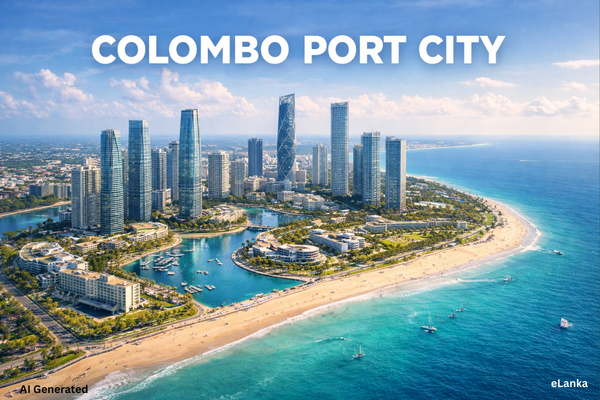
Colombo Port City is one of the most ambitious development projects ever undertaken in Sri Lanka. Located along the western coastline of Colombo next to Galle Face Green, the project aims to transform reclaimed land from the Indian Ocean into a modern international financial and commercial hub. Designed as a special economic zone (SEZ), Port City Colombo represents a bold step toward positioning Sri Lanka as a key business and investment destination in South Asia.
Origins and Development
The concept of Port City Colombo was introduced in 2014 as part of a large-scale public–private partnership between the Sri Lankan government and the Chinese company China Harbour Engineering Company (CHEC). The project involves reclaiming approximately 269 hectares of land from the sea, creating an entirely new extension of Colombo’s central business district.
The land reclamation work was completed in 2019, marking a major milestone in the development process. The estimated total investment in the project is expected to exceed US$15–20 billion when fully completed, making it one of the largest foreign direct investment projects in Sri Lanka’s history.
To regulate and promote investment in the area, the Sri Lankan Parliament passed the Colombo Port City Economic Commission Act in 2021, establishing a special regulatory framework that offers tax incentives and business-friendly policies aimed at attracting global investors.
Vision and Purpose
The main vision of Port City Colombo is to create a world-class business and financial hub that connects South Asia with global markets. Sri Lanka’s strategic location along major international shipping routes makes it an ideal gateway between East and West.
Port City Colombo is designed to provide a modern ecosystem where multinational companies, financial institutions, technology firms, and entrepreneurs can operate in a globally competitive environment. The project aims to create over 143,000 new jobs and accommodate an estimated population of around 273,000 people once fully developed.
Beyond economic growth, the development also seeks to improve Sri Lanka’s urban landscape by introducing high-quality infrastructure, modern residential spaces, entertainment venues, and tourism attractions.
Key Features of Port City Colombo
The master plan of Port City Colombo includes five main districts that will support different aspects of business, living, and leisure:
-
Financial District – Designed to host international banks, financial institutions, and global corporations.
-
Central Park Living – A residential area with luxury apartments and green spaces.
-
Island Living – High-end residential developments surrounded by waterfront views.
-
The Marina – A leisure and entertainment district featuring a yacht marina, restaurants, and retail outlets.
-
International Island – Planned as a premium tourism and hospitality destination.
When completed, the city will offer more than 6.4 million square metres of built space, including offices, hotels, shopping malls, healthcare facilities, and educational institutions.
Economic Opportunities
Port City Colombo is expected to play a significant role in boosting Sri Lanka’s economy. As a special economic zone, it offers several advantages such as tax concessions, simplified business regulations, and streamlined investment procedures. These incentives are designed to attract foreign companies looking to expand into South Asian markets.
The project also aims to develop Colombo into a regional financial centre, similar to cities such as Dubai or Singapore. By creating a global investment hub, Sri Lanka hopes to increase foreign direct investment, diversify its economy, and strengthen its position in international trade.
Moreover, the development is expected to support industries such as fintech, professional services, tourism, logistics, and maritime services.
Sustainability and Urban Planning
Sustainability has been a key focus in the planning of Port City Colombo. Environmental impact assessments were conducted before construction to ensure minimal damage to marine ecosystems. The city’s design incorporates renewable energy systems, efficient water management, and environmentally friendly infrastructure.
Approximately 91 hectares of the development are dedicated to public spaces, including parks, beaches, and recreational areas, while around 40 hectares are reserved for green zones and beaches.
The project also aims to encourage eco-friendly urban living through pedestrian walkways, cycling paths, and smart transport systems.
Challenges and Criticism
Despite its ambitious goals, Port City Colombo has also faced criticism and concerns. Some critics have raised questions about environmental impacts, transparency in investment agreements, and the potential influence of foreign investors in the project.
Others argue that the success of Port City will depend heavily on Sri Lanka’s political stability, economic policies, and the country’s ability to attract international businesses. Ensuring proper governance and regulatory oversight will therefore be crucial for the project’s long-term success.
The Future of Colombo
Port City Colombo represents more than just a construction project—it symbolizes Sri Lanka’s aspiration to become a modern global hub for finance, innovation, and trade. If successfully implemented, the development could transform Colombo into one of South Asia’s most dynamic cities.
By combining cutting-edge infrastructure, sustainable design, and international investment opportunities, Port City Colombo has the potential to reshape the country’s economic landscape and create new opportunities for future generations.