Sinhala Avurudu Jana Kreeda – Tradition, Joy, and Community Spirit
Sinhala Avurudu, also known as the Sinhala and Tamil New Year, is one of the most important cultural celebrations in Sri Lanka. It marks the transition of the sun from the zodiac sign of Pisces (Meena) to Aries (Mesha), symbolizing a fresh beginning, prosperity, and happiness. This festive season is not only about rituals and food but also about bringing people together through traditional games known as “Avurudu Jana Kreeda.”
These traditional New Year games play a significant role in preserving Sri Lankan culture while creating joy, unity, and excitement among people of all ages. From villages to cities, families, friends, and communities gather to participate in these fun and engaging activities.
The Importance of Avurudu Games
Avurudu games are more than just entertainment. They reflect the values of togetherness, cooperation, and cultural heritage. During the New Year season, people forget their daily stress and come together to celebrate as one community.
These games help strengthen relationships among family members, neighbours, and friends. They also encourage teamwork, friendly competition, and laughter. Most importantly, Avurudu games help pass down traditions from one generation to another, ensuring that Sri Lankan cultural identity remains strong.
Popular Sinhala Avurudu Jana Kreeda
1. Pillow Fighting (Kotta Pora)
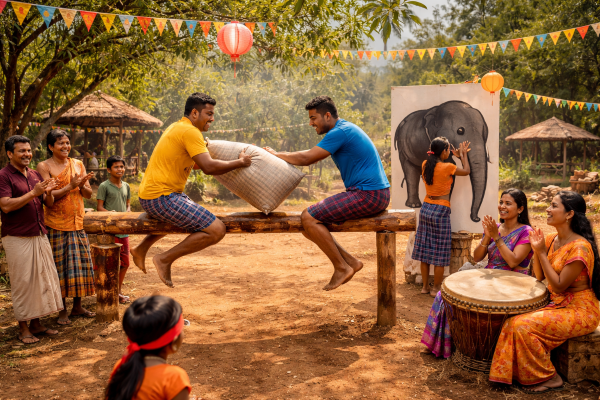
Pillow fighting is one of the most popular and entertaining Avurudu games. Two participants sit on a suspended beam or log and try to knock each other off using pillows. The goal is to maintain balance while hitting the opponent.
This game creates a lot of laughter and excitement, as players often lose balance and fall in funny ways. It is enjoyed by both participants and spectators.
Why it’s fun: A perfect mix of balance, strength, and laughter.
2. Breaking the Pot (Kana Mutti Bindeema)
This game involves blindfolding a participant and asking them to break a hanging clay pot using a stick. The challenge is that the player cannot see, and must rely on directions given by others.
The confusion and misdirection often lead to humorous moments, making it a crowd favourite.
Why it’s fun: Combines skill, trust, and plenty of laughter.
3. Pin the Eye on the Elephant
In this game, a picture of an elephant without an eye is placed on a board. The participant, who is blindfolded, must place the eye in the correct position.
It is especially popular among children and requires good judgment and coordination.
Why it’s fun: Simple, interactive, and enjoyable for all ages.
4. Greased Pole Climbing (Lissana Gaha Negima)
This is one of the most challenging Avurudu games. A tall pole is covered with grease, and participants must climb it to reach prizes placed at the top.
It requires strength, strategy, and teamwork, as participants often help each other to reach the top.
Why it’s fun: A test of physical ability and teamwork.
5. Tug of War (Kamba Adeema)
Tug of war is a classic team game where two groups pull a rope in opposite directions. The team that pulls the other across a designated line wins.
This game highlights teamwork, coordination, and strength, and is often one of the most competitive events.
Why it’s fun: Encourages teamwork and friendly competition.
6. Rabana Playing and Singing
Rabana playing is a traditional musical activity performed mainly by women during the Avurudu season. A group gathers around a large drum (rabana) and sings traditional songs while playing rhythmic beats.
Although not a competitive game, it adds a joyful and cultural atmosphere to the celebrations.
Why it’s special: Celebrates music, culture, and unity.
7. Relay Races (Pandam Duwa)
Relay races involve teams passing an object from one participant to another while running. Speed, coordination, and teamwork are essential to win.
This game is energetic and exciting, especially for younger participants.
Why it’s fun: Fast-paced and full of energy.
Social and Cultural Value
Sinhala Avurudu Jana Kreeda hold deep social and cultural value. They bring people together regardless of age, gender, or background. These games promote unity and help build stronger communities.
They also teach important life skills such as cooperation, patience, leadership, and resilience. For children, these games are a great way to learn about tradition while having fun.
In a world where digital entertainment is becoming dominant, Avurudu games provide a refreshing opportunity to engage in real-life interactions and physical activities.
Avurudu Games in Modern Times
With modernization and urban lifestyles, some traditional games are slowly fading. However, many schools, organizations, and communities continue to organize Avurudu festivals to keep these traditions alive.
Media and social platforms also play a role in promoting these games, making them popular among younger generations. Today, Avurudu games are often included in corporate events, school celebrations, and community gatherings.
Conclusion
Sinhala Avurudu Jana Kreeda are a beautiful expression of Sri Lankan culture, bringing together joy, unity, and tradition. These games are not just about winning or losing, but about creating memories, sharing laughter, and strengthening bonds.
As we celebrate the Sinhala New Year, it is important to continue practicing and promoting these traditional games. By doing so, we preserve our cultural heritage and pass it on to future generations.
Participating in Avurudu games is not only fun but also a meaningful way to stay connected to our roots and celebrate the spirit of togetherness.