News & Community eLanka

eLanka

Friday, 16 Oct 2026
  • Home
  • Read History
  • Articles
    • eLanka Journalists
  • Events
  • Useful links
    • Obituaries
    • Seeking to Contact
    • eLanka Newsletters
    • Weekly Events and Advertisements
    • eLanka Testimonials
    • Sri Lanka Newspapers
    • Sri Lanka TV LIVE
    • Sri Lanka Radio
    • eLanka Recepies
  • Gallery
  • Contact
Newsletter
Sri lankan news
  • eLanka Weddings
  • Property
  • eLanka Shop
  • Business Directory
eLankaeLanka
Font ResizerAa
Search
  • Home
  • Read History
  • Articles
    • eLanka Journalists
  • Events
  • Useful links
    • Obituaries
    • Seeking to Contact
    • eLanka Newsletters
    • Weekly Events and Advertisements
    • eLanka Testimonials
    • Sri Lanka Newspapers
    • Sri Lanka TV LIVE
    • Sri Lanka Radio
    • eLanka Recepies
  • Gallery
  • Contact
Follow US
© 2005 – 2026 eLanka Pty Ltd. All Rights Reserved.
Home » Goodnews Stories Srilankan Expats » Articles » Sybil : the colourful nonconformist-by Randima Attygalle
Articles

Sybil : the colourful nonconformist-by Randima Attygalle

eLanka admin
Last updated: June 28, 2021 3:53 pm
By
eLanka admin
ByeLanka admin
Follow:
Share
15 Min Read
SHARE
Views: 103

Sybil : the colourful nonconformist-by Randima Attygalle

Sybil

Source:Island

Sybil Wettasinghe was not merely an example of an imaginative, quality illustrator of her generation, but much more. A journalist, a creative artist, a woman of many roles, she was a trendsetting global-Lankan. As the first death anniversary of this well known writer/illustrator approaches, we remember her life and times.

The six-year-old Sybil de Silva who left Gintota for her English convent education in Colombo with a head full of ‘aththamma’s folk tales’ and memories of Seedakka’s hopper-making and Yakdehi Muththa’s devil dancing found wrestling with forks and spoons in her convent refectory a futile effort. She wouldn’t compromise the flavour of her favourite lunch of rice with prawns and murunga and would wait till the nuns left the dining room and relish the meal, eating with her fingers amid protests from her schoolmates who would threaten to report her! During art class, she would horrify the Irish nuns at Holy Family Convent, Bambalapitiya, replicating her sculptor-grandfather’s female figures.

Despite resistance from school, teachers and her mother, Sybil continued to defend her dream of becoming a professional painter. She was not impressed by her mother’s efforts to make her an architect. Her father who encouraged his daughter’s art, submitted her work for an exhibition at the Colombo Art Gallery. The 15-year-old’s work impressed H.D. Sugathapala, Headmaster of the Royal Primary School, who handpicked Sybil to illustrate his Nava Maga Standard 5 Reader. The book which launched her artistic career was also the first book to be printed in colour here in Sri Lanka.
Sybil‘Sybil’ was a prophetess in Greek mythology – a woman who claimed to be able to interpret the wishes of the gods through their oracles. But this Sybil Wettasinghe was her own prophet. She was a rebel too. At 19, she knew she was ready for much more than pottering around with paint and brushes. Journalism was her next calling. It was on April 1, 1948 that draped in a new saree her mother had bought for the occasion, her hair in a formal konde, the 19-year-old was presented to D.B.Dhanapala, the Chief Editor of Lankadeepa.

The youngest and the only female staffer then at Lankadeepa, she was assigned a weekly ‘Saturday Strip’, giving life to characters and tales from her Gintota childhood. “Most readers believed the creator of this strip of folk poems and illustrations was a man, misreading my name and when news spread that it was a young girl, there were inquisitive visitors to the Lankadeepa office,” she once recounted.

The visits ended when Dhanapala ran a newspaper account of his gifted new recruit with her photograph. Turning a deaf ear to those who urged the editor to ‘drill some sense’ to the girl who was sketching ‘gibberish, nonsensical figures’, he cheered her on to discover her own metier, never altering her style to please the masses. “Some even proposed Heywood mentoring for me and Mr. Dhanapala wouldn’t hear any of it,” the self-taught artist would say.

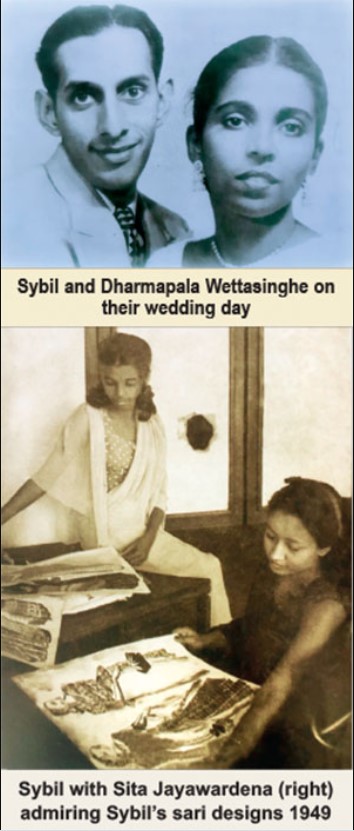
Bored with just her weekly Lankadeepa strip and with enough time to spare to buy books with her monthly salary of Rs. 60, Sybil one day boldly strode into the offices of Sita Jayawardena who compiled the then Times of Ceylon Women’s Page and asked for additional work. Soon she was illustrating Sooty Banda’s caricatures of Colombo socialites for The Times.

Moving to the newly launched Janatha Sinhala evening paper of the Lake House Group in 1952 was a turning point for Sybil both personally and professionally. While the Chief Editor Denzil Peiris gave her free rein, young Chief Sub Editor, Dharmapala Wettasinghe implored her to write a children’s story for his sake! Not only was a story born which still keeps girdling the globe, but a romance too bloomed culminating in the nuptial knot between Dharmapala Wettasinghe and Sybil de Silva in 1955. “He was my best fan and my best critic,” Sybil would often say and credit her fame as a globally acclaimed writer to her late husband.
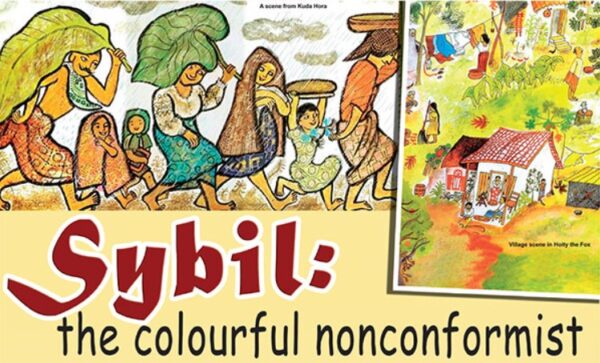
SybilThe children’s story Kuda Hora (Umbrella Thief) which Sybil initially wrote and illustrated for ‘his sake’ in the Janatha, became a book which is now translated into several languages. In Japan it was once judged the best foreign book published there and also the most popular children’s book. At a time when Sinhala literature for children meant direct translations of European children’s stories and school texts with a ‘scattering of illustrations’, Kuda Hora with its unforgettable antics of the mischievous monkey ushered a new era in children’s literature. Critic Regi Siriwardena once remarked that, ‘Kuda Hora was the first Sinhala book to completely marry words and pictures.’

‘Kosgama kuda ne, minissu kuda dekalawath ne’

(Kosgama people don’t have umbrellas nor have they ever seen any) set the scene for Kuda Hora. From Habarala leaves which served as umbrellas, a half eaten bunch of bananas in the village tea kiosk, the bulath heppuwa, hiramanaya to the cat on the Sinhala ulu-tiled roof, all her work breathed and celebrated the Sri Lankan flavour at its best. She often lamented that these ‘roots’ were missing in most contemporary Sri Lankan children’s literature.

Challenging the West-aping, servile mentality, the writer who defined the shape and form of Sri Lanka’s children’s literature for nearly 70 years, was bold enough to question, “why glorify apple trees and snow-capped mountains when we are part of a rich heritage.” In all her scores of much loved books including Hoity the Fox, Weniyan kalu weniyan, Sooththara Puncha, Runaway Beard, Poddai-Poddi and Meti gedara lamai, the authentic Sri Lankan flavour had been her credo. In a digital era where aththamma’s kitchen is only an image from the past, ‘googled’ and found, her documentation of an era gone by is priceless. Moreover her work impel a generation living in a cultural vacuum to revisit a value system fast eroding.

Sybil’s proficiency in English, her convent education and her exposure to English speaking circles of Colombo did not drive her to become yet another Anglo-Sri Lankan, a trait she shared with her journalist-husband. On the contrary, she would be skeptical of elaborate hats, gowns and parasols. Her social satire built around the character of Kusumalatha which she wrote and illustrated for the Sarasaviya paper was an index of this. In taking the authentic Sri Lankan landscape in which a distinct value system thrived, to the global platform, she would not compromise her style for any affinity with a particular ideology. For this, she was lauded by the world. She was one of the earliest Lankan writers and illustrators to go international long before ‘international citizenry’ became a buzz word.

Besides several state literary awards, and honorary titles, her work won a number of coveted international awards including the Nikkei Asia Prize for Culture 2012, Isabel Hutton Prize for Asian Women Writers, the Best Foreign Book Award in Japan in 1986 (for Kuda Hora). Her documentation of her childhood- Child in Me won the Gratiaen Prize for the most Creative English Book in 1995. She also won a Guinness world record in 2020 with her book Wonder Crystal a few months before her death at the age of 92, for having the most number of alternative endings which were solicited from young readers.

Accepting the Nikkei Asia Prize 2012 in Tokyo in recognition of her ‘magnificent contribution to enrich people’s lives in the region’ and first time bestowed on a Sri Lankan, Sybil remarked that although she had five grandchildren of her own, she considered all the world’s children hers. “Children are the spice of my life,” she remarked. Deeply moved by her love for children, Nikkei Inc. President & CEO Tsuneo Kita noted that her presence ‘bestowed a magical atmosphere’ at the event.

A woman with a fiercely independent mind who called herself her own ‘best friend’, Sybil did not bend the rules by which she lived. This was true of her artistic style as well. While most of her contemporaries would align themselves with a particular ‘school’, Sybil remained unaware of ‘current trends’ as she hardly stepped into Colombo’s galleries. She was never an understudy. “It never bothered me not to belong to any school or group,” she would say. With only her artistic DNA in her, the gene passed down by her sculptor-grandfather, Sybil went on to evolve her style of ‘talking pictures’ enthused by the fine nuances of a childhood spent in the South and people and places of her everyday life. A strong promoter of nurturing the inherent talent of children and allowing it to evolve naturally, she believed that ‘green skies’ and ‘blue trees’ were very much a part of this process.

Knowing Aunty Sybil or Sybil nenda as a nation of children called her, was a journey of discovery. Her cozy little home was my sanctuary. With each passing hour in her wise, wonderful company I rediscovered a phenomenal woman of iron will living in a slight frame. Seated at her weathered kitchen-table, I would spend many happy hours with her. “If only this table could talk,” she would often gleefully tell me. From the cat family which she lured with her ‘magical recipe’ of milk, sprats and bread to floating saucepans in her flooded drawing room (as a result of a tap left running throughout the night) her mischievous wit offered me constant amusement. Neither of us had any inkling that the breakfast of kiribath, lunumiris, ginger-tea and hakuru she treated me to a few weeks before her death was to be our last shared meal.

There were ‘story times’ too when the child in me would surface true to her mantra that ‘there is a wonder child living in all of us’. I would sit at her feet, she in her rocking chair telling me stories in her beautifully modulated story-teller voice. The one of the mermaid living six lives and realizing she is made only to be a mermaid remains one of my favourites. “A child is like that, we cannot make them live the lives we want, we have no right to realize our unrealized dreams through them, for they have their own destined paths,” she would tell me in the end. Then there were stories to which I was treated beyond her illustrated pages; trials and tribulations of a mother and a career woman, her measure of hurt and betrayal and so much more.

Long before ‘work-life balance’ for women was heard of, at a time when most of her contemporaries would abandon their vocations to raise a family, Sybil juggled both. To use a present day cliché, she ‘shattered the glass ceiling’ unconsciously. She was among the pioneering professional Sri Lankan women to have pioneered a path that generations of young women could follow. When her husband, the famous editor, Dharmapala Wettasinghe, became a political victim and lost his job, it was Sybil, then a mother of four young children, who kept the home fires burning. The batik business she set up during their dark hour not only helped her make ends meet but eventually rose to be an enterprise in which many took delight.

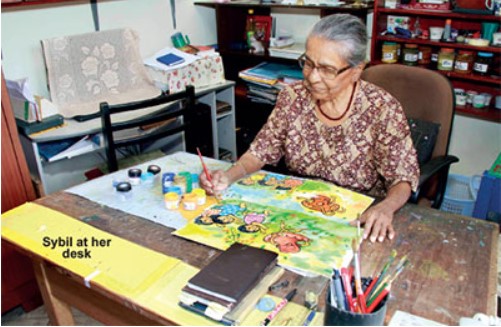
Sybil herself was a chronicle of history, her life intersecting with almost a century of changing socio-political and cultural milieu of the nation. Soon to turn 93, Sybil nenda kept herself busy at her desk everyday immersed in the child’s world, surrounded by her pots of ink and birds who would chirp outside her window. A verse from her popular book Child in Me would resonate;

A child and a grown up

Live as one

In perfect, perfect harmony

Within me.

She remained the six-year-old ‘Gintota girl’ until the very end…..

TAGGED:Sybil Wettasinghe
Share This Article
Facebook Whatsapp Whatsapp LinkedIn Email Copy Link Print
Previous Article Milkha Singh obituary-by John Rawling
Next Article Sri Lankan actress/model nominated at Britain’s National TV Award
FacebookLike
YoutubeSubscribe
LinkedInFollow
- Advertisement -
eLankaproperty - sell property in Sri Lanka, Sri Lanka property for sale, Sri Lanka real estate, Sri Lanka property listings, property marketplace Sri Lanka, land for sale Sri Lanka, houses for sale Sri Lanka, apartments for sale Sri Lanka, commercial property Sri Lanka, luxury villas Sri Lanka, Sri Lankan property investment, buy property in Sri Lanka, Colombo property for sale, beachfront property Sri Lanka, development land Sri Lanka, investment property Sri Lanka, property advertising Sri Lanka, real estate agents Sri Lanka, property brokers Sri Lanka, overseas Sri Lankan property buyers, Sri Lanka property website, list property online Sri Lanka, affordable property listings Sri Lanka, Sri Lanka homes for sale, Sri Lanka land investment, property developers Sri Lanka, real estate marketplace Sri Lanka, Sri Lanka commercial real estate, sell land in Sri Lanka, sell house in Sri Lanka, Sri Lanka property portal, global property marketplace Sri Lanka, Sri Lankan real estate investment, property management Sri Lanka, buy land Sri Lanka, residential property Sri Lanka, holiday homes Sri Lanka, Sri Lanka investment opportunities, real estate advertising Sri Lanka, eLankaProperty
- Advertisement -
ALTAIR
- Advertisement -
Ad image
eLanka Wedding
Most Read
Liverpool city Council

Liverpool faces $1.8 million funding cut as city grows

What Everyone with Diabetes Should Know-eLanka

What Everyone with Diabetes Should Know: The Truth-by Harold Gunatillake

Ashoka Colombage

Ashoka Colombage-by Gamini Kariyawasam

Digampathana-The Day the Navy Was Shattered – Sri Lanka Guardian

Digampathana: The Day the Navy Was Shattered – Sri Lanka Guardian-by Ravindra C Wijegunaratne

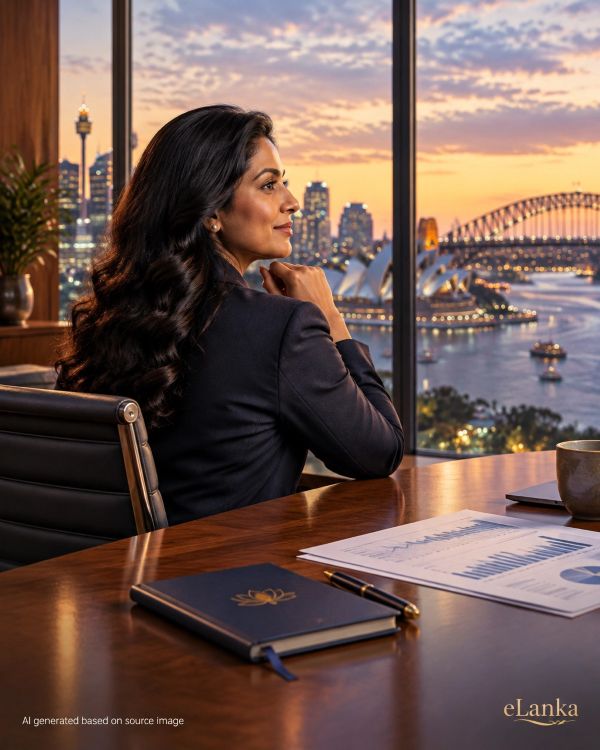
Shemara Wikramanayake: Sri Lankan Roots to Macquarie CEO

Shemara Wikramanayake: From Sri Lankan Beginnings to Leading Macquarie Group on the Global Stage

Related News
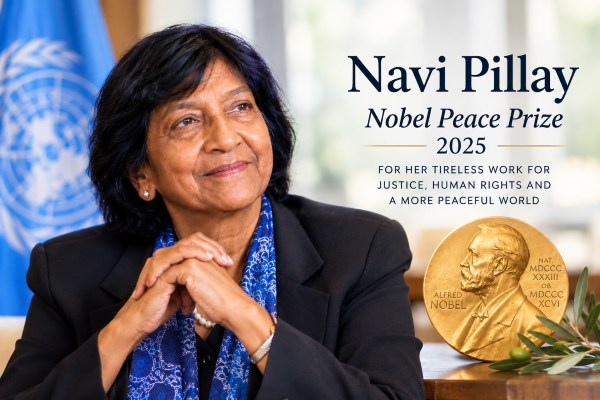
Navi Pillay Honoured
Articles

Navi Pillay Honoured: A Legacy of Peace, Justice and Human Rights

Sandika Hemakumari
Articles

Sandika Hemakumari to Captain Sri Lanka’s Women’s Sevens Squad at the Colombo Leg of the Asia Rugby Sevens Series

Sri Lankan junior tennis players
Articles

Three Sri Lankan Girls Reach the ATF Under-16 Quarter-Finals in Colombo

Otherland Galle Opens on Sri Lanka’s Southern Coast With a Locally Built Approach to Hospitality AI-generated illustration based on source material. No authentic photograph of the Otherland Galle property is embedded in this article. Otherland Hotels opened its first property, Otherland Galle, on 12 October 2026, introducing a 66-key lifestyle hotel that brings together accommodation, dining, music and locally curated experiences on Sri Lanka’s southern coast. The opening adds a new hospitality concept to a region known for its beaches, historic Galle Fort and established surf culture, with the hotel’s programme designed to encourage visitors to engage with the wider destination as well as the property. Located on Matara Road, Otherland Galle is approximately 400 metres from Dewata Beach and 2.8 kilometres from Galle Fort, the UNESCO World Heritage Site. The hotel draws on the area’s culinary traditions, creative communities and coastal way of life, positioning local experiences as a central part of its offer rather than an optional addition to a conventional hotel stay. Founded by Rishi Sreedharan, Samarth Gowda and Emanuel Siddhartha in partnership with Beryll Group, Otherland Hotels is built around the philosophy “Never the Same Twice”. Its approach combines private rooms and suites with shared accommodation and communal spaces intended for different kinds of travellers, from couples and groups of friends to solo visitors and culturally curious guests. The co-founders, pictured from left: Emanuel Siddhartha, Rishi Sreedharan and Samarth Gowda. Source photograph: Lanka Business News. A design-led mix of rooms and shared spaces Designed by Studio Camarada, led by Andre Camara, the hotel has been arranged as a series of interconnected spaces rather than a conventional sequence of corridors and separate facilities. Its interiors draw on the colours and materials of the southern coast, including sandy neutrals, ocean blues and earthy tones, alongside rattan, ash, hand-tufted textiles and marble finishes. The 66-key accommodation comprises 24 Ocean Rooms, 25 Terra Rooms, 12 suites and five dormitories. Room sizes range from 27 square metres to the 70-square-metre Patio Suite, while the property also includes rooms designed for guests with disabilities. The mix offers a range of accommodation formats within one property, including shared dormitory options alongside private rooms and suites. At ground level, Bar-kery combines several functions: reception, coffee shop, bakery, aperitivo counter and informal co-working space. Its Vinyl Corner invites guests to browse records and choose music, giving the communal area a more participatory character. Colombo Coffee Company has developed an exclusive signature blend for the hotel. AI-generated illustrative image based on the reported design approach; it is not a photograph of Otherland Galle. The rooftop venue Creatures brings together a restaurant, cocktail bar, infinity pool and music space, with 270-degree views of the Indian Ocean. It is intended to serve as a daytime dining and swimming venue as well as an evening social space, linking the hotel’s food and music programmes with its coastal setting. Sri Lankan flavours, music and a sense of place The food programme is led by Chef Rajeev Kumar and draws on Sri Lankan culinary traditions, alongside international influences and contemporary techniques. Dishes listed for the menu include King Coconut Ceviche, Yellowfin Tuna Tataki, Lankan Fish Cutlets and Devilled Pork Ribs glazed with kithul treacle. A Watalappam Brûlée brings a familiar Sri Lankan dessert into a contemporary format. Arijit Bose leads the cocktail programme, while Aneesha Thapa manages day-to-day operations. Music is another part of the hotel’s identity, with programming across Afro, R&B, folk, funk, jazz fusion, house, techno and electronica. The combination of food, music and shared spaces is intended to make the property relevant to both visitors and people from the surrounding area. Co-founder Samarth Gowda described the approach as one intended to make the hotel feel accessible and personal: > “Otherland Galle should feel like yours from the moment you walk in. Luxury has often come with a sense of distance, with places appearing impressive because they do not feel accessible to everyone. That is not what we are building. Everything here is designed around who you are and how you want to spend your time.” AI-generated illustration of ingredients associated with Sri Lankan culinary traditions; not a photograph of the hotel’s kitchen or menu. The Other Side: experiences created with local communities A key element of the concept is The Other Side, an experiences programme developed in collaboration with local surfers, fishermen, artisans, guides, chefs and musicians. The activities are designed to connect guests with people and places beyond the hotel, while drawing on knowledge and skills already present in the Galle region. The programme includes curry masterclasses, guided walks through Galle Fort and surf lessons at Dewata Beach. Further afield, guests can take whale-watching excursions off Mirissa or kayak through the mangroves of Koggala Lake. Rooftop sunset sessions, arrack tastings, beach cricket and tuk-tuk bar crawls are among the social activities described as part of the offer. This community-led model gives local participants a role in shaping and delivering visitor experiences, rather than presenting the area only as a backdrop for sightseeing. Its longer-term value will depend on how consistently these partnerships are sustained and how directly local contributors benefit from the activity they help create. Co-founder Rishi Sreedharan said: > “At Otherland, curiosity is the operating principle. We measure success by whether guests leave with a real sense of Galle. The surfers, fishermen, chefs and craftspeople who live here have helped build these experiences, and they are the ones bringing them to life.” AI-generated coastal illustration based on the article’s setting; it does not depict a verified view from the property. A new option for visitors to Galle The opening marks the first phase of Otherland Galle’s development. A gym, wellness centre and banquet facilities are planned for a subsequent phase. The property’s initial offer, however, is already structured around more than its room inventory: its communal areas, food and beverage venues, music programme and locally developed activities form a connected hospitality concept. For Sri Lankans abroad planning a visit home, the opening provides another option near Galle, with a programme that brings together coastal recreation, local food, heritage and community knowledge. For the Galle area, the approach places local contributors at the centre of the visitor experience. Whether the model makes a lasting contribution will be measured not only by the facilities it offers, but also by the strength and continuity of those relationships. The launch also reflects a wider interest among culturally curious travellers in experiences that extend beyond accommodation and conventional sightseeing. In Galle, where historic landmarks sit alongside a living coastal culture, the opportunity is to create hospitality that is carefully designed while remaining connected to the people and traditions that give the destination its character. Sources: Lanka Business News; Colombo Times; Hiru News Gold FM; SoulofHospitality. This article was written based on the source https://www.lankabusinessnews.com/otherland-hotels-makes-its-debut-in-galle/ and corroborated by https://colombotimes.net/otherland-hotels-makes-its-debut-in-galle/, https://hirunews.lk/goldfmnews/493932/otherland-galle-opens-with-66-rooms-introduces-dormitories-to-luxury-hotel-mix and https://www.soulofhospitality.com/business/hotel-openings/otherland-hotels-enters-sri-lanka-with-a-new-approach-to-lifestyle-hospitality, kindly email us at info@eLanka.com.au if any information needs to be corrected. Click here to receive your free copy of the eLanka Newsletter twice a week delivered directly to your inbox! At eLanka, we respect the rights of creators. If we have used an image you own and you'd like it removed, please email us at info@elanka.com.au and we’ll handle it promptly. Thanks. eLanka team eLanka Disclaimer Content published on eLanka may be created by the eLanka team, submitted by contributors or third parties, reproduced or adapted from other sources with appropriate source acknowledgement, or provided as promotional/advertising material by our clients. While eLanka takes reasonable care in preparing and publishing content, we do not warrant its completeness or accuracy. Views expressed are those of the respective authors or contributors and do not necessarily represent the views of eLanka. Third-party contributors, content providers and advertisers are responsible for the accuracy of material they supply and for ensuring they hold the necessary rights and permissions for its publication. Advertising and promotional content should not be regarded as an endorsement by eLanka of any product, service or claim.
Articles

Otherland Galle Opens on Sri Lanka’s Southern Coast With a Locally Built Approach to Hospitality

Dilmah SIAL Paris 2026
Articles

Dilmah’s Three Innovations Selected for SIAL Paris 2026 as Company Named a Top Five SIAL For Change Finalist

  • Quick Links:
  • Articles
  • DESMOND KELLY
  • Dr Harold Gunatillake
  • English Videos
  • Sri Lanka
  • Sinhala Videos
  • Obituaries
  • eLanka Newsletters
  • Sunil Thenabadu
  • Trevine Rodrigo
  • Dr. Harold Gunatillake
  • Tamil Videos
  • Sinhala Movies
  • eLanka Newsletter
  • Photos

eLanka

Your Trusted Source for News & Community Stories: Stay connected with reliable updates, inspiring features, and breaking news. From politics and technology to culture, lifestyle, and events, eLanka brings you stories that matter — keeping you informed, engaged, and connected 24/7.
Kerrie road, Oatlands , NSW 2117 , Australia.
Email : info@eLanka.com.au / rasangivjes@gmail.com.
WhatsApp : +61402905275 / +94775882546
  • About eLanka
  • Terms & Conditions

Disclaimer:
eLanka is committed to sharing positive and community-focused stories. We do not publish or endorse political, religious, or ethnic viewpoints. The content published on eLanka, including articles and newsletters, reflects the opinions and views of the respective authors and not those of eLanka. eLanka accepts no responsibility or liability for the accuracy, completeness, or consequences of any content provided by contributors.

(c) 2005 – 2025 eLanka Pty Ltd. All Rights Reserved.