


Sinhala and Tamil New Year – A Celebration of Unity, Culture, and Renewal – By Malsha – eLanka
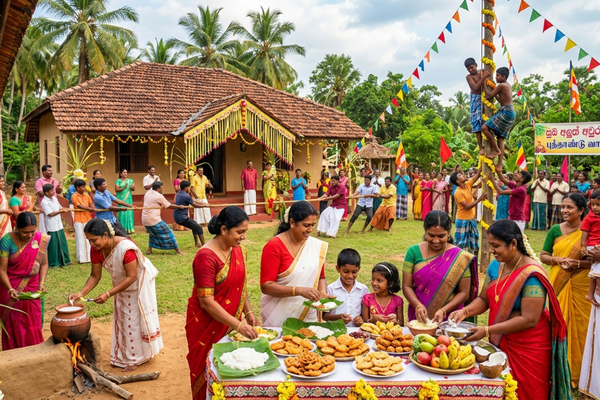
The Sinhala and Tamil New Year, known in Sinhala as Aluth Avurudda and in Tamil as Puthandu, is one of the most important and widely celebrated cultural festivals in Sri Lanka. Observed in mid-April, this joyous occasion marks the end of the harvest season and the beginning of a new solar year. More than just a date on the calendar, it is a deeply symbolic celebration of renewal, gratitude, family unity, and cultural heritage shared by both Sinhalese and Tamil communities.
The Significance of the New Year
The Sinhala and Tamil New Year is based on astrological calculations, specifically the transition of the sun from the Pisces zodiac sign (Meena Rashiya) to Aries (Mesha Rashiya). This transition signifies the dawn of a new year according to traditional solar calendars. Unlike January 1st, this New Year is deeply rooted in agricultural traditions, reflecting Sri Lanka’s ancient farming lifestyle.
This festival is unique because it is celebrated by both Sinhalese Buddhists and Tamil Hindus, making it a powerful symbol of cultural harmony and coexistence. Despite differences in religious practices, both communities share many customs and rituals, emphasizing unity and mutual respect.
Preparations for the New Year
Preparations for the New Year begin several days in advance. Homes are thoroughly cleaned, symbolizing the removal of past negativity and welcoming prosperity and positivity. People purchase new clothes, prepare traditional sweets, and decorate their homes.
Markets become vibrant and busy, filled with shoppers buying essential items such as rice, coconut, jaggery, and spices. The atmosphere across the country becomes festive, with a sense of excitement building as the auspicious time approaches.
The Nonagathaya – A Time of Pause
One of the most unique aspects of the Sinhala and Tamil New Year is the Nonagathaya, or the neutral period between the old year and the new year. During this time, all work and transactions are halted. People are encouraged to engage in religious and spiritual activities, such as visiting temples or kovils, meditating, and reflecting on their lives.
The Nonagathaya symbolizes a moment of transition—a time to let go of the past and prepare mentally and spiritually for a fresh beginning.
New Year Rituals and Traditions
The New Year is celebrated according to auspicious times (nekath) determined by astrologers. These times dictate when important activities should be performed.
Lighting the Hearth (Lipa Gini Melawima):
The New Year officially begins with lighting the hearth at a specific auspicious time. The first meal, usually milk rice (kiribath), is prepared while facing a particular direction. This symbolizes prosperity and blessings for the year ahead.
First Meal and Transactions (Ganu Denu):
Families gather to share the first meal together, reinforcing bonds and unity. The ganu denu ritual involves exchanging money or gifts, symbolizing prosperity and goodwill.
Anointing Oil (Hisa Thel Gema):
Another important ritual is the anointing of oil on the head, performed by an elder or religious figure. This is believed to bring good health and protection.
Starting Work (Weda Alleema):
People resume their daily work at an auspicious time, symbolizing a fresh and successful start to the year.
Traditional Foods
Food plays a central role in the celebrations. A variety of traditional sweets and dishes are prepared, each with cultural significance. Some popular items include:
- Kiribath (milk rice)
- Kavum (oil cakes)
- Kokis (crispy fried snack)
- Aluwa (sweet made with rice flour and treacle)
- Aggala (sweet balls made of rice and jaggery)
These delicacies are shared with family, friends, and neighbors, fostering a spirit of generosity and togetherness.
New Year Games and Festivities
The Sinhala and Tamil New Year is also a time for fun and entertainment. Traditional games (Avurudu Kreeda) are organized in villages and communities, bringing people together in a joyful atmosphere.
Popular games include:
- Tug of war (Kamba Adeema)
- Pillow fighting (Kotta Pora)
- Climbing the greasy pole (Lissana Gaha Nageema)
- Sack races and bun-eating competitions
These activities promote teamwork, laughter, and community bonding, making the celebration lively and memorable.
Cultural and Social Importance
Beyond rituals and festivities, the Sinhala and Tamil New Year holds deep cultural and social significance. It is a time for reconciliation, forgiveness, and strengthening relationships. Families come together, often traveling long distances to be with loved ones.
Elders are respected and honored, and children are taught the values of gratitude, respect, and tradition. The festival also encourages sharing and caring, as people distribute food and gifts among neighbors and those in need.
A Celebration of Unity
One of the most beautiful aspects of the Sinhala and Tamil New Year is its ability to unite people across ethnic and religious lines. In a diverse country like Sri Lanka, this shared celebration serves as a reminder of common cultural roots and mutual respect.
Both Sinhalese and Tamil communities celebrate with similar customs, highlighting the harmony that exists within diversity. It stands as a symbol of hope, peace, and togetherness for the nation.
Conclusion
The Sinhala and Tamil New Year is more than just a festival—it is a celebration of life, culture, and unity. It reflects the values of gratitude, renewal, and harmony that are deeply embedded in Sri Lankan society. As families gather, traditions are honored, and joy is shared, the New Year brings with it a sense of hope and positivity for the future.
In a fast-changing world, this timeless celebration continues to preserve cultural identity while fostering unity among people. The Sinhala and Tamil New Year truly embodies the spirit of Sri Lanka—rich in tradition, diverse in culture, and united in celebration.