The History of Vesak Celebrations in Sri Lanka – By Malsha – eLanka
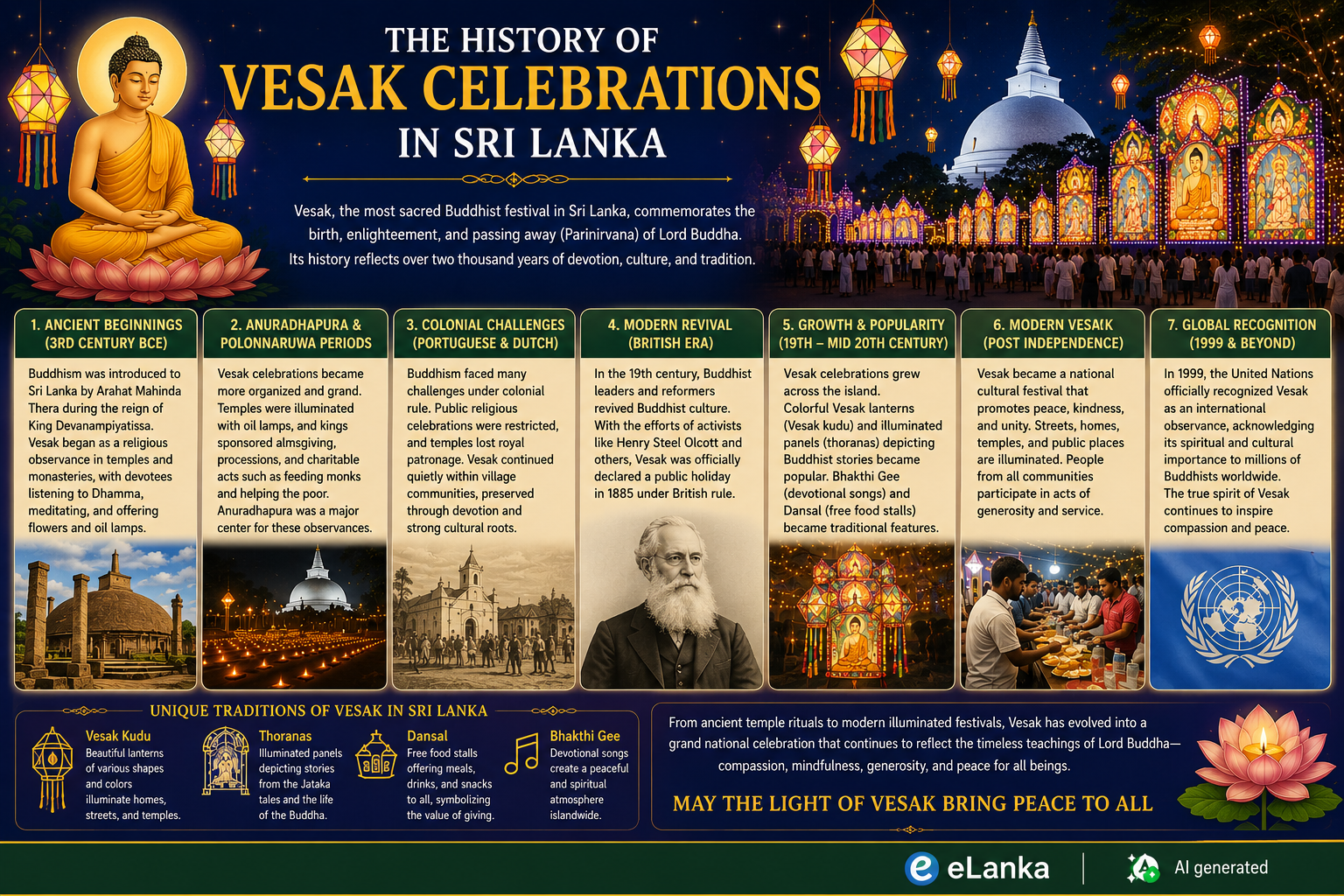
Vesak is the most sacred and widely celebrated Buddhist festival in Sri Lanka. Observed on the full moon day of the month of May, Vesak commemorates the birth, enlightenment, and passing away (Parinirvana) of Lord Buddha. For centuries, this holy festival has held a special place in the hearts of Sri Lankan Buddhists, blending deep religious devotion with rich cultural traditions.
The history of Vesak celebrations in Sri Lanka dates back more than two thousand years. Buddhism was introduced to Sri Lanka during the reign of King Devanampiyatissa in the 3rd century BCE by Arahat Mahinda Thero, the son of Indian Emperor Ashoka. With the arrival of Buddhism, Buddhist customs and religious observances gradually became part of Sri Lankan life. Vesak soon emerged as one of the island’s most important religious festivals. Historical chronicles such as the Mahavamsa mention religious festivals and ceremonies connected to the full moon month of Vesak.
In ancient Sri Lanka, Vesak was mainly observed as a religious ceremony in temples and monasteries. Kings and rulers supported Buddhist activities by organizing almsgiving, temple decorations, processions, and preaching ceremonies. Devotees spent the day at temples observing Sil (Buddhist precepts), meditating, listening to Dhamma sermons, and offering flowers and oil lamps to the Buddha. These practices reflected the teachings of compassion, simplicity, and spiritual purification.
During the Anuradhapura and Polonnaruwa periods, Vesak celebrations became more organized and grand. Temples were illuminated with oil lamps, and devotees gathered in large numbers to participate in religious programs. Kings often sponsored charitable acts such as feeding monks and helping the poor. The sacred city of Anuradhapura, home to the Sri Maha Bodhi Tree and many great stupas, became an important center for Vesak observances.
However, during the Portuguese and Dutch colonial periods, Buddhism in Sri Lanka faced many challenges. Buddhist traditions and public religious celebrations were restricted, and many temples lost royal patronage. Vesak celebrations continued quietly among village communities, but public recognition of Buddhist festivals declined. Despite these difficulties, Sri Lankan Buddhists preserved their religious identity and traditions through strong community support and devotion.
The modern revival of Vesak celebrations began during the British colonial era in the 19th century. Buddhist leaders and reformers worked tirelessly to restore Buddhist culture and religious freedom. One important figure in this revival was Henry Steel Olcott, an American Theosophist who strongly supported Buddhist education and rights in Sri Lanka. Through the efforts of Buddhist activists and religious leaders, Vesak was officially declared a public holiday in 1885 under British rule.
Following this recognition, Vesak celebrations in Sri Lanka grew rapidly in scale and popularity. Public displays of Buddhist devotion became common across the country. Colorful Vesak lanterns, known locally as Vesak kudu, began decorating homes, streets, and temples. Large illuminated panels called thoranas or pandals were created to depict stories from the Jataka tales and the life of the Buddha. These artistic displays combined religion, creativity, and community participation.
Another unique feature of Sri Lankan Vesak celebrations is the tradition of Dansal. During Vesak, people organize free food stalls offering rice, tea, ice cream, drinks, and snacks to the public. These acts of generosity symbolize the Buddhist value of Dana (giving). Across the island, people from different communities come together to serve others regardless of religion or social background.
Music and devotional songs also became an important part of Vesak celebrations. Bhakthi Gee (Buddhist devotional songs) are played throughout the country, creating a peaceful and spiritual atmosphere. Streets are beautifully illuminated with lanterns and electric lights, turning cities such as Colombo and Kandy into vibrant centers of celebration.
Today, Vesak in Sri Lanka is not only a religious event but also a national cultural festival that promotes peace, kindness, and unity. During Vesak week, alcohol and meat sales are often restricted, encouraging people to practice self-discipline and compassion. Schools, government institutions, businesses, and media organizations actively participate in Vesak activities and decorations.
Sri Lanka’s Vesak celebrations have also gained international recognition. In 1999, the United Nations officially recognized Vesak as an international observance, acknowledging its spiritual and cultural importance to millions of Buddhists worldwide.
Despite modernization and technological changes, the true spirit of Vesak remains deeply rooted in Sri Lankan society. Families continue to gather to create lanterns, visit temples, and engage in acts of charity. Communities unite in harmony, reflecting the timeless teachings of Lord Buddha — compassion, mindfulness, generosity, and peace.
In conclusion, the history of Vesak celebrations in Sri Lanka reflects the island’s deep Buddhist heritage and enduring cultural traditions. From ancient temple rituals to modern illuminated festivals, Vesak has evolved into a grand national celebration that continues to inspire spiritual reflection and social unity. More than just a festival of lights, Vesak remains a powerful reminder of the Buddha’s message of peace and compassion for all humanity.
At eLanka, we respect the rights of creators. If we have used an image you own and you’d like it removed, please email us at info@elanka.com.au and we’ll handle it promptly.
Thanks.
eLanka team