News & Community eLanka

eLanka

Thursday, 15 Oct 2026
  • Home
  • Read History
  • Articles
    • eLanka Journalists
  • Events
  • Useful links
    • Obituaries
    • Seeking to Contact
    • eLanka Newsletters
    • Weekly Events and Advertisements
    • eLanka Testimonials
    • Sri Lanka Newspapers
    • Sri Lanka TV LIVE
    • Sri Lanka Radio
    • eLanka Recepies
  • Gallery
  • Contact
Newsletter
Sri lankan news
  • eLanka Weddings
  • Property
  • eLanka Shop
  • Business Directory
eLankaeLanka
Font ResizerAa
Search
  • Home
  • Read History
  • Articles
    • eLanka Journalists
  • Events
  • Useful links
    • Obituaries
    • Seeking to Contact
    • eLanka Newsletters
    • Weekly Events and Advertisements
    • eLanka Testimonials
    • Sri Lanka Newspapers
    • Sri Lanka TV LIVE
    • Sri Lanka Radio
    • eLanka Recepies
  • Gallery
  • Contact
Follow US
© 2005 – 2026 eLanka Pty Ltd. All Rights Reserved.
Home » Goodnews Stories Srilankan Expats » Articles » Raj Gonsalkorale » YouTube channel “Panshu” launched by the Walpola Rahula Institute; A fertile environment for critical thinking By Raj Gonsalkorale
ArticlesRaj Gonsalkorale

YouTube channel “Panshu” launched by the Walpola Rahula Institute; A fertile environment for critical thinking By Raj Gonsalkorale

eLanka admin
Last updated: October 15, 2021 4:10 am
By
eLanka admin
ByeLanka admin
Follow:
Share
14 Min Read
SHARE
Views: 124

YouTube channel “Panshu” launched by the Walpola Rahula Institute; A fertile environment for critical thinking By Raj Gonsalkorale

The lesson for all is the need for nurturing critical thinking and to question information and its veracity. In explaining the thinking behind naming the new YouTube channel as Panshu, Ven Galkande Dhammananda said that the philosophy of the WRI has always had a positive outlook and it has focused on what could be done to have better outcomes, even over time, rather than just being disappointed with existing outcomes.

By Raj Gonsalkorale

Social media today has linked millions of people with facts, fiction and outright fake news. It has influenced change of governments, election of Presidents, Royalty being found out and disgraced, scandals of every description doing the rounds faster than lightning, and instant messaging becoming integral to the life of millions. Most do not ascertain the veracity of information that is circulating, which can easily be done in most cases by doing a quick internet search, but simply and irresponsibly, have become fodder for social media giants in the market who have reaped millions of dollars as a consequence.

It is debateable whether instant information dissemination has made the world a better place for human beings and whether their quality of life has improved. Following statistics presents a considerably bleak world.

  • The world poverty rates (The World Bank says that in 2020, About 9.2%of the world, or 689 million people, lived in extreme poverty on less than $1.90 a day),
  • Number of refugees (according to the UNHCR’s latest report for 2020, “some 79.5 million people had been forced from their homes due to persecution, conflict, and human rights violations.” That number includes 6 million refugees, 4.2 million asylum seekers, as well as 45.7 million internally displaced people (IDPs).
  • Access to safe drinking water (WHO, in its 2019 report estimated that 2 billion people need access to safely managed drinking water, including 884 million currently without basic drinking water services)
  • Number without basic food requirements (Action Against Hunger sates that about 690 million people globally are undernourished)
  • Access to basic health services (according to the WorldBank and WHO, at least half of the world’s population cannot obtain essential health services, according to a new report published in 2017)
  • State of the world’s environment (The UN says that “If current trends continue and the world fails to enact solutions that improve current patterns of production and consumption, if we fail to use natural resources sustainably, then the state of the world’s environment will continue to decline. It is essential that we understand the pace of environmental change that is upon us and that we start to work with nature instead of against it to tackle the array of environmental threats that face us) https://www.un.org/sustainabledevelopment.

That is the reality of the world that is interconnected before one can blink an eye lid!  As of January 2021 it has been reported that there were 4.66 billion active internet users worldwide – 59.5 percent of the global population. Of this total, 92.6 percent (4.32 billion) accessed the internet via mobile devices. https://www.statista.com/statistics. The power of the internet has given enormous mind changing powers to social media giants, but as mentioned at the outset here, it is highly debateable whether this power has been harnessed to improve the quality of life for people and whether instant messaging has, in effect, brought people closer to one another.

A discussion on this topic could very well be both esoteric and fruitless; understood and appreciated by a few, and of not much consequence to many. It is this statement that has relevance to the effort of Venerable Galkande Dhammananda and the Walpola Rahula Institute, to introduce a fundamental tenant of what Buddha had taught more than 2500 years ago.

In the inaugural program of the rebranded WRI YouTube channel “Panshu”, Ven Dhammananda makes an enthralling presentation based on the Chulla Haththi Padopama Sutta which hopefully will leave viewers contemplating how well an ancient truism has been contextualised to a modern setting for its relevance today.

It is said that of many Suttas diversely found in the Buddhist text, Arahat Mahinda chose Chulla Haththi Padopama Sutta as the first discourse seed to feed Buddhist philosophy into King Devanampiyatissa (http://dailynews.lk/2021/06/24/features/252307/intellectual-discourse-led-new-social-foundation)

It is highly relevant that today, in the age of a world so instantly linked to one another, to relive what the Buddha himself extolled, and later Ven Mahinda presented to the people of Sri Lanka during his visit more than 2000 years ago, and now, what Ven Dhammananda presents to the contemporary world.

The following is adopted from Venerable Dhammananda’s presentation on this inaugural Panshu program and begins with the question whether Buddhism provides a guide to evaluate a situation before arriving at better decisions after critical inquiry. The answer is: yes, it does.

Quote “Before we introduce the Buddhist model of decision making, let us familiarise ourselves with two general decision-making models that exist in society – the Pilotika model and the Janussoniya model. One day, Pilotika and Janussoniya met on the streets. Hearing from Pilotika that he is returning from an audience with Buddha, Janussoniya inquires whether Buddha is a noble person. Pilotika replies in the affirmative. Janussoniya then questions how Pilotika decided that Buddha is noble. Pilotika’s answer is quite important. He says: I decided that Buddha is noble because I saw expert debaters coming to debate with Buddha, having prepared extensively. However, upon a brief conversation, they gave up their prepared debating points, agreed with Buddha, and even became followers of Buddha. Having seen this, I decided that Buddha is noble. Having heard Pilotika’s answer, Janussoniya gets down from the chariot, asks where Budda stayed and salutes in the direction of Buddha, praising his nobleness.

Many of us make decisions following these two models. Pilotika’s decision of Buddha’s nobleness was not a result of consideration of Buddha’s discourse. It was simply a decision inspired by those Pilotika deemed to be important members of society.

When an actor or actress you like promotes a particular soap to become beautiful, or a sportsperson promotes a specific type of milk to make you stronger, some people believe that to be the utmost truth. This kind of thinking follows the Pilotika model.  Janussoniya model involves much less evaluation than even the Pilotika model. People following the Janussoniya model make decisions purely based on someone’s word. They would listen to the news telecast at night or someone’s recital of newspaper headlines in the morning and accepts that with no critical evaluation.

Going back to the original story, after this incidence, Janussoniya meets Buddha and describes his conversation with Pilotika. This is when Buddha rejects both Pilotika and Janussoniya models and describes the proper way of arriving at a conclusion or making critically evaluated decisions – in the form of a story:

A person entering a jungle observes a large footprint of an elephant. Having seen the sheer size of the impression, he decides that the print belongs to the ‘King Elephant’ of the jungle. However, Buddha suggests that he should look for further signs as other elephants can also have large footprints. Then the person observes broken branches, high above in the canopy – suggesting the elephant’s height and the reach of its trunk. However, still, this is not enough proof for a conclusion. There could be other elephants as tall. Then he observes mud streaks on branches higher up, again suggesting strong evidence of a tall elephant. Yet, there could be other tall elephants. Search further. Next, he observes damages on tree trunks made by elephant tusks. These damages suggest the height, size of the tusks and the strength of the elephant. Although this is even more substantial proof, yet it’s not sufficient proof to draw a final conclusion. Lastly, he sees with his own eyes the ‘King Elephant’ grazing the fields. Having seen with his own eyes, having confirmed what he has seen, only then can he conclude – teaches Buddha.

This model demonstrates to us that you shouldn’t come to a conclusion just by mere sight or mere word. You should collect further proof; you should examine further. Finally, only after coming to a concrete understanding after critical evaluation should you arrive at a final conclusion.

Practically, we may not be able to achieve a concrete understanding of everything in the world. We may need to stop at the footprint stage, broken branches stage, mud streak stage or the tusk damage stage. If we are in one of these stages, then our statements cannot be conclusive. Then it is essential to be aware that our understanding is incomplete” Unquote

Venerable Dhammananda concludes thus “You may now see that, in the ‘Buddha’ model of decision making, there is zero room for blind faith; that critical evaluation is held in high regard. Now, let us reflect. Do you belong to the Pilotika model, Janussoniya model or the Buddha model?”

The lesson for all is the need for nurturing critical thinking and to question information and its veracity. In explaining the thinking behind naming the new YouTube channel as Panshu, Ven Dhammananda said that the philosophy of the WRI has always had a positive outlook and it has focused on what could be done to have better outcomes, even over time, rather than just being disappointed with existing outcomes.

He said that on the one hand, Panshu may be considered as being basically all the elements of soil that graces the Earth’s surface and the final repository of everything that is material irrespective of who one is and their wealth. Ignorance of this fact, and being blinded by perceptions, unable to come to terms with reality and look at life more objectively, critically and with unconditional love to others, have left many disappointed and dissatisfied with what they currently have around them.

On the other hand, one could look at Panshu or soil, as being a fertile environment to grow new thinking, new ideas, and an avenue for renewal of ethical and moral values, so that outcomes, even if it takes time for fruition, will yield a more loving, compassionate, ethical and moral world. Ven Dhammananda said the WRI, through Panshu, will be providing opportunities for experiencing, questioning, and discussing and engaging in critical thinking through a variety of programs that are being designed as a pathway for a better future. “We reap what we sow, so, it is important to sow correct thinking so that we can reap a better future without just complaining about the present” he said.

The first program on Panshu may be accessed via https://www.youtube.com/watch?v=x9zc7JpA3cs
TAGGED:Panshu you tubePilotika and JanussoniyaRaj GonsalkoraleVenerable DhammanandaWalpola Rahula Institute
Share This Article
Facebook Whatsapp Whatsapp LinkedIn Email Copy Link Print
Previous Article Grocery Voucher Support Program - SLA Grocery Voucher Support Program – SLA
Next Article Felicitation Ceremony Felicitation Ceremony – paying tributes to Dr. Siri Kannangara, Dr. Shelton Premarathne, Dr. Don Wickrama & Dr. Seneviratne Banda – 20th March 2022 (Sydney event)
FacebookLike
YoutubeSubscribe
LinkedInFollow
- Advertisement -
eLankaproperty - sell property in Sri Lanka, Sri Lanka property for sale, Sri Lanka real estate, Sri Lanka property listings, property marketplace Sri Lanka, land for sale Sri Lanka, houses for sale Sri Lanka, apartments for sale Sri Lanka, commercial property Sri Lanka, luxury villas Sri Lanka, Sri Lankan property investment, buy property in Sri Lanka, Colombo property for sale, beachfront property Sri Lanka, development land Sri Lanka, investment property Sri Lanka, property advertising Sri Lanka, real estate agents Sri Lanka, property brokers Sri Lanka, overseas Sri Lankan property buyers, Sri Lanka property website, list property online Sri Lanka, affordable property listings Sri Lanka, Sri Lanka homes for sale, Sri Lanka land investment, property developers Sri Lanka, real estate marketplace Sri Lanka, Sri Lanka commercial real estate, sell land in Sri Lanka, sell house in Sri Lanka, Sri Lanka property portal, global property marketplace Sri Lanka, Sri Lankan real estate investment, property management Sri Lanka, buy land Sri Lanka, residential property Sri Lanka, holiday homes Sri Lanka, Sri Lanka investment opportunities, real estate advertising Sri Lanka, eLankaProperty
- Advertisement -
ALTAIR
- Advertisement -
Ad image
eLanka Wedding
Most Read
Sandika Hemakumari

Sandika Hemakumari to Captain Sri Lanka’s Women’s Sevens Squad at the Colombo Leg of the Asia Rugby Sevens Series

Sri Lankan junior tennis players

Three Sri Lankan Girls Reach the ATF Under-16 Quarter-Finals in Colombo

Otherland Galle Opens on Sri Lanka’s Southern Coast With a Locally Built Approach to Hospitality AI-generated illustration based on source material. No authentic photograph of the Otherland Galle property is embedded in this article. Otherland Hotels opened its first property, Otherland Galle, on 12 October 2026, introducing a 66-key lifestyle hotel that brings together accommodation, dining, music and locally curated experiences on Sri Lanka’s southern coast. The opening adds a new hospitality concept to a region known for its beaches, historic Galle Fort and established surf culture, with the hotel’s programme designed to encourage visitors to engage with the wider destination as well as the property. Located on Matara Road, Otherland Galle is approximately 400 metres from Dewata Beach and 2.8 kilometres from Galle Fort, the UNESCO World Heritage Site. The hotel draws on the area’s culinary traditions, creative communities and coastal way of life, positioning local experiences as a central part of its offer rather than an optional addition to a conventional hotel stay. Founded by Rishi Sreedharan, Samarth Gowda and Emanuel Siddhartha in partnership with Beryll Group, Otherland Hotels is built around the philosophy “Never the Same Twice”. Its approach combines private rooms and suites with shared accommodation and communal spaces intended for different kinds of travellers, from couples and groups of friends to solo visitors and culturally curious guests. The co-founders, pictured from left: Emanuel Siddhartha, Rishi Sreedharan and Samarth Gowda. Source photograph: Lanka Business News. A design-led mix of rooms and shared spaces Designed by Studio Camarada, led by Andre Camara, the hotel has been arranged as a series of interconnected spaces rather than a conventional sequence of corridors and separate facilities. Its interiors draw on the colours and materials of the southern coast, including sandy neutrals, ocean blues and earthy tones, alongside rattan, ash, hand-tufted textiles and marble finishes. The 66-key accommodation comprises 24 Ocean Rooms, 25 Terra Rooms, 12 suites and five dormitories. Room sizes range from 27 square metres to the 70-square-metre Patio Suite, while the property also includes rooms designed for guests with disabilities. The mix offers a range of accommodation formats within one property, including shared dormitory options alongside private rooms and suites. At ground level, Bar-kery combines several functions: reception, coffee shop, bakery, aperitivo counter and informal co-working space. Its Vinyl Corner invites guests to browse records and choose music, giving the communal area a more participatory character. Colombo Coffee Company has developed an exclusive signature blend for the hotel. AI-generated illustrative image based on the reported design approach; it is not a photograph of Otherland Galle. The rooftop venue Creatures brings together a restaurant, cocktail bar, infinity pool and music space, with 270-degree views of the Indian Ocean. It is intended to serve as a daytime dining and swimming venue as well as an evening social space, linking the hotel’s food and music programmes with its coastal setting. Sri Lankan flavours, music and a sense of place The food programme is led by Chef Rajeev Kumar and draws on Sri Lankan culinary traditions, alongside international influences and contemporary techniques. Dishes listed for the menu include King Coconut Ceviche, Yellowfin Tuna Tataki, Lankan Fish Cutlets and Devilled Pork Ribs glazed with kithul treacle. A Watalappam Brûlée brings a familiar Sri Lankan dessert into a contemporary format. Arijit Bose leads the cocktail programme, while Aneesha Thapa manages day-to-day operations. Music is another part of the hotel’s identity, with programming across Afro, R&B, folk, funk, jazz fusion, house, techno and electronica. The combination of food, music and shared spaces is intended to make the property relevant to both visitors and people from the surrounding area. Co-founder Samarth Gowda described the approach as one intended to make the hotel feel accessible and personal: > “Otherland Galle should feel like yours from the moment you walk in. Luxury has often come with a sense of distance, with places appearing impressive because they do not feel accessible to everyone. That is not what we are building. Everything here is designed around who you are and how you want to spend your time.” AI-generated illustration of ingredients associated with Sri Lankan culinary traditions; not a photograph of the hotel’s kitchen or menu. The Other Side: experiences created with local communities A key element of the concept is The Other Side, an experiences programme developed in collaboration with local surfers, fishermen, artisans, guides, chefs and musicians. The activities are designed to connect guests with people and places beyond the hotel, while drawing on knowledge and skills already present in the Galle region. The programme includes curry masterclasses, guided walks through Galle Fort and surf lessons at Dewata Beach. Further afield, guests can take whale-watching excursions off Mirissa or kayak through the mangroves of Koggala Lake. Rooftop sunset sessions, arrack tastings, beach cricket and tuk-tuk bar crawls are among the social activities described as part of the offer. This community-led model gives local participants a role in shaping and delivering visitor experiences, rather than presenting the area only as a backdrop for sightseeing. Its longer-term value will depend on how consistently these partnerships are sustained and how directly local contributors benefit from the activity they help create. Co-founder Rishi Sreedharan said: > “At Otherland, curiosity is the operating principle. We measure success by whether guests leave with a real sense of Galle. The surfers, fishermen, chefs and craftspeople who live here have helped build these experiences, and they are the ones bringing them to life.” AI-generated coastal illustration based on the article’s setting; it does not depict a verified view from the property. A new option for visitors to Galle The opening marks the first phase of Otherland Galle’s development. A gym, wellness centre and banquet facilities are planned for a subsequent phase. The property’s initial offer, however, is already structured around more than its room inventory: its communal areas, food and beverage venues, music programme and locally developed activities form a connected hospitality concept. For Sri Lankans abroad planning a visit home, the opening provides another option near Galle, with a programme that brings together coastal recreation, local food, heritage and community knowledge. For the Galle area, the approach places local contributors at the centre of the visitor experience. Whether the model makes a lasting contribution will be measured not only by the facilities it offers, but also by the strength and continuity of those relationships. The launch also reflects a wider interest among culturally curious travellers in experiences that extend beyond accommodation and conventional sightseeing. In Galle, where historic landmarks sit alongside a living coastal culture, the opportunity is to create hospitality that is carefully designed while remaining connected to the people and traditions that give the destination its character. Sources: Lanka Business News; Colombo Times; Hiru News Gold FM; SoulofHospitality. This article was written based on the source https://www.lankabusinessnews.com/otherland-hotels-makes-its-debut-in-galle/ and corroborated by https://colombotimes.net/otherland-hotels-makes-its-debut-in-galle/, https://hirunews.lk/goldfmnews/493932/otherland-galle-opens-with-66-rooms-introduces-dormitories-to-luxury-hotel-mix and https://www.soulofhospitality.com/business/hotel-openings/otherland-hotels-enters-sri-lanka-with-a-new-approach-to-lifestyle-hospitality, kindly email us at info@eLanka.com.au if any information needs to be corrected. Click here to receive your free copy of the eLanka Newsletter twice a week delivered directly to your inbox! At eLanka, we respect the rights of creators. If we have used an image you own and you'd like it removed, please email us at info@elanka.com.au and we’ll handle it promptly. Thanks. eLanka team eLanka Disclaimer Content published on eLanka may be created by the eLanka team, submitted by contributors or third parties, reproduced or adapted from other sources with appropriate source acknowledgement, or provided as promotional/advertising material by our clients. While eLanka takes reasonable care in preparing and publishing content, we do not warrant its completeness or accuracy. Views expressed are those of the respective authors or contributors and do not necessarily represent the views of eLanka. Third-party contributors, content providers and advertisers are responsible for the accuracy of material they supply and for ensuring they hold the necessary rights and permissions for its publication. Advertising and promotional content should not be regarded as an endorsement by eLanka of any product, service or claim.

Otherland Galle Opens on Sri Lanka’s Southern Coast With a Locally Built Approach to Hospitality

Dilmah SIAL Paris 2026

Dilmah’s Three Innovations Selected for SIAL Paris 2026 as Company Named a Top Five SIAL For Change Finalist

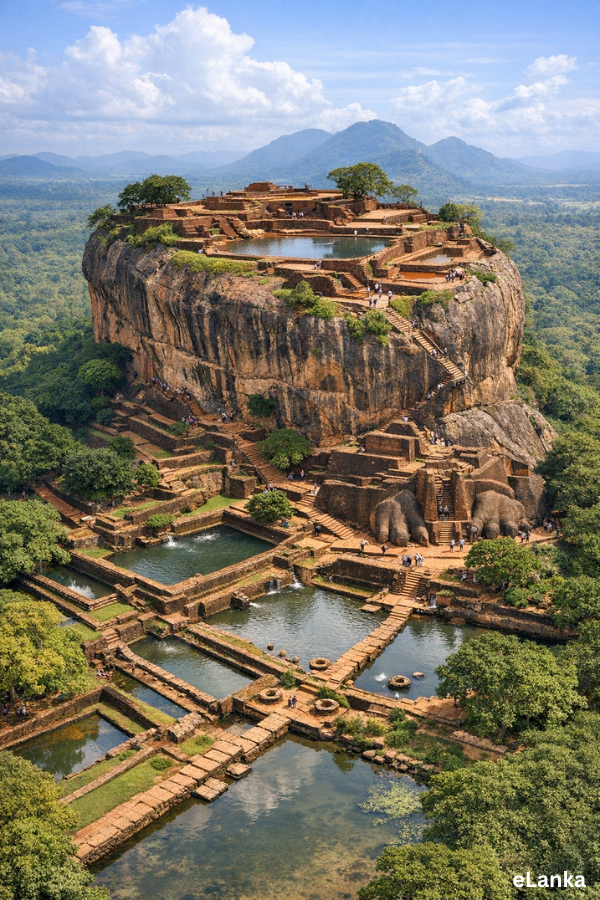
Sigiriya Sri Lanka

WHY WOULD A KING BUILD HIS PALACE ON TOP OF THIS ROCK?

Related News
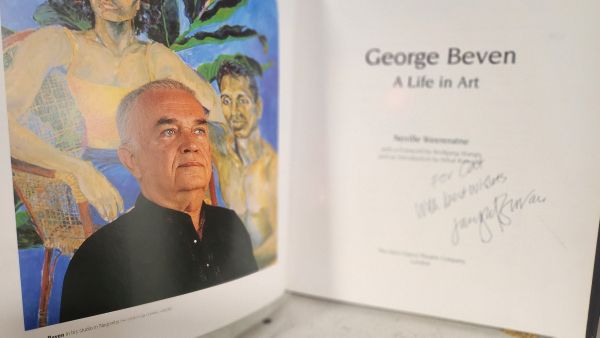
Re-writing history – the queer-washing of prolific Sri Lankan artist George Beven  ( PART ONE ) – by   Cat Clare Wright
Articles

Re-writing history – the queer-washing of prolific Sri Lankan artist George Beven ( PART ONE ) – by Cat Clare Wright

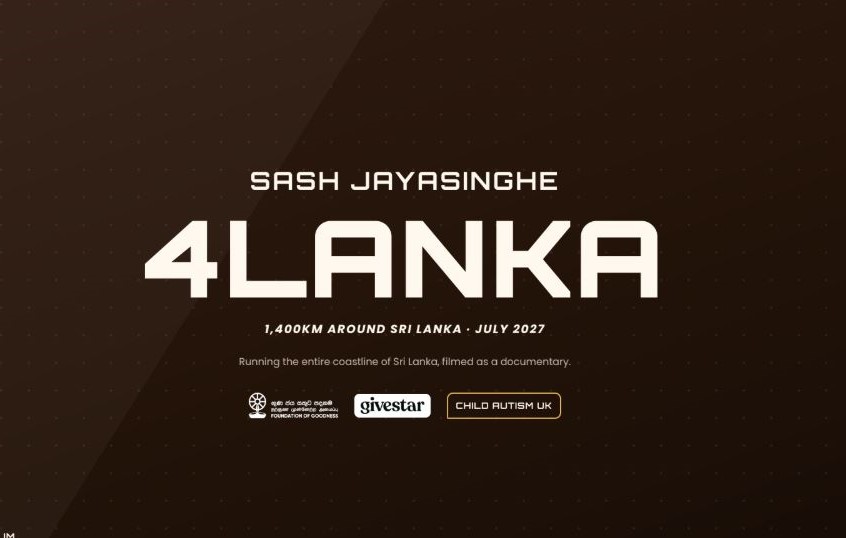
Sash Jayasinghe – 4LANKA 1,400KM Sri Lanka Run 2027
Articles

Sash Jayasinghe’s 4LANKA: 1,400KM Around Sri Lanka – July 2027

A Vision for Culturally Inclusive Aged Care-Pearl Life Care Meets with Hornsby Shire Council
Articles

A Vision for Culturally Inclusive Aged Care: Pearl Life Care Meets with Hornsby Shire Council

Janani Dananjana Wickramasinghe at Asian Para Games 2026
Articles

Janani Dananjana Wickramasinghe Carries Sri Lanka’s Medal Hopes in Three Events at the Asian Para Games 2026

Sri Lanka U19 Women
Articles

Limansa Thilakarathna and Sanjana Kavindi Lead Sri Lanka U-19 Women Past Pakistan for a Fourth Straight Win

  • Quick Links:
  • Articles
  • DESMOND KELLY
  • Dr Harold Gunatillake
  • English Videos
  • Sri Lanka
  • Sinhala Videos
  • Obituaries
  • eLanka Newsletters
  • Sunil Thenabadu
  • Trevine Rodrigo
  • Dr. Harold Gunatillake
  • Tamil Videos
  • Sinhala Movies
  • eLanka Newsletter
  • Photos

eLanka

Your Trusted Source for News & Community Stories: Stay connected with reliable updates, inspiring features, and breaking news. From politics and technology to culture, lifestyle, and events, eLanka brings you stories that matter — keeping you informed, engaged, and connected 24/7.
Kerrie road, Oatlands , NSW 2117 , Australia.
Email : info@eLanka.com.au / rasangivjes@gmail.com.
WhatsApp : +61402905275 / +94775882546
  • About eLanka
  • Terms & Conditions

Disclaimer:
eLanka is committed to sharing positive and community-focused stories. We do not publish or endorse political, religious, or ethnic viewpoints. The content published on eLanka, including articles and newsletters, reflects the opinions and views of the respective authors and not those of eLanka. eLanka accepts no responsibility or liability for the accuracy, completeness, or consequences of any content provided by contributors.

(c) 2005 – 2025 eLanka Pty Ltd. All Rights Reserved.