eLanka

Saturday, 28 Mar 2026
  • Home
  • Read History
  • Articles
    • eLanka Journalists
  • Events
  • Useful links
    • Obituaries
    • Seeking to Contact
    • eLanka Newsletters
    • Weekly Events and Advertisements
    • eLanka Testimonials
    • Sri Lanka Newspapers
    • Sri Lanka TV LIVE
    • Sri Lanka Radio
    • eLanka Recepies
  • Gallery
  • Contact
Newsletter
  • eLanka Weddings
  • Property
  • eLanka Shop
  • Business Directory
eLankaeLanka
Font ResizerAa
Search
  • Home
  • Read History
  • Articles
    • eLanka Journalists
  • Events
  • Useful links
    • Obituaries
    • Seeking to Contact
    • eLanka Newsletters
    • Weekly Events and Advertisements
    • eLanka Testimonials
    • Sri Lanka Newspapers
    • Sri Lanka TV LIVE
    • Sri Lanka Radio
    • eLanka Recepies
  • Gallery
  • Contact
Follow US
© 2005 – 2026 eLanka Pty Ltd. All Rights Reserved.
Home » Goodnews Stories Srilankan Expats » Articles » Doctor, my feet and ankles are getting swollen. What can I do? – By Dr harold Gunatillake
ArticlesDr Harold Gunatillake

Doctor, my feet and ankles are getting swollen. What can I do? – By Dr harold Gunatillake

eLanka admin
Last updated: October 18, 2023 11:33 am
By
eLanka admin
ByeLanka admin
Follow:
Share
9 Min Read
SHARE
Views: 8

Doctor, my feet and ankles are getting swollen. What can I do? – By Dr harold Gunatillake


What is the most common cause of leg swelling?

In older adults is what we call venous insufficiency.” The second most common cause of leg swelling is a reaction to certain medications.

When you remove your socks and shoes at the end of the day and detect swelling around your ankles and feet, you need to worry about it. Travelling by plane for long hours and not moving your legs is an acute problem. In some situations, this can be due to DVT, meaning that the deep veins in your calf muscles become clogged up

with clots due to a lack of peripheral pumping action in the calf muscles, or may be due to a condition called ‘lymphatic stasis’ meaning that the extra-cellular fluid is not being returned from the dependent areas, It is essential to move your ankles whilst being seated on the plane to prevent such episodes.

Today’s discussion concerns leg, ankle, and foot swelling due to more chronic conditions and prevention and control.

When your feet, ankles and legs get swelled mildly as a daily event, the most common situation may be drug-induced.

Most of you may be on Amlodipine, a calcium channel blocker prescribed for your high blood pressure, especially if given high doses such as 10 mg daily.

In such a situation, wearing compression socks or elevating your legs is best to help with swelling from amlodipine.

Or, you may be on Gabapentin, a medication used to treat nerve pain from shingles, seizures and restless legs syndrome.

You may be prescribed Pioglitazone, also called Actos, or rosiglitazone or Avandia, for type 2 diabetes. Leg swelling is a well-known side effect of these medications. These drugs have a greater risk of having heart failure, too.

Talk to your healthcare provider if you experience swelling while taking pioglitazone or rosiglitazone. They may be able to help switch you to a different diabetes medication.

If you take Non-steroid anti-inflammatory drugs for arthritic pain, the long term may cause water retention, leading to swelling in the legs and ankles. If you have kidney problems, you should avoid taking these drugs.

Ladies taking birth control pills also get water retention, which may show up as swelling in the legs or ankles.

When taken long-term, steroids are prescribed for asthma, chronic obstructive airway disease, and severe allergic reactions, another cause of water retention and leg swelling.

For many people, swelling from a medication isn’t severe and will typically go away once you stop taking it. Depending on the medication, lifestyle changes or lowering your dose may help if it’s something you need to take long-term.

Other causes of leg, ankle and foot swellings, or oedema, may be standing or sitting in the same position for too long.

Eating too much-added salt in your food can give rise to leg swelling. Being overweight could cause leg swelling.

More severe causes of leg swelling come with your kidney, liver or heart disease.

If you have had coronary heart disease treated with stents, you must take special precautions to avoid further damage to the heart muscles. If you continue your happy, enjoyable lifestyle, you may have a condition called CCF or congestive heart failure. This is a sign that your heart muscles do not have the strength to pump blood from the heart’s lower chambers efficiently.

People with heart failure tend to retain fluid. This appears as swollen ankles and legs because of excess fluid building up. You may notice that your shoes don’t fit and socks appear tight or leave a prominent indent above the ankle.

When the right side of the heart (right ventricle) starts to fail, fluid collects in the feet and lower legs. Puffy leg swelling (oedema) is a sign of right heart failure, especially if the oedema is pitting oedema. With pitting oedema, a finger pressed on the swollen leg leaves an imprint.

Early symptoms of heart failure are breathlessness on exertion, fatigue, rapid or irregular heartbeat, exhausting exercise, and leg swelling.

It would be best if you saw your cardiologist soon, as it is a serious situation, to salvage yourself from your serious situation.

Now, let’s discuss how you could get leg swelling due to kidney issues.

As the kidney function begins to fall, sodium retention causes swelling in your shin and ankles. In short, any person noting new onset leg or foot oedema should get an immediate evaluation of their renal function after visiting a nephrologist.

Damage to the tiny filtering nephrons can result in nephrotic syndrome; declining levels of the protein albumin in your blood and increasing levels in the urine can cause fluid to build up and result in oedema, most commonly around the ankles and feet.

Let’s discuss how you could get leg swelling due to liver disease.

Cirrhosis slows the regular flow of blood through the liver. This increases pressure in the vein that brings blood to the liver, causing swelling in the legs and abdomen.

The increased pressure in the portal vein can cause fluid to accumulate in the legs, called edema, and ascites in the abdomen.

In Stage 3, cirrhosis of your liver, caused by severe liver scarring, may cause more liver damage symptoms, including jaundice, weakness, fatigue, appetite and weight loss, abdominal bloating, and edema in your extremities.

In most chronic illnesses that cause leg swelling, only symptomatic medication is available to make you feel comfortable, and a complete cure is impossible.

I advise that preventive measures are best taken, as it is impossible to complicate the process in this day of ‘indulged’ living.

I hope this video article is helpful. Goodbye for now, until we meet again.


Disclaimer:

The information contained in this article is for general information purposes only, and whilst the author will endeavour to keep the information up to date and correct, eLanka makes no representations or warranties of any kind, express or implied, about the completeness, accuracy, reliability, suitability or availability with respect to the eLanka website or the information, products, services, or related graphics contained in this article for any purpose. Any reliance you place on such information is therefore strictly at your own risk. In other words, eLanka In no event will we be liable for any loss or damage including without limitation, indirect or consequential loss or damage, or any loss or damage whatsoever arising from loss of data or profits arising out of, or in connection with, the use of this website / article. Also please note that through this website / web page articles you are able to link to other websites which are not under the control of eLanka and therefore we have no control over the nature, content and availability of those sites. The inclusion of any links does not necessarily imply a recommendation or endorse the views expressed within them.
TAGGED:ankles.calf musclesDr. Harold GunatillakeeLankahealth problemsleg swellinglegs syndrome.legs welling
Share This Article
Facebook Whatsapp Whatsapp LinkedIn Email Copy Link Print
Previous Article WBBL stars take trophy over 1000ft to mark mew heights for WBBL - eLanka WBBL stars take trophy over 1000ft to mark mew heights for WBBL.
Next Article Writer as the Chief of Defence Staff with the Son of Chief Petty Officer K G Shantha in 2018 Remembering Heroes on 30th Anniversary of Special Boats Squadron – What I Learnt from The War Hero’s Son By Admiral Ravindra C Wijegunaratne
FacebookLike
YoutubeSubscribe
LinkedInFollow
Most Read
10 Pictures With Fascinating Stories Behind Them!

“A PICTURE SPEAKS A 1000 WORDS” – By Des Kelly

Look past your thoughts so you may drink the pure nectar of this moment

A Life Hack for when we’re Burnt Out & Broken Down – By Uma Panch

Narration of the History of our Proud Ancestral (Orang Jawa) Heritage. by Noor R. Rahim

eLanka Weddings

eLanka Marriage Proposals

Noel News

Noel News

Noel News

Noel News- By Noel Whittaker

EILEEN MARY SIBELLE DE SILVA (nee DISSANAYAKE) – 29 September 1922 – 6 April 2018 – A Woman of Value an Appreciation written by Mohini Gunasekera

K.K.S. Cement Factory

Dr.Harold Gunatillake’s 90th Birthday party

Sri Lanka's women's cricket squad in Melbourne

Cricket: Sri Lanka’s women’s squad in Melbourne

- Advertisement -
Ad image
Related News
Extreme Heat in Sri Lanka
Articles Bhanuka Nuwan

Extreme Heat in Sri Lanka: Causes, Science, and How to Protect People

Sri Lankan Aluwa Recipe – A Simple Traditional Sweet Delight - By Nadeeka - eLanka
Articles Nadeeka Kumari

Sri Lankan Aluwa Recipe – A Simple Traditional Sweet Delight – By Nadeeka – eLanka

Dilruk Jayasinghe is Sri Lanka's pride at the Australian Comedy Festival. - BY TREVINE RODRIGO IN MELBOURNE.
Articles Trevine Rodrigo

Dilruk Jayasinghe is Sri Lanka’s pride at the Australian Comedy Festival.- BY TREVINE RODRIGO IN MELBOURNE.

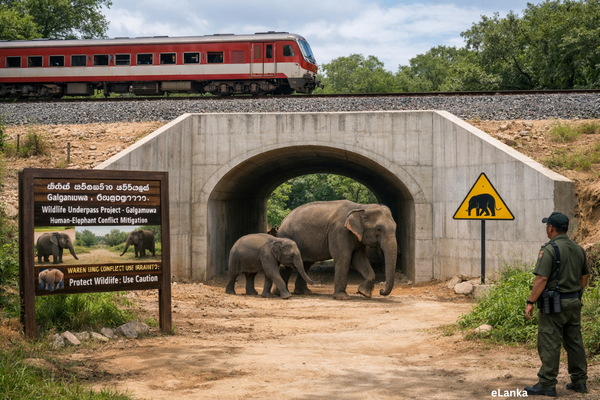
New wildlife underpass at Galgamuwa – solution for Human-Elephant Conflict By Arundathie Abeysinghe According to scholars, the new wildlife underpass at Galgamuwa in North Western Province which will be completed this month, will be a solution for the Human-Elephant Conflict (HEC). Galgamuwa is part of the Mahaweli Development Programme, the largest multipurpose national development programme in the country. Currently, construction of the elephant underpass is being completed beneath the railway line at Kasikote, between Galgamuwa and Ambanpola, an area well-known for frequent elephant crossings. A tunnel is constructed beneath the railway track to allow wild elephants to move safely from one side to the other, reducing the risk of train collisions as well as HEC. In 1977, when the Accelerated Mahaweli Development Scheme was launched, vast extents of forest lands were logged to facilitate new settlements. This led to elephants losing their habitats. According to senior engineers working on the project site, “construction work is expected to be completed in March 2026. The project would have been completed in early March, yet, the design phase of the project could not be finalised as there were challenges in controlling the movements of elephants towards the villages. During the rainy season, the slope that had already been cut was filled with water. Hence, those issues had to be addressed prior to its completion.” Galgamuwa residents are of the view that “this is a key project that should have been completed several decades ago as over 300 people have died in the area due to HEC, while over 50 people are handicapped as a large number of houses were damaged by elephants in search of food. For many years, we have spent sleepless nights due to fear of elephants roaming villages at night. One or two officers of the Department of Wildlife Conservation (DWC) cannot handle several elephants at once.” According to environmentalists “due to new settlements, there is lack of food in existing elephant migratory routes. To prevent elephant encounters, majority of villagers have set up electric fences which are useless as elephants cross the fences by felling large trees over them.” “Kahalla-Pallekele sanctuary was declared in 1989 with the objective of declaring the area up to Kala Wewa and Balalu Wewa as a national park. Yet, after this declaration, illegal land grabbing and human activities have disturbed migratory routes that elephants have been using for many years. Subsequent governments dug trenches, thinking that it would discourage elephants from coming towards villages. But that too was unsuccessful. Elephants now destroy electric fences because there’s lack of maintenance. It is difficult for just one or two wildlife officers to manage these elephant fences. When there’s lack of fodder, they go to people’s backyards in search of vegetables and fruits grown in home gardens.” In certain areas of Galagamuwa, community-based seasonal paddy field fences are constructed to avoid HEC. These are very successful as there is a direct incentive for the farmers to maintain and monitor the fence as their crops may be raided by elephants. In 2024, there were around 300 seasonal paddy field fences erected by Farmer Organisations supported by the Department of Agrarian Development. These seasonal paddy field fences contributed significantly to the number of elephant deaths decreasing from 488 in 2023 to 386 in 2024 as people kill elephants mainly when they raid their paddy or vegetable crops. Scholars are of the view that “although, the project would be completed this month, it is necessary to monitor, at least for a period of one year, if elephants may get used to using the underpass, even though they may not use it immediately.”
Articles Arundathie Abeysinghe

New wildlife underpass at Galgamuwa – solution for Human-Elephant Conflict – By Arundathie Abeysinghe

Australia to host U19 women’s tri-series in April
Articles

Australia to host U19 women’s tri-series in April

  • Quick Links:
  • Articles
  • DESMOND KELLY
  • Dr Harold Gunatillake
  • English Videos
  • Sri Lanka
  • Sinhala Videos
  • eLanka Newsletters
  • Obituaries
  • Sunil Thenabadu
  • Dr. Harold Gunatillake
  • Tamil Videos
  • Sinhala Movies
  • Trevine Rodrigo
  • Photos
  • eLanka Newsletter

eLanka

Your Trusted Source for News & Community Stories: Stay connected with reliable updates, inspiring features, and breaking news. From politics and technology to culture, lifestyle, and events, eLanka brings you stories that matter — keeping you informed, engaged, and connected 24/7.
Kerrie road, Oatlands , NSW 2117 , Australia.
Email : info@eLanka.com.au / rasangivjes@gmail.com.
WhatsApp : +61402905275 / +94775882546
  • About eLanka
  • Terms & Conditions

Disclaimer:
eLanka is committed to sharing positive and community-focused stories. We do not publish or endorse political, religious, or ethnic viewpoints. The content published on eLanka, including articles and newsletters, reflects the opinions and views of the respective authors and not those of eLanka. eLanka accepts no responsibility or liability for the accuracy, completeness, or consequences of any content provided by contributors.

(c) 2005 – 2025 eLanka Pty Ltd. All Rights Reserved.