eLanka

Saturday, 28 Mar 2026
  • Home
  • Read History
  • Articles
    • eLanka Journalists
  • Events
  • Useful links
    • Obituaries
    • Seeking to Contact
    • eLanka Newsletters
    • Weekly Events and Advertisements
    • eLanka Testimonials
    • Sri Lanka Newspapers
    • Sri Lanka TV LIVE
    • Sri Lanka Radio
    • eLanka Recepies
  • Gallery
  • Contact
Newsletter
  • eLanka Weddings
  • Property
  • eLanka Shop
  • Business Directory
eLankaeLanka
Font ResizerAa
Search
  • Home
  • Read History
  • Articles
    • eLanka Journalists
  • Events
  • Useful links
    • Obituaries
    • Seeking to Contact
    • eLanka Newsletters
    • Weekly Events and Advertisements
    • eLanka Testimonials
    • Sri Lanka Newspapers
    • Sri Lanka TV LIVE
    • Sri Lanka Radio
    • eLanka Recepies
  • Gallery
  • Contact
Follow US
© 2005 – 2026 eLanka Pty Ltd. All Rights Reserved.
Home » Goodnews Stories Srilankan Expats » Articles » VOLUNTEERS FROM CEYLON WHO SERVED IN THE BRITISH AND COMMONWEALTH FORCES DURING WORLD WAR 1 [1914-1918] AND WORLD WAR 2 [1939-1945]
Articles

VOLUNTEERS FROM CEYLON WHO SERVED IN THE BRITISH AND COMMONWEALTH FORCES DURING WORLD WAR 1 [1914-1918] AND WORLD WAR 2 [1939-1945]

eLanka admin
Last updated: June 13, 2022 1:28 pm
By
eLanka admin
ByeLanka admin
Follow:
Share
9 Min Read
SHARE
Views: 1

VOLUNTEERS FROM CEYLON WHO SERVED IN THE BRITISH AND COMMONWEALTH FORCES DURING WORLD WAR 1 [1914-1918] AND WORLD WAR 2 [1939-1945]

 VOLUNTEERS FROM CEYLON WHO SERVED IN THE BRITISH AND COMMONWEALTH FORCES DURING WORLD WAR 1 [1914-1918] AND WORLD WAR 2 [1939-1945] VOLUNTEERS FROM CEYLON WHO SERVED IN THE BRITISH AND COMMONWEALTH FORCES DURING WORLD WAR 1 [1914-1918] AND WORLD WAR 2 [1939-1945]

ABSTRACT

This abstract is a compilation of records in honour of all Ceylonese who served in the military during the two world wars, based on newspaper articles, historical records and material shared by relatives, military history enthusiasts, and web based information.

Sri Lanka or Ceylon, as we were known then, played a comparatively important role in the First World War although we were a crown colony of the British Empire. In 1917 the Times of Ceylon estimated that 1,250 volunteers had enlisted for overseas service. At least 351 Ceylon volunteers signed up while in England and another 438 enlisted on their own account. In addition, the ‘Times Fund’ facilitated the expenses for 156 Ceylon volunteers to enlist overseas. 

From the various  available nominal rolls and rolls of honour it appears there were minor concentrations of Ceylon volunteers in  the Royal Army Medical Corps (apart from Ceylon Sanitary Company), Kings Royal Rifle Corps (KRRC), Middlesex Regiment,  Cold stream Guards, Royal Fusiliers, Royal Garrison Artillery (RGA) and the Royal Engineers, Inland  Water Transport unit. 

In terms of the 1,250 Ceylon Volunteers estimated, there were 105 fatalities, 84 were Killed in Action and 21 died of wounds. Of the 114 Wounded in Action, 18 were categorised as either missing or Prisoners of War. It goes on to say that of the 330 casualties from the four English medium schools (Royal, St Thomas, Kingswood and Trinity) approximately 28% were casualties. Some of the volunteers were either students, past students or staff. The nominal rolls and the state of casualties are recorded as follows.

Royal – 88 enlisted (15 British European / 73 Ceylonese) – 5 KIA, 13 WIA and 3 POWs. 

St.Thomas’ – 86 enlisted (28 British European / 58 Ceylonese) – 14 KIA. 

Kingswood – 84 enlisted (25 British European / 59 Ceylonese) – 13 KIA and 15 WIA. 

Trinity – 72 enlisted (27 British European / 45 Ceylonese) – 13 KIA, 18 WIA and 2 POWs. 

Total – 330 enlisted – 45 KIA, 46 WIA and 5 POWs. 

KIA=Killed in Action, WIA=Wounded in Action, POW=Prisoner of War

These schoolboy enlistments were possible due to the dedication, patriotism and motivation of the British principals and cadet masters of the four schools. Let their example be emulated by the masters and schoolboy cadets of the present schools in Sri Lanka.

The outstanding events of the Second World War in Ceylon were the two Japanese air raids on Trincomalee and Colombo in 1942 which was successfully repelled with the downing of over 70 aircraft by the RAF and the Anti-aircraft batteries, most of whom were manned by Ceylonese volunteers. The experience of being under enemy fire and its successful defence provided a rare opportunity for the Ceylon Volunteers to show their capabilities in combat very competently. 

The association with many British Army and other allied units enabled the Ceylon Defence Force (CDF) troops to gain much needed experience in Jungle warfare training, in the performance of numerous duties including guard duties during war and learning valuable lessons from a professional Army that has stood in good stead for the future. However at the end of the Second World War the CDF was demobilised in 1946 although a cross section of troops attended the Victory parade in London in 1946.

Then in 1947 when the trade union action caused civil disorder certain CDF personnel were mobilised and used to bring back order to the country. 

The brief history of the CLIV [Ceylon Light Infantry Volunteers] forms the history of the Infantry arm in Ceylon and the birth of many units of the Ceylon Volunteer Force which later became the Ceylon Defence Force and the Ceylon / Sri Lanka Army later. The above facts also indicate the lack of trust of the Sinhalese in the early part of British colonial rule which impacted very adversely on the local population, the formation of the Army with indigenous personnel and the administration of the country. 

This situation changed due to the events that took place in the rest of the world and the need to provide the political, economic and social changes to enable the local population to emancipate themselves from abject poverty, whilst being recognized and provided basic needs thus far neglected. Hence the basic infrastructure for the local population was developed through the plantation economy, where the construction of roads, railways, the irrigation system and the commencement of primary education in the second half of the 19th century. 

Since the administration suffered as a result of the rebellions, the British colonial power was forced to change its strategy of depending only on the European powers and their local elites in Colombo by incorporating the local leaders in the administration of the country over time. They began to understand the Ceylonese way of life and existence which was gradually allowed to be revived although they were always vary of their own security.

The lessons we learn are the importance of Security of a country. The priority of serving your motherland and doing all you can without asking what it can do for you instead. The collection of material was compiled by Group Captain Kumar Kirinde [retd] SLAF with the support of the team of tri-forces members to record it for posterity, honouring the Fallen and remembering those who volunteered to serve the motherland during the World Wars in its hour of need. Let it inspire the youth of the country in the future for FREEDOM has a PRICE. – LEST WE FORGET –  

Please contact the following for further details

Brigadier Hiran Halangode      @ +94 714 774 987     email – nivanh@gmail.com

Group Captain Kumar Kirinde @ +94 718 580 079     email – slaf.rafoa@gmail.com

Quintus Andradi                        @ +94 777 939 611     Email – andradiquintus@yahoo.com

Price : Rs. 1000/= + Rs. 350/= Postage

From Sri Lanka : please deposit Rs. 1,350 to the following account and email your postal address to anyone of the addresses given above

Name : A.F.Q.  Andradi

Bank   : H.N.B.

Branch: Maharagama

Act.No.: 009020122822

Swift Code : HBLILKLX

Address      : 248/3, Arawwala Rd., Pannipitiya

Those who wish to make an on line payment from abroad can do so to the below account in Australia and please email your postal address to any of the above addresses. But for the present it will be posted from Sri Lanka


Account in Australia

 VOLUNTEERS FROM CEYLON WHO SERVED IN THE BRITISH AND COMMONWEALTH FORCES DURING WORLD WAR 1 [1914-1918] AND WORLD WAR 2 [1939-1945] VOLUNTEERS FROM CEYLON WHO SERVED IN THE BRITISH AND COMMONWEALTH FORCES DURING WORLD WAR 1 [1914-1918] AND WORLD WAR 2 [1939-1945]

BY POST

Local delivery per book (1.2 kg)

Rs 1,350  (Rs.1,000 for book, Rs.150 for SL POST parcel post delivery service and Rs 200 for padded special envelope) 

Overseas delivery per book (1.2 kg)

USA – USD 10 for book plus Rs.3,600 for SL POST delivery service plus Rs 200 for padded special envelope 

UK – USD 10 for book plus Rs.3,600 for SL POST delivery service plus Rs 200 for padded special envelope 

Canada – USD 10 for book plus Rs.3,600 for SL POST delivery service plus Rs 200 for padded special envelope

Australia – USD 10 for book plus Rs.2,500 for SL POST delivery service plus Rs 200 for padded special envelope 


TAGGED:British EmpireRoyal Army Medical CorpsRoyal EngineersSecond World WarSri Lanka
Share This Article
Facebook Whatsapp Whatsapp LinkedIn Email Copy Link Print
Previous Article This is story of a girl born in Vavuniya - By Dr Harold Gunatillake This is story of a girl born in Vavuniya – By Dr Harold Gunatillake
Next Article Furano - for lavender and melons - GEORGE BRAINE Furano – for lavender and melons – GEORGE BRAINE
FacebookLike
YoutubeSubscribe
LinkedInFollow
Most Read
10 Pictures With Fascinating Stories Behind Them!

“A PICTURE SPEAKS A 1000 WORDS” – By Des Kelly

Look past your thoughts so you may drink the pure nectar of this moment

A Life Hack for when we’re Burnt Out & Broken Down – By Uma Panch

Narration of the History of our Proud Ancestral (Orang Jawa) Heritage. by Noor R. Rahim

eLanka Weddings

eLanka Marriage Proposals

Noel News

Noel News

Noel News

Noel News- By Noel Whittaker

EILEEN MARY SIBELLE DE SILVA (nee DISSANAYAKE) – 29 September 1922 – 6 April 2018 – A Woman of Value an Appreciation written by Mohini Gunasekera

K.K.S. Cement Factory

Dr.Harold Gunatillake’s 90th Birthday party

Sri Lanka's women's cricket squad in Melbourne

Cricket: Sri Lanka’s women’s squad in Melbourne

- Advertisement -
Ad image
Related News
Extreme Heat in Sri Lanka
Articles Bhanuka Nuwan

Extreme Heat in Sri Lanka: Causes, Science, and How to Protect People

Sri Lankan Aluwa Recipe – A Simple Traditional Sweet Delight - By Nadeeka - eLanka
Articles Nadeeka Kumari

Sri Lankan Aluwa Recipe – A Simple Traditional Sweet Delight – By Nadeeka – eLanka

Dilruk Jayasinghe is Sri Lanka's pride at the Australian Comedy Festival. - BY TREVINE RODRIGO IN MELBOURNE.
Articles Trevine Rodrigo

Dilruk Jayasinghe is Sri Lanka’s pride at the Australian Comedy Festival.- BY TREVINE RODRIGO IN MELBOURNE.

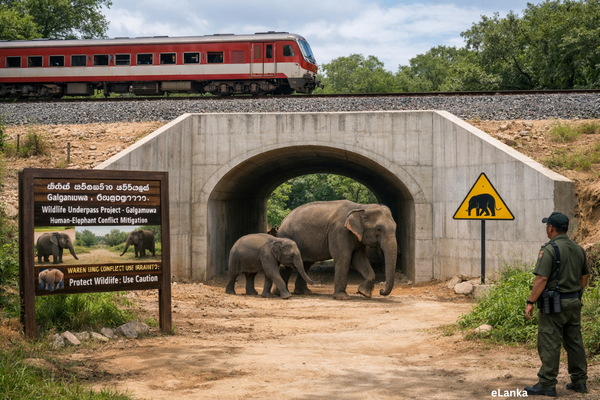
New wildlife underpass at Galgamuwa – solution for Human-Elephant Conflict By Arundathie Abeysinghe According to scholars, the new wildlife underpass at Galgamuwa in North Western Province which will be completed this month, will be a solution for the Human-Elephant Conflict (HEC). Galgamuwa is part of the Mahaweli Development Programme, the largest multipurpose national development programme in the country. Currently, construction of the elephant underpass is being completed beneath the railway line at Kasikote, between Galgamuwa and Ambanpola, an area well-known for frequent elephant crossings. A tunnel is constructed beneath the railway track to allow wild elephants to move safely from one side to the other, reducing the risk of train collisions as well as HEC. In 1977, when the Accelerated Mahaweli Development Scheme was launched, vast extents of forest lands were logged to facilitate new settlements. This led to elephants losing their habitats. According to senior engineers working on the project site, “construction work is expected to be completed in March 2026. The project would have been completed in early March, yet, the design phase of the project could not be finalised as there were challenges in controlling the movements of elephants towards the villages. During the rainy season, the slope that had already been cut was filled with water. Hence, those issues had to be addressed prior to its completion.” Galgamuwa residents are of the view that “this is a key project that should have been completed several decades ago as over 300 people have died in the area due to HEC, while over 50 people are handicapped as a large number of houses were damaged by elephants in search of food. For many years, we have spent sleepless nights due to fear of elephants roaming villages at night. One or two officers of the Department of Wildlife Conservation (DWC) cannot handle several elephants at once.” According to environmentalists “due to new settlements, there is lack of food in existing elephant migratory routes. To prevent elephant encounters, majority of villagers have set up electric fences which are useless as elephants cross the fences by felling large trees over them.” “Kahalla-Pallekele sanctuary was declared in 1989 with the objective of declaring the area up to Kala Wewa and Balalu Wewa as a national park. Yet, after this declaration, illegal land grabbing and human activities have disturbed migratory routes that elephants have been using for many years. Subsequent governments dug trenches, thinking that it would discourage elephants from coming towards villages. But that too was unsuccessful. Elephants now destroy electric fences because there’s lack of maintenance. It is difficult for just one or two wildlife officers to manage these elephant fences. When there’s lack of fodder, they go to people’s backyards in search of vegetables and fruits grown in home gardens.” In certain areas of Galagamuwa, community-based seasonal paddy field fences are constructed to avoid HEC. These are very successful as there is a direct incentive for the farmers to maintain and monitor the fence as their crops may be raided by elephants. In 2024, there were around 300 seasonal paddy field fences erected by Farmer Organisations supported by the Department of Agrarian Development. These seasonal paddy field fences contributed significantly to the number of elephant deaths decreasing from 488 in 2023 to 386 in 2024 as people kill elephants mainly when they raid their paddy or vegetable crops. Scholars are of the view that “although, the project would be completed this month, it is necessary to monitor, at least for a period of one year, if elephants may get used to using the underpass, even though they may not use it immediately.”
Articles Arundathie Abeysinghe

New wildlife underpass at Galgamuwa – solution for Human-Elephant Conflict – By Arundathie Abeysinghe

Australia to host U19 women’s tri-series in April
Articles

Australia to host U19 women’s tri-series in April

  • Quick Links:
  • Articles
  • DESMOND KELLY
  • Dr Harold Gunatillake
  • English Videos
  • Sri Lanka
  • Sinhala Videos
  • eLanka Newsletters
  • Obituaries
  • Sunil Thenabadu
  • Dr. Harold Gunatillake
  • Tamil Videos
  • Sinhala Movies
  • Trevine Rodrigo
  • Photos
  • eLanka Newsletter

eLanka

Your Trusted Source for News & Community Stories: Stay connected with reliable updates, inspiring features, and breaking news. From politics and technology to culture, lifestyle, and events, eLanka brings you stories that matter — keeping you informed, engaged, and connected 24/7.
Kerrie road, Oatlands , NSW 2117 , Australia.
Email : info@eLanka.com.au / rasangivjes@gmail.com.
WhatsApp : +61402905275 / +94775882546
  • About eLanka
  • Terms & Conditions

Disclaimer:
eLanka is committed to sharing positive and community-focused stories. We do not publish or endorse political, religious, or ethnic viewpoints. The content published on eLanka, including articles and newsletters, reflects the opinions and views of the respective authors and not those of eLanka. eLanka accepts no responsibility or liability for the accuracy, completeness, or consequences of any content provided by contributors.

(c) 2005 – 2025 eLanka Pty Ltd. All Rights Reserved.